
From Dream Chasers to Low-Desire Lives: The Evolution of Chinese Youth Culture
- Date:
- Views:300
- Source:The Silk Road Echo
Remember when every young person in China was all about chasing the dream? Big cities, high-paying jobs, fancy cars — you name it. Fast forward to today, and a whole new vibe is taking over: quiet quitting, lying flat, and embracing what we call the 'low-desire life.' So what happened? How did China’s youth go from hustle culture to just… chilling out?
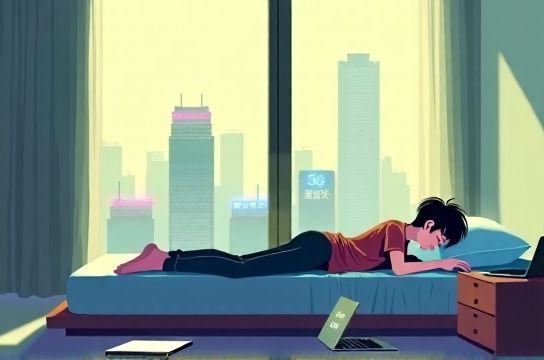
It’s not that today’s young people are lazy — far from it. They’re just tired. Growing up during China’s economic boom, many were raised with sky-high expectations. Study hard, get into a top university, land a white-collar job, buy an apartment, climb the corporate ladder. But reality hit hard. Skyrocketing housing prices, fierce job competition, and the infamous 996 work culture (that’s 9 a.m. to 9 p.m., six days a week) made the dream feel more like a trap.
Enter 'tang ping' — or 'lying flat.' It’s not about giving up completely, but about opting out of the rat race. More and more young Chinese are choosing simpler lives: smaller apartments, part-time gigs, minimal spending. Some even move back to their hometowns to escape the pressure. It’s less about ambition and more about peace.
Take Xiao Lin, a 27-year-old former tech worker in Shenzhen. After two years of burnout, he quit his job, sold most of his stuff, and now lives in a rural village teaching English online. 'I don’t need luxury,' he says. 'I just want to breathe.' His story isn’t unique — it’s becoming a trend.
Social media plays a big role too. Platforms like Xiaohongshu and Bilibili are full of videos showing cozy minimalist lifestyles, DIY home setups, and slow living. These aren’t aspirational luxury clips — they’re relatable, low-key, and oddly inspiring. Young people aren’t comparing themselves to billionaires anymore; they’re finding joy in small wins.
But this shift hasn’t gone unnoticed by authorities. Some state media have criticized 'lying flat' as unpatriotic or defeatist. Yet, for many youth, it’s not rebellion — it’s self-preservation. With marriage rates dropping, birth rates at historic lows, and mental health concerns rising, opting for a low-desire life feels like the only sane choice.
So is this the end of ambition in China? Probably not. It’s more like a reset. Today’s youth aren’t rejecting success — they’re redefining it. Success now might mean work-life balance, personal freedom, or just having time to enjoy a cup of tea without checking emails.
The cultural shift from dream chaser to low-desire living reflects deeper societal changes. It’s a response to overload, inequality, and the emotional cost of constant hustle. And honestly? It makes sense. If the system doesn’t reward effort fairly, why keep running on a treadmill that goes nowhere?
This evolution isn’t just happening in China — similar trends appear in Japan (with its 'herbivore men'), South Korea (the 'escape the grind' movement), and even the West (looking at you, 'quiet quitting'). But in China, it’s uniquely shaped by rapid modernization and intense social pressure.
So what’s next? Maybe a generation that values well-being over wealth, authenticity over appearances, and contentment over consumption. Call it low desire, call it mindful living — either way, it’s a powerful statement: I’m still here, I’m just living on my own terms.