
Inside China's 'Involution' Epidemic: How Social Pressure Shapes Young Lives
- Date:
- Views:319
- Source:The Silk Road Echo
You’ve probably heard the term *involution* floating around Chinese social media—or maybe your friend studying in Beijing mentioned how they’re "trapped in the involution cycle." But what exactly is it? And why are millions of young people across China feeling like they’re running a marathon with no finish line?
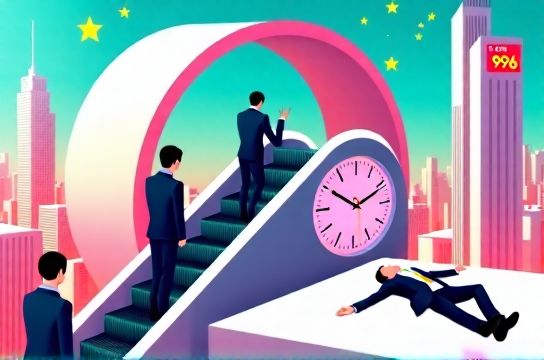
In simple terms, *involution*—or *neijuan* (内卷) in Mandarin—refers to a situation where individuals work harder and harder just to stay in the same place. It’s not progress; it’s exhaustion disguised as productivity. Imagine everyone in a classroom pulling all-nighters just to outdo each other on exams that don’t even matter in the real world. That’s involution.
This phenomenon has seeped deep into Chinese society, especially among Gen Z and millennials. From hyper-competitive university entrance exams to grueling 996 work cultures (that’s 9 a.m. to 9 p.m., six days a week), young people feel constant pressure to over-perform. The sad truth? No matter how hard they work, the rewards barely budge.
Take Xiao Lin, a 24-year-old recent graduate from Wuhan. She studied engineering, pulled 18-hour days during finals, landed a job at a top tech firm—and still can’t afford rent in Shanghai without help from her parents. "I thought if I worked hard enough, I’d make it," she says. "But everyone’s working just as hard. There’s no winning, only surviving."
The roots of involution go beyond personal ambition. They’re tied to systemic issues: a shrinking job market, rising education costs, and sky-high housing prices. With limited opportunities, young people aren’t competing to grow—they’re fighting for scraps.
Social media makes it worse. Platforms like Xiaohongshu and Weibo are flooded with "perfect life" content—glamorous jobs, luxury trips, flawless skincare routines. It’s not aspirational; it’s anxiety-inducing. When everyone seems to be leveling up while you’re stuck, it’s easy to burn out.
But here’s the twist: more young Chinese are pushing back. Some are embracing *tang ping*—"lying flat"—a quiet rebellion against hustle culture. Others are quitting high-paying jobs to teach in rural schools or start small farms. It’s not laziness; it’s a search for meaning beyond endless competition.
Experts say this shift could spark real change. "Involution isn’t natural," says Dr. Mei Chen, a sociologist at Fudan University. "It’s a response to broken systems. When people opt out, they force those systems to adapt."
So, what’s next? Can China’s youth redefine success on their own terms? Maybe. But one thing’s clear: the involution epidemic isn’t just about overwork—it’s about reclaiming life from relentless pressure.
As the world watches, China’s young generation is asking a powerful question: Why run faster if the treadmill’s going nowhere?