
The New Chinese Dream: Escaping the 996 Work Culture for Work-Life Balance
- Date:
- Views:294
- Source:The Silk Road Echo
Remember when the 'Chinese Dream' meant working nonstop to climb the corporate ladder? Yeah, that’s so last decade. These days, more and more young professionals in China are saying 'no thanks' to the grind—and it’s about time. The 996 work culture—9 a.m. to 9 p.m., six days a week—used to be worn like a badge of honor. But now? It’s seen as outdated, exhausting, and frankly, not worth it.
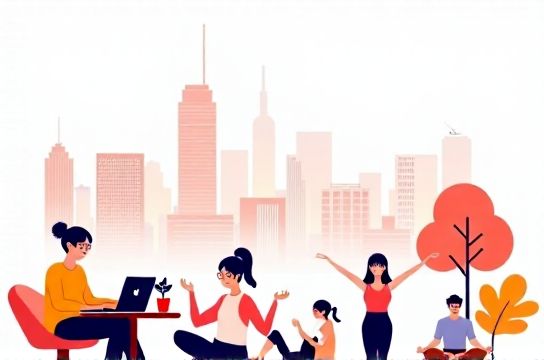
Let’s be real: burning out at your desk isn’t living. And after years of hustle culture glorifying overwork, people are finally waking up. Especially Gen Z. These digital natives didn’t sign up for soul-crushing hours just to afford rent in Beijing or Shanghai. They want flexibility. They want meaning. They want life outside the office.
Take Xiao Lin, a 26-year-old designer from Hangzhou. She left her high-paying tech job after two years of 996. 'I had no weekends, barely saw my family, and my health was tanking,' she said. Now, she freelances remotely and works with clients across Asia. 'I make less money, sure—but I actually enjoy my life. That’s worth more than any bonus.'
She’s not alone. A 2023 survey by Zhaopin showed that over 60% of workers aged 18–35 would take a pay cut for better work-life balance. That’s a massive shift. Companies are starting to notice too. Some startups in Chengdu and Xiamen now offer four-day weeks or unlimited vacation—yes, really. And they’re not collapsing. In fact, productivity is up, turnover is down, and employees are happier.
Why the change? Part of it is burnout fatigue. Another part? Social media. Platforms like Xiaohongshu and Douyin are flooded with posts titled 'Why I Quit My 996 Job' and 'How I Found Peace Working 30 Hours a Week.' These stories go viral because they hit home. People are tired of sacrificing their mental health for KPIs.
But let’s not pretend it’s easy. Leaving a stable job in a competitive market takes guts. And not everyone can freelance or land a chill startup role. Still, the mindset shift is powerful. The new Chinese Dream isn’t about owning an apartment in Pudong or driving a Tesla. It’s about having time—to travel, to rest, to be with loved ones, to just *breathe*.
Some call it laziness. We call it wisdom. Because what’s the point of success if you’re too drained to enjoy it?
So yeah, the dream has changed. And honestly? It’s looking a lot healthier.