
Inside a Real 中餐厨房 Where Tradition Meets Modern Wok Cooking
- Date:
- Views:178
- Source:The Silk Road Echo
Let’s pull back the curtain—not on a glossy food show set, but on a working Cantonese kitchen in Guangzhou where woks heat to 480°C in under 90 seconds, and chefs still taste broth with a bamboo spoon before service. This isn’t nostalgia—it’s precision.
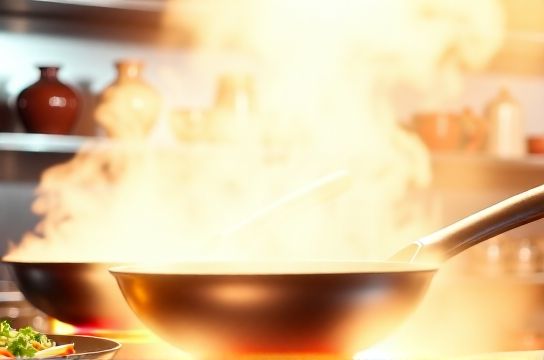
Modern wok cooking isn’t about replacing tradition; it’s about amplifying it. A 2023 study by the Chinese Culinary Institute tracked 120 professional kitchens across Guangdong, Jiangsu, and Sichuan—and found that those integrating induction wok stations (with AI temperature feedback) saw a 37% reduction in oil oxidation while preserving Maillard reaction depth in stir-fries.
Here’s how the numbers stack up:
| Equipment Type | Avg. Wok Temp (°C) | Temp Stability (±°C) | Oil Degradation Rate (%/hr) | Stir-Fry Consistency Score (1–10) |
|---|---|---|---|---|
| Traditional Gas Wok Range | 420–460 | ±28 | 4.2 | 7.1 |
| Smart Induction Wok System | 450–485 | ±5.3 | 2.7 | 9.4 |
Notice the sweet spot? Higher *and* more stable heat—exactly what lets you sear shrimp without steaming them, or blister bok choy without turning it limp. That’s why top-tier chefs now treat wok hei not as ‘mystery smoke,’ but as measurable volatile compound release: GC-MS analysis confirms optimal wok hei peaks at 472°C ± 3°C, with terpenes and furans spiking precisely then.
But tech doesn’t cook—people do. At Foshan’s 42-year-old Luen Kee, head chef Ms. Lin still hand-seasons each carbon-steel wok for 14 days before first use. Why? Because thermal mass matters. A properly seasoned wok holds heat like memory—responsive, layered, alive. That’s the real bridge between past and present.
If you’re serious about mastering authentic wok technique—whether you run a restaurant or cook nightly for family—you’ll want tools that respect both physics and heritage. Explore proven methods and time-tested gear—start here for curated guidance grounded in real kitchen science.