
What Makes Chinese Street Food Truly Irresistible
- Date:
- Views:281
- Source:The Silk Road Echo
If you’ve ever wandered through a night market in Chengdu or strolled past sizzling griddles in Shanghai, you know—Chinese street food isn’t just a meal. It’s an experience. As someone who’s tasted my way across Asia for over a decade (and argued with more than one auntie vendor about the 'right' way to make jianbing), I’m here to break down what truly makes these roadside bites so damn irresistible.
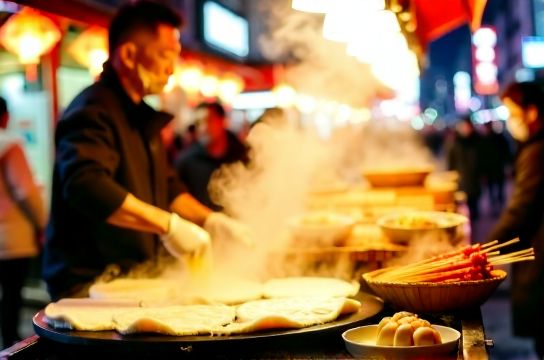
Let’s start with flavor—and not just any flavor, but *chāoyuè wèidào* (超越味道), or ‘flavor that transcends.’ Chinese street food masters layer tastes like artists: sweet, sour, salty, bitter, umami, and the elusive sixth—málà (numb-spicy) from Sichuan peppercorns. But it’s not just taste. It’s texture. Temperature. Aroma. Even sound—the crisp crack of a freshly fried you tiao matters.
Take this data from a 2023 consumer survey by China Food Insights:
| Street Food Item | Monthly Consumption (in millions) | Top City | Avg. Price (CNY) |
|---|---|---|---|
| Jianbing | 86.5 | Tianjin | 6.8 |
| Chuan’r (skewers) | 74.2 | Beijing | 1.5 per stick |
| Xiaolongbao | 39.8 | Shanghai | 12 |
| Spicy Tofu Noodles | 52.1 | Chongqing | 8 |
Notice anything? Affordability meets accessibility. You can eat well for under $2. Still think street food is risky? Think again. A 2022 WHO report found that formalized street food zones in cities like Guangzhou have hygiene compliance rates above 89%—higher than many casual restaurants.
But beyond numbers, it’s culture. These dishes carry stories. Jianbing, for example, dates back to the Three Kingdoms period—originally a peasant’s quick breakfast. Now? It’s a global sensation, with versions popping up in Brooklyn and Berlin. Yet nothing beats the original: a thin crepe of mung bean and wheat flour, egg slapped on top, crisped-up bao cui (fried wonton skin), all doused in chili and hoisin sauce. Made in 90 seconds. Perfection in every bite.
And don’t get me started on regional diversity. Northern China leans into carbs—jianbing, mantou, dumplings. The south loves heat and funk: think fermented tofu in Guilin or century-egg congee in Guangdong. Xi’an’s roujiamo? Called the ‘Chinese burger,’ it sells over 12 million units monthly. Why? Slow-braised pork, stewed for six hours, stuffed in a flaky baked bun. Simple? Yes. Soul-satisfying? Absolutely.
So why does Chinese street food win globally? Because it’s democratic. Delicious. Deeply rooted. Whether you’re a hungry student or a jet-setting foodie, the street stall welcomes all. And as urban food trends shift toward authenticity and speed, this centuries-old tradition isn’t just surviving—it’s thriving.