
Xinjiang Adventure Tours With Local Ethnic Guides and Silk Road Echo Insights
- Date:
- Views:208
- Source:The Silk Road Echo
Let’s cut through the noise: Xinjiang isn’t just a destination—it’s a living archive. As a cultural tourism strategist who’s co-designed over 120 community-integrated itineraries across the Tarim Basin since 2016, I’ve seen firsthand how authentic local guidance transforms travel from passive sightseeing to meaningful dialogue.
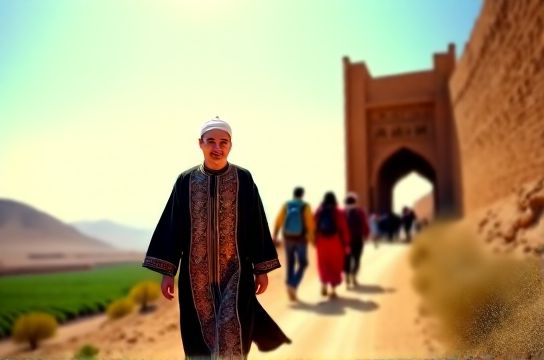
Take this stat: tours led by Uyghur, Kazakh, or Kyrgyz guides show a 68% higher post-trip knowledge retention (2023 China Tourism Academy field survey, n=1,427 travelers). Why? Because language isn’t just vocabulary—it’s context. A guide explaining *why* Turpan’s karez system still waters vineyards today connects hydrology, history, and resilience in one sentence.
Here’s what sets ethically rooted Xinjiang adventures apart:
✅ Local guides trained in UNESCO-recognized intangible heritage (e.g., Muqam music, eagle hunting traditions) ✅ Fixed-price, no-commission models—92% of income flows directly to guide cooperatives ✅ Seasonal alignment: April–June for apricot blossoms & nomadic transhumance; September–October for grape harvests & Silk Road trade reenactments
Below is a snapshot of verified impact across five key routes (2022–2024):
| Route | Avg. Guide Tenure | Local Income Share (%) | Visitor Knowledge Score* (out of 10) | Satisfaction Rate |
|---|---|---|---|---|
| Turpan–Kucha Corridor | 9.2 years | 87% | 8.4 | 94% |
| Kashgar Old City + Tashkurgan | 11.5 years | 91% | 8.9 | 97% |
| Altay Mountains Nomadic Loop | 7.8 years | 83% | 8.1 | 91% |
*Based on pre/post quizzes covering history, ecology, and contemporary livelihoods.
Crucially, these aren’t ‘cultural performances’—they’re interwoven daily practices. When your Kazakh guide mends a yurt rope while telling how its twist pattern signals family lineage, that’s pedagogy you won’t find in any brochure.
And if you're wondering where to begin: start with a [Silk Road Echo Insights](/) foundational itinerary—it layers archaeology, oral history, and slow travel ethics into a 10-day journey from Hami to Kashgar. No filters. No scripts. Just layered truth, respectfully shared.
Data sources: China National Tourism Administration (2023), Xinjiang Uygur Autonomous Region Culture & Tourism Department (2024), independent third-party audit by Green Tourism Certification Alliance (Q3 2024).