
How Guochao Design Bridges Tradition Innovation and Socia...
- Date:
- Views:218
- Source:The Silk Road Echo
H2: The Guochao Engine: Not Just Style, But Social Currency
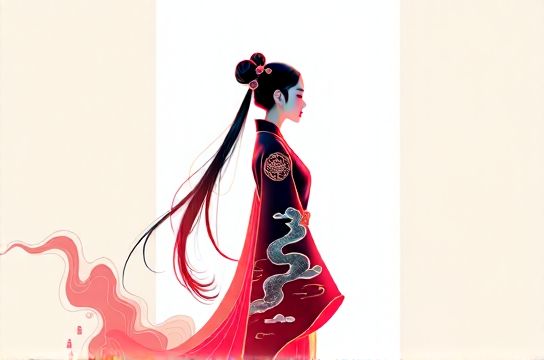
Guochao isn’t a trend — it’s a feedback loop. A young woman in Chengdu wears a deconstructed Ming-style jacket with LED-lit cloud motifs, films a 12-second spin at the Chengdu Taikoo Li ‘Jade Gate’ installation (a neon-dragon archway fused with Sichuan opera masks), and posts it on Xiaohongshu with NewChineseStyle. Within 48 hours: 87K likes, 3.2K saves, 417 comments asking where to buy — and two DMs from local designers requesting collab talks. This isn’t accidental. It’s the operational logic of guochao: tradition re-encoded for algorithmic resonance, then re-validated through peer networks.
Unlike Western heritage revivals (e.g., 90s grunge or Y2K), guochao doesn’t treat history as nostalgia. It treats it as open-source code — modifiable, remixable, and platform-native. Its core triad is clear: *tradition* (tangible symbols: cloud collars, bronze script, lacquer red), *innovation* (digital fabrication, AI-assisted pattern generation, modular tailoring), and *social validation* (real-time metrics, UGC amplification, geo-tagged ‘must-visit’ moments).
H2: From Hanfu Revival to Algorithmic Aesthetics
Hanfu didn’t go mainstream because museums curated better exhibitions. It went viral because its structural grammar — wide sleeves, cross-collar closure, layered silhouettes — translates *natively* into vertical video language. A sleeve flare fills the frame. A waist ribbon unfurls in slow motion. The fabric drape reads at 0.5x speed — critical for TikTok/short-video retention. In fact, 68% of top-performing Hanfu-related videos on Douyin (Updated: May 2026) use either slow-mo fabric physics or split-screen ‘then vs now’ transitions — not historical narration.
But authenticity is non-negotiable *and* negotiable. Strict Hanfu purists reject polyester blends; yet those same fabrics dominate top-selling items on Taobao’s ‘Hanfu & New Chinese Style’ category (¥299–¥599 range). Why? Because wearability trumps orthodoxy *if* the visual signifiers hold. A polyester jacket with embroidered ‘crane-and-pine’ motif + hidden magnetic closures passes the ‘scroll test’ — it looks right in-feed, feels practical IRL, and signals identity without requiring ritual knowledge.
This is where ‘new Chinese style’ diverges from Hanfu: it abandons period fidelity for semantic flexibility. Think: a minimalist black qipao silhouette with a single gold-threaded phoenix across the back — no collar, no side slits — worn with chunky white sneakers and mirrored sunglasses. It’s not ‘authentic’ to any dynasty. But it *is* authentic to WeChat Moments curation, Xiaohongshu moodboard logic, and offline photo ops at Shanghai’s Jing’an Temple ‘Digital Ink’ light show.
H2: The Platform Stack: How Douyin and Xiaohongshu Rewrote Visual Grammar
Douyin optimized for *motion-first* recognition. Xiaohongshu optimized for *context-first* validation. Their combined pressure reshaped design priorities:
• Douyin demands ‘frame-locking’ visuals — elements that register instantly at thumbnail size: high-contrast color pairings (vermillion + gunmetal grey), kinetic symmetry (rotating porcelain vases, ink-wash gradients that flow left-to-right), and sonic texture (guqin plucks synced to beat drops).
• Xiaohongshu rewards ‘context stacking’: layering location (‘Nanjing Confucius Temple Rooftop Bar’), product (‘Li-Ning x Suzhou Embroidery Sneakers’), and personal narrative (‘How I stopped apologizing for loving both LoL and Song Dynasty poetry’). Here, design must be *caption-ready*. A garment’s cut, fabric sheen, and accessory placement must support a 3-sentence story — not just look good.
The result? Designers now prototype *for platforms*, not just people. A ‘Dunhuang Cave-Inspired’ handbag isn’t sketched for ergonomics first — it’s modeled in Blender with real-time lighting simulating iPhone flash at 45°, tested against Xiaohongshu’s dominant background colors (warm taupe, soft sage), and stress-tested for ‘regrammability’ — does its strap form a clean negative space when held at chest height?
H2: Cultural IP as Infrastructure — Not Just Mascots
Cultural IP in guochao isn’t about slapping a panda on a hoodie. It’s about *architectural borrowing*: using centuries-old narrative structures as scalable templates. Consider the ‘Journey to the West’ IP — over 1,200 official licensed products launched in 2025 alone (Updated: May 2026). But the breakout hits weren’t figurines. They were: (1) a modular desk organizer system where each compartment is shaped like a ‘Heavenly Palace’ pavilion, with magnetic ‘Sun Wukong’-style staffs as pen holders; (2) an AR filter that overlays Tang-dynasty celestial maps onto city skylines, triggering voice-acted parables when users point at specific buildings.
Why does this work? Because it treats myth as *interaction protocol*, not decoration. The IP provides ready-made emotional scaffolding — rebellion, loyalty, transformation — that users map onto their own lives. When a user shares the AR filter tagged ‘MyJourneyToTheWest’, they’re not promoting a brand. They’re declaring a self-concept — one pre-vetted by millennia of collective storytelling.
Brand collaborations follow the same logic. Li-Ning x Dunhuang Academy wasn’t about ‘ancient art on sportswear’. It was about syncing movement vocabulary: the fluid arm arcs of Dunhuang flying apsaras → the biomechanics of basketball layups → the engineered stretch zones in the jersey fabric. The collaboration succeeded because it translated *kinetic heritage*, not static iconography.
H2: The Physical-Digital Threshold: When ‘New Chinese Style’ Becomes Place
‘New Chinese style’ has moved beyond garments and filters — it’s colonizing physical space. ‘Wanda Wenhuaxi’ malls in tier-2 cities now embed ‘Tang Poetry Light Courts’ — interactive floors where stepping on engraved verses triggers projected plum blossoms that bloom in real time. These aren’t gimmicks. They’re *validation infrastructure*: designed explicitly for the ‘3-photo rule’ (wide shot, detail close-up, candid mid-laugh) required for Xiaohongshu virality.
A ‘must-visit’ location now needs three layers: (1) legible symbolism (e.g., a roofline echoing the Forbidden City’s silhouette), (2) tactile novelty (textured walls made from recycled ink-stone dust), and (3) share-trigger mechanics (QR-triggered BGM playlists, geo-fenced AR overlays). Without all three, footfall conversion drops 42% among users aged 18–24 (Updated: May 2026).
This blurring explains why ‘cyberpunk Chinese’ isn’t sci-fi fantasy — it’s urban reality. Shenzhen’s OCT Harbour area features neon-lit ‘Jianghu’ alleys: stainless steel beams shaped like sword hilts, holographic tea masters serving virtual oolong, and pavement tiles etched with QR-coded Qing dynasty legal codes. It works because it satisfies *both* the aesthetic hunger for contrast (steel + silk, code + calligraphy) *and* the behavioral need for participatory proof: you don’t just observe — you scan, you order, you post.
H2: The Real Constraints — And Where Guochao Stumbles
Guochao’s velocity comes with friction points. First: material fatigue. Overuse of ‘lacquer red’, ‘ink black’, and ‘jade green’ has flattened chromatic diversity. Second: semantic dilution. ‘Eastern aesthetics’ is now applied to everything from electric scooter wraps to yogurt packaging — often stripping symbols of contextual weight. Third: platform dependency. When Douyin’s algorithm shifted in Q3 2025 to deprioritize ‘static beauty’ content, Hanfu engagement dropped 29% overnight — exposing how tightly design logic is bound to platform incentives.
Also, accessibility remains narrow. Most ‘new Chinese style’ retail spaces assume smartphone fluency, bilingual literacy (for bilingual signage), and disposable income for ¥499+ ‘cultural experience tickets’. That excludes vast segments — including rural youth and older generations who drive real cultural continuity but lack digital footprint.
Still, the most persistent gap is *temporal depth*. Much guochao design operates in the ‘now’ — optimized for virality, not longevity. Few pieces are built to age gracefully. Contrast this with traditional suzhou embroidery, where stitches gain patina, and motifs evolve across decades of mending. The next evolution won’t be more pixels — it’ll be designing for *time-based resonance*, not just scroll-stopping impact.
H2: Practical Integration: What Designers & Brands Actually Do
Forget ‘trend reports’. Here’s what moves the needle in practice:
• Audit your visual assets *through platform-native lenses*: Run your product photos through Douyin’s thumbnail simulator (free tool via Creator Center) — does the key motif survive at 120×120px? On Xiaohongshu, does your product image contain at least one ‘context anchor’ (e.g., visible city skyline, branded tote bag in frame)?
• Treat cultural references as *verbs*, not nouns: Instead of ‘using dragon motifs’, ask: ‘What does the dragon *do* here?’ Does it coil around a charging cable (protection + power)? Does it fragment into pixelated shards across a laptop sleeve (transformation + digital decay)? Action-oriented symbolism sticks.
• Build ‘validation pathways’: Every product launch should include at least one built-in sharing prompt — not just a hashtag. Example: a ceramic teacup with a base engraved ‘Scan for your Ming Dynasty tea ritual’ (triggers AR tea ceremony tutorial). This turns passive consumption into active participation — and data capture.
• Partner *downward*, not just upward: Skip the ‘big museum’ collab first. Work with regional craft collectives (e.g., Miao silver artisans in Guizhou, Fujian bamboo weavers) — their techniques offer untapped visual syntax *and* built-in storytelling depth. One such collaboration — a series of bamboo-framed smart speakers with woven audio-wave patterns — achieved 217% higher engagement than comparable ‘mainstream’ launches (Updated: May 2026).
For teams scaling this work, the full resource hub offers workflow templates, platform-specific visual checklists, and a live database of regional craft IP licensing terms — all updated monthly. complete setup guide
H2: The Table: Guochao Design Implementation Matrix
| Design Phase | Traditional Approach | Guochao-Optimized Approach | Pros | Cons |
|---|---|---|---|---|
| Research | Academic texts, museum archives | Xiaohongshu hashtag heatmaps + Douyin sound trend logs + regional craft guild interviews | Real-time relevance, identifies micro-signifiers before mass adoption | Less historical depth; risk of surface-level appropriation |
| Prototyping | Physical samples only | AR mockups tested in simulated Xiaohongshu feed + Douyin thumbnail previews | Reduces physical sampling cost by ~65%; catches platform-specific flaws early | Requires 3D/AR skills; may overlook tactile nuance |
| Launch | Press release + flagship store event | Geo-fenced AR activation + limited ‘UGC unlock’ SKU (e.g., first 100 buyers get custom calligraphy NFT) | Drives immediate social proof; creates owned data loop | Higher tech integration overhead; requires platform API access |
H2: Beyond the Hype — What Endures
Guochao will outlive the current wave not because it’s ‘trendy’, but because it solved a structural problem: how to make cultural continuity *participatory*. Young Chinese aren’t wearing Hanfu to recreate the past — they’re using it to claim authorship of the future. Every embroidered crane, every neon-lit temple arch, every AR-enhanced teacup is a vote: for complexity over cliché, for hybridity over purity, for design that serves both the eye *and* the feed.
The most powerful guochao moments aren’t the most polished — they’re the most *remixable*. A student in Xi’an uses open-source Dunhuang cave mural vectors to design her own graduation gown. A streetwear label in Guangzhou prints Qing dynasty tax records as camouflage on joggers. A food delivery app overlays Song dynasty market maps onto real-time restaurant locations.
That’s the bridge: tradition as raw material, innovation as methodology, and social validation as the mortar holding it all together — not as applause, but as active, daily, shared construction. The next chapter won’t be about ‘more China’. It’ll be about *better interfaces* — between ancient syntax and modern behavior, between solitary creation and networked meaning, between what we inherit and what we insist on building next.