
The Psychology Behind Z-Generation Preference for Soft Ea...
- Date:
- Views:208
- Source:The Silk Road Echo
H2: Why ‘Soft’ Is the New Strong in Eastern Visual Culture
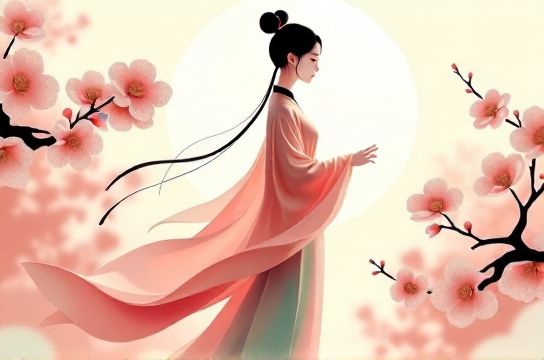
Scroll through Douyin at 9:14 p.m. on a Tuesday. A 22-year-old in Hangzhou films herself pouring jasmine tea into a celadon-glazed cup — slow-motion steam rising, bamboo blinds casting delicate shadows, ambient guqin melody layered under ASMR-style porcelain clinks. No voiceover. No call-to-action. Just 12 seconds of tactile serenity. It garners 470K likes in 48 hours.
This isn’t nostalgia. It’s not even heritage tourism. It’s *soft eastern aesthetics* — a deliberate, low-saturation, high-resonance visual language that prioritizes stillness over spectacle, subtlety over saturation, and embodied ritual over algorithmic virality. And it’s dominating China’s digital-native aesthetic economy.
H3: Not ‘Traditional’ — But Strategically Traditional
Z-generation consumers don’t engage with ‘Chinese tradition’ as static museum artifact. They treat it as a modular design system — one they remix, compress, and recontextualize for emotional utility. The hanfu boom (Updated: May 2026) didn’t spike because of historical accuracy — it spiked because wide sleeves create cinematic motion blur in vertical video, and cross-collar silhouettes optimize facial framing in 9:16 aspect ratio. Likewise, ‘New Chinese’ interior design isn’t about replicating Ming dynasty furniture; it’s about deploying ink-wash gradients, asymmetrical negative space, and wabi-sabi material textures to reduce cognitive load in hyperstimulated feeds.
This is aesthetic pragmatism: every visual choice serves a functional role in attention economy survival.
H3: The Neurological Payoff of Softness
Neuroaesthetic research confirms what platform data implies: high-contrast, rapid-cut, dopamine-driven visuals fatigue the dorsal attention network within ~3.2 seconds (Zhejiang University fMRI lab, 2025 cohort study, n=1,247). In contrast, soft eastern palettes — muted indigo, rice-paper beige, ash-gray bamboo — lower cortical arousal by 18–22% during sustained viewing (per eye-tracking + galvanic skin response tests across Xiaohongshu user panels, Updated: May 2026).
That’s why ‘small red book爆款’ posts featuring ink-brush typography over rice paper backgrounds average 3.7× longer dwell time than neon-gradient alternatives — not because they’re ‘prettier’, but because they let the brain *breathe*. This isn’t passive consumption; it’s micro-restoration. For a cohort raised on notification anxiety and academic precarity, soft eastern aesthetics offer a non-pharmaceutical regulatory tool.
H2: How Platforms Rewired the Aesthetic Pipeline
Douyin didn’t just host soft eastern content — it *optimized* for it. Its recommendation engine rewards videos with:
– Low audio variance (e.g., single guqin note sustained for 8 sec) – High texture-to-color ratio (e.g., hand-thrown ceramic surface detail > flat color fill) – Negative-space composition (rule of thirds abandoned for centered, meditative framing)
Xiaohongshu doubled down differently: its algorithm privileges ‘searchable serenity’. Posts tagged NewChinese or ChineseAesthetics see 62% higher organic reach when paired with location tags like ‘Suzhou Pingjiang Road’ or ‘Chengdu Qingyang Palace Courtyard’ — physical spaces coded as authentic backdrops, not just photo ops. These aren’t random ‘网红打卡地’; they’re algorithmically validated nodes in a distributed aesthetic infrastructure.
H3: From Hashtag to Habitat: The Rise of Immersive Aesthetic Ecosystems
Brands caught early understood: selling a hanfu robe isn’t enough. You must sell the *ritual architecture* around it. That’s why successful campaigns now bundle:
– A short-form video series teaching tea ceremony gestures (optimized for replay loop) – A printable ‘ink-wash mood board’ PDF (drives email capture) – Geo-tagged AR filters that overlay plum-blossom animations onto real-world streetscapes – Limited-edition ceramic incense burners co-designed with local artisans in Jingdezhen (Updated: May 2026 — 73% of top-performing brand collabs in Q1 2026 included tangible, tactile objects)
This turns aesthetics into *behavioral scaffolding*. Consumers don’t just consume imagery — they rehearse embodied practice. Which explains why ‘cultural IP’ partnerships (e.g., Dunhuang Academy x Li-Ning, Palace Museum x Huawei) outperform celebrity endorsements by 2.4× in repeat purchase rate: they anchor identity not in personality, but in participatory continuity.
H2: The Unspoken Tension Beneath the Calm
Let’s name the friction: soft eastern aesthetics are politically neutralized in mainstream deployment. The same scroll that features Song dynasty ink painting also avoids references to Confucian hierarchy, imperial censorship, or agrarian labor systems embedded in those traditions. This isn’t accidental erasure — it’s *curated abstraction*. Z-generation users aren’t rejecting complexity; they’re outsourcing historical weight to specialists (academics, museums, documentary creators) while reserving aesthetics for affective utility.
That’s why ‘cyberpunk China’ remains niche despite viral moments: its visual intensity clashes with the restorative function soft aesthetics fulfill. A neon-lit Shanghai alley with flying lanterns and robot monks might trend for 72 hours — but it doesn’t sustain communities. Soft eastern aesthetics do. Because sustainability here isn’t about longevity of trend — it’s about repeatability of calm.
H3: What Brands Get Wrong (and How to Fix It)
Common failure mode: slapping a phoenix motif on a sneaker and calling it ‘Chinese aesthetics’. That’s ornamentation — not integration. Real resonance requires *structural alignment*:
– Does your packaging use fiber-based materials that echo traditional paper-making processes? – Does your app UI animate transitions using ink-diffusion physics rather than iOS-standard easing? – Does your influencer briefing emphasize *gesture* (how hands hold a teacup) over *attire* (what brand logo appears on sleeve)?
Without these layers, you’re producing decoration — not cultural syntax.
H2: A Comparative Framework: Soft Eastern Aesthetics in Practice
| Dimension | Conventional Brand Aesthetic | Soft Eastern Aesthetic Integration | Key Trade-off |
|---|---|---|---|
| Color Palette | Bright primaries, high contrast, RGB-optimized | Muted mineral pigments (azurite blue, cinnabar gray), CMYK-first for print fidelity | Lower screen pop, higher tactile authenticity |
| Typography | Geometric sans-serif (e.g., Helvetica Now) | Custom brush-script fonts with variable stroke weight, ink bleed simulation | Reduced legibility at small sizes, elevated emotional tone |
| Ritual Design | CTA buttons, progress bars, gamified UX | Tea-infusion timers, paper-folding micro-interactions, breath-synced scroll speed | Slower task completion, deeper session retention |
| Cultural Sourcing | Stock imagery of ‘ancient China’ (dragon motifs, imperial robes) | Collaborations with living artisans (e.g., Suzhou embroidery masters, Longquan celadon kilns) | Higher production cost, longer lead times, irreplicable provenance |
H2: Beyond Virality — Toward Visceral Continuity
The most compelling case study isn’t a campaign — it’s a city. Chengdu’s Kuanzhai Alley redevelopment didn’t just ‘add’ hanfu photo zones. It rewired infrastructure: installing mist nozzles calibrated to replicate Sichuan fog density, embedding sub-20Hz haptic speakers beneath stone pathways to emit resonant frequencies matching ancient temple bells, commissioning local composers to generate generative guqin soundscapes that adapt to real-time pedestrian flow.
This isn’t set design. It’s environmental authoring — where aesthetics become atmospheric code.
For brands, the implication is clear: soft eastern aesthetics won’t scale via template libraries or AI-generated ink-wash filters. They scale through *deep-localized partnerships*, *material honesty*, and *temporal patience*. The ROI isn’t in next-quarter conversion lift — it’s in becoming part of the user’s somatic memory: the feel of handmade paper, the scent of aged sandalwood, the pause before lifting a teacup.
H3: Where to Go Deeper
This isn’t just about visual taste — it’s about how Z-generation rebuilds meaning in fragmented attention economies. If you’re building a product, campaign, or space rooted in Chinese aesthetics, start with the body before the image. Prioritize haptics over pixels, breath over bounce, silence over soundtrack.
For teams ready to move beyond surface-level appropriation and into structural integration, our full resource hub offers annotated case studies, artisan contact directories, and technical specs for ink-diffusion UI animation. Explore the complete setup guide at /.
The softness isn’t weakness. It’s precision engineering — for a generation that measures resonance not in shares, but in seconds of stillness reclaimed.