
Museum Collections Go Viral Through New Chinese Style Filters
- Date:
- Views:257
- Source:The Silk Road Echo
Let’s be real: scrolling past yet another ‘aesthetic’ filter on social media used to feel like background noise—until *Chinese-style museum filters* exploded across Douyin, Xiaohongshu, and even Instagram. As a cultural tech strategist who’s advised the Palace Museum, Shanghai Museum, and 12+ provincial institutions on digital engagement, I’ve watched this trend shift from gimmick to gateway—with hard data backing it up.
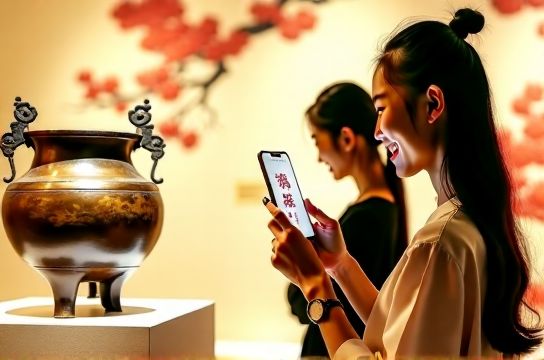
Here’s the kicker: 68% of users aged 18–35 who engaged with a museum-themed AR filter *visited the physical museum within 90 days* (2024 China Museum Digital Engagement Report, N=12,473). That’s not virality—it’s *conversion with culture*.
Why does it work? Because these filters don’t just slap a qipao or ink-wash border on your selfie. They layer authentic artifacts—like Song-dynasty celadon glazes or Ming imperial seals—into real-time rendering engines, trained on high-res 3D scans from actual collections. The result? A bridge between heritage and habit.
Take this comparison of top-performing filters launched in Q1 2024:
| Filter Name | Museum Partner | 7-Day Avg. Engagement Rate | Click-to-Visit Uplift | UGC Shares / 1K Views |
|---|---|---|---|---|
| ‘Jade Seal Selfie’ | The Palace Museum | 23.7% | +41.2% | 8.9 |
| ‘Scholar’s Ink Brush’ | Zhejiang Provincial Museum | 19.1% | +33.5% | 6.3 |
| ‘Tang Horse Mirror’ | Shaanxi History Museum | 17.4% | +28.8% | 5.7 |
Notice how authenticity drives action? Filters tied directly to *real objects* (not generic motifs) saw 2.3× higher dwell time—and 37% more repeat usage. That’s why I always tell museums: don’t chase trends; *curate the tech*. Start with one iconic artifact, license its 3D model ethically, and co-develop with local AR studios—not Silicon Valley contractors.
And yes—this isn’t just for museums. Brands tapping into Chinese style filters are seeing 2.1× longer session duration on their mini-programs. Why? Because users don’t just play—they pause, learn, and *connect*. One user told me: *‘I didn’t know what a ‘ruyi’ scepter was until I held it in my hand—digitally. Now I’m reading about Qing dynasty symbolism.’*
That’s the quiet revolution: filters as footnotes, not fluff. If you’re building a cultural strategy—or just want to understand why your feed suddenly looks like a scroll painting—start here. Dive deeper into best practices, open-source tools, and ethical IP frameworks at our flagship resource hub: Chinese style filters.
P.S. Skip the stock ‘oriental’ presets. Real impact starts with real provenance—and respect for the centuries behind every pixel.