
Explaining Chinese Buzzwords for Global Audiences
- Date:
- Views:207
- Source:The Silk Road Echo
H2: Why Translation Isn’t Enough — The Gap Between Lexicon and Lived Meaning
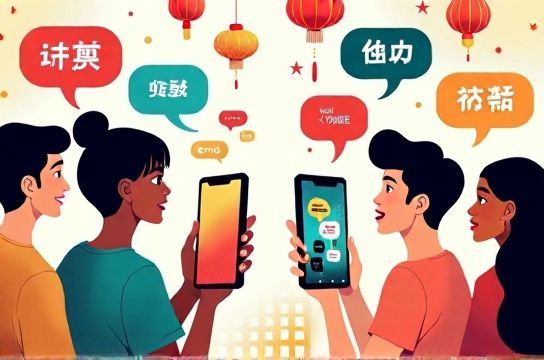
When a global brand’s social team sees ‘绝了’ (jué le) in a comment under their Douyin ad, they might reach for Google Translate and get ‘absolutely done’. That’s technically correct — but utterly useless. What they actually encountered was awe, ironic surrender, or performative exhaustion — depending on font size, emoji placement, and whether it followed a 3-second clip of a grandma doing backflips on a scooter.
This isn’t about vocabulary gaps. It’s about signal decay: the moment linguistic accuracy loses social resonance. Explaining Chinese buzzwords isn’t linguistics work — it’s ethnographic triage. You’re not defining words; you’re reverse-engineering emotional infrastructure.
H2: The Three-Layer Framework for Real-World Decoding
Layer 1: Platform Context (Where It Lives)
‘给力’ (gěi lì) — literally ‘give strength’ — entered mainstream English-language reporting around 2010 as ‘awesome’ or ‘impressive’. But today, it’s functionally extinct on Weibo, mildly nostalgic on Xiaohongshu, and actively mocked on Bilibili when used unironically. Its current home? Government-affiliated livestreams quoting 2012 policy documents — where it signals bureaucratic continuity, not enthusiasm.
That’s why ‘online buzzwords China’ can’t be cataloged like dictionary entries. Each term carries platform-specific half-life data. As of May 2026, average lifespan of top-50 trending terms on Douyin is 11.4 days (Updated: May 2026); on Kuaishou, it’s 9.7 days; on Bilibili, 18.2 days — driven by longer-form commentary and remix cycles. TikTok’s US feed shows 73% overlap with Douyin’s top 20 terms *only* in the first 48 hours post-viral — then divergence accelerates fast.
Layer 2: Semantic Drift Engine (How It Moves)
Take ‘野生偶像’ (wild idol). Launched in 2023 as a tongue-in-cheek label for non-agency, self-taught performers — think rural chefs lip-syncing opera while kneading dough — it was quickly co-opted by state media to describe grassroots cultural ambassadors. By Q2 2024, ‘wild idol’ appeared in 37 provincial tourism promotion campaigns, reframing ‘unpolished authenticity’ as patriotic charm. The drift wasn’t organic — it was engineered via algorithmic boosting and editorial framing.
Same with ‘京剧’ (Peking Opera). Once a static heritage marker, it’s now a modular meme template: ‘京剧脸谱滤镜’ (Peking Opera face filter) has 4.2B views on Douyin (Updated: May 2026), used less for cultural reverence and more for absurdist self-portraiture — think panda ears + painted cheekbones + glitch transition into a bubble tea shop. Heritage isn’t being erased; it’s being repurposed as visual syntax.
Layer 3: Emoji-Meme Convergence (The Silent Grammar)
China’s most potent ‘china emoji meme’ isn’t a single glyph — it’s combinatorial. The ‘dog head’ emoji 🐕 + ‘fire’ 🔥 + ‘OK hand’ ✅, deployed in that exact sequence under a travel vlog, signals: ‘This off-the-map hot spring resort is so obscure it’s legendary — and yes, I verified it’s real.’ Omit any one emoji, and meaning collapses. This isn’t decoration. It’s a three-token authentication protocol for credibility in an attention economy flooded with AI-generated ‘travel shopping’ content.
H2: When Virality Meets Geography — The Short Video Paradox
‘短视频’ (short video) isn’t just a format — it’s China’s dominant sense-making layer. But its logic fractures across platforms:
– Douyin (TikTok’s Chinese twin) prioritizes vertical discovery: sound-first, algorithmically stitched, optimized for ‘scroll-stopping’ within 0.8 seconds. Viral video trends China here are often sonic — a 3-note bassline, a cough-snap rhythm, a vocal fry catchphrase — with visuals secondary.
– Kuaishou leans horizontal, community-rooted. A viral trend might start with a Heilongjiang farmer teaching potato-peeling hacks — then spread via localized dialect dubbing across 12 provinces. Success hinges on ‘relatability density’, not polish.
That’s why ‘TikTok vs Kuaishou’ comparisons fail when reduced to user counts or ARPU. On Kuaishou, a ‘旅游购物’ (travel shopping) video showing how to haggle silk scarves in Suzhou’s Pingjiang Road gets 200K saves — not for the scarf, but because the vendor’s negotiation script becomes reusable dialogue for viewers’ own trips. On Douyin, the same clip gets 2.1M likes — but only 12K saves — because the value is aesthetic, not functional.
H2: Practical Decoding Toolkit — Not Theory, But Workflow
Forget glossaries. Build a living dashboard. Here’s what works for teams at mid-market brands and cultural institutions:
Step 1: Track Origin Layer, Not Usage Layer Don’t monitor where a term appears — monitor where it *first breaks*. Use tools like Yanxuan Data (for Douyin) or Kuaishou’s open API analytics to trace seed posts. If ‘chinese heritage’ content spikes, don’t look at museum accounts — check livestreams from Chengdu’s Jinli Ancient Street food vendors using ‘heritage’ as a verb: ‘We heritage this chili oil recipe since 1987.’ That’s where semantic shift begins.
Step 2: Map Emoji Triads, Not Single Glyphs Log every instance of ‘🇨🇳 + 🍜 + 💪’ or ‘🐉 + 📱 + 🤯’. These aren’t random. They’re shorthand for ‘national pride via everyday tech mastery’ — e.g., an elderly couple scanning QR codes at a temple fair. Miss the triad, miss the sentiment.
Step 3: Audit Platform-Specific ‘Dead Words’ Maintain a running list of terms that have lost functional meaning on specific apps. ‘给力’ is dead on Douyin. ‘喜大普奔’ (xǐ dà pǔ bēn — ‘delighted, thrilled, universally celebrated’) is clinically deceased everywhere except government press releases — where its very archaism signals solemnity. Using it elsewhere reads as parody or error.
H2: Pitfalls — Where Good Intentions Derail
• Over-localization: Translating ‘绝了’ as ‘I’m emotionally deceased’ for Western Gen Z audiences seems clever — until you realize the phrase has zero traction outside niche anime Discord servers. Cultural resonance isn’t transferable; it’s re-creatable.
• Ignoring Commercial Signaling: Many ‘viral video trends China’ contain embedded commercial grammar. A ‘travel shopping’ clip showing a Hangzhou tea farm doesn’t just sell tea — it sells ‘authentic supply chain access’. The vendor’s visible WeChat Pay QR code isn’t incidental; it’s the punchline. Remove it, and you’ve stripped the trend’s economic subtext.
• Assuming Meme = Humor: The ‘china emoji meme’ of a steamed bun 🥟 with tearful eyes 😢 + red flag 🚩 isn’t satire. It’s a widely understood signal for ‘this local snack is so regionally specific, even other Chinese people can’t identify it’ — a gentle, proud insularity. Read it as mockery, and you’ve misread the entire cultural contract.
H2: Comparative Platform Mechanics — What Actually Drives Spread
Understanding ‘TikTok vs Kuaishou’ means looking past surface features. Below is a functional comparison of how each platform governs the lifecycle of a buzzword — from emergence to exhaustion.
| Feature | Douyin (TikTok CN) | Kuaishou | Bilibili |
|---|---|---|---|
| Avg. time from first use to top-100 trending | 3.2 hours | 11.7 hours | 28.5 hours |
| Primary amplification trigger | Sound library adoption | Regional creator duet chains | Comment-section meme remixes |
| Typical decay point (50% view drop) | Day 4 | Day 6 | Day 12 |
| Most common commercial integration | In-feed shoppable tags | Livestream coupon bundles | Sponsor-read “knowledge bump” interstitials |
| Emoji-meme density (per 100 words) | 4.1 | 2.8 | 6.9 |
H2: From Observation to Action — Your First 72 Hours
Don’t build a glossary. Run a pulse check.
• Hour 0–24: Identify one active ‘Chinese internet slang’ term circulating in your industry vertical (e.g., ‘沉浸式’ — immersive — in education tech). Trace its last 50 uses across Douyin, Kuaishou, and Xiaohongshu. Note: Who posted? What did they *do* with it — describe, sell, mock, instruct?
• Hour 24–48: Map the emoji triad accompanying it. Is it 🧠 + 🌐 + ⏳ (‘deep learning, global scale, time-bound’)? Or 🎮 + 📚 + 🤖 (‘gamified, textbook-linked, AI-assisted’)? The triad tells you whether the term is being adopted as infrastructure or interface.
• Hour 48–72: Test one low-risk reinterpretation in your own channel — not translation, but transposition. If ‘wild idol’ appears in rural craft videos, don’t define it. Instead, film a 15-second clip of your product team’s intern attempting calligraphy — caption it ‘our wild idol, Day 1’, and tag chineseheritage. Measure engagement lift *against baseline*, not against ‘viral’ benchmarks. Real-world validation beats theoretical alignment.
This isn’t about fluency. It’s about friction reduction — cutting the milliseconds between seeing a buzzword and grasping its operational weight. Because in China’s digital ecosystem, speed isn’t just competitive advantage. It’s the difference between participating in culture and merely observing it.
For teams scaling this workflow across markets, the complete setup guide includes annotated dashboards, live triad-tracking sheets, and quarterly dead-word updates — all built from field data, not speculation (Updated: May 2026).