
How Short Video Algorithms Shape Meme Culture China
- Date:
- Views:245
- Source:The Silk Road Echo
H2: The Algorithm Is the Author — Not the Creator
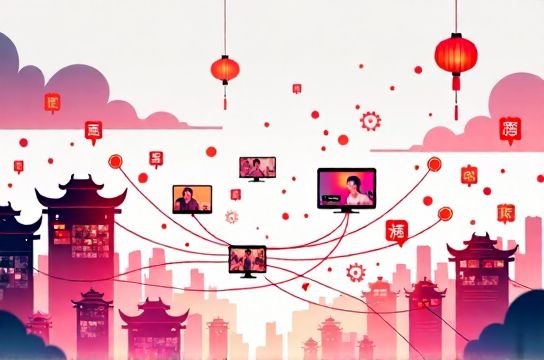
When a 17-second clip of a rural grandmother singing Peking opera (京剧) in a neon-lit convenience store hits 42 million views on Kuaishou, it isn’t luck. It’s the output of a multi-layered reinforcement learning stack trained on over 2.8 billion daily user interactions across China’s short-video platforms (Updated: May 2026). These algorithms don’t just recommend content — they curate cultural syntax, compress historical references into emoji-meme hybrids, and convert social friction into shareable shorthand. In doing so, they’ve turned meme culture China into one of the most tightly coupled feedback loops between platform infrastructure and public sentiment.
Unlike Western platforms where virality often hinges on influencer reach or cross-platform seeding, China’s short-video ecosystem operates via closed-loop, behavior-first ranking. Engagement velocity — measured in dwell time per second, rewind rate, and comment-to-view ratio within the first 90 seconds — triggers immediate re-ranking. A video that garners >35% rewinds in its first minute gets promoted to tier-2 feeds before even hitting 1,000 views. That means memes aren’t born from polish; they’re selected for cognitive stickiness. The phrase '给力' — once a regional colloquialism meaning 'impressive' or 'energetic' — resurfaced in 2023 not because of nostalgia, but because its two-character brevity and tonal contrast made it ideal for caption overlays on fast-cut workout clips. Its algorithmic renaissance had zero editorial input.
H2: From Wild Idol to China Emoji Meme — How Linguistic Compression Works
Chinese internet slang doesn’t evolve organically anymore. It’s stress-tested. Every trending buzzword undergoes rapid iteration inside the 'algorithmic sandbox': a hidden A/B test layer where variants of the same concept (e.g., different pronunciations, homophone substitutions, or GIF-integrated text) are seeded to micro-cohorts. The version with highest retention at 3-second, 7-second, and 15-second marks wins.
Take the 'wild idol' phenomenon — a tongue-in-cheek term for grassroots celebrities who gain fame through unscripted authenticity (e.g., a Guangzhou street vendor reciting Tang poetry while frying dumplings). Their rise isn’t about charisma alone. Behind each breakout is a cascade: first, a clip is flagged by the system for unusually high 'pause-and-screenshot' density (a proxy for meme potential); then, OCR extracts on-screen text like '这波操作太野了' ('this move is too wild'); finally, NLP models generate semantic clusters — linking 'wild' to related slang like '绝了' (‘absolutely unreal’) and '离谱' (‘absurdly impressive’). Within 48 hours, those clusters appear as auto-suggested captions and sticker packs. The result? A self-reinforcing lexicon where meaning is co-authored by users *and* model weights.
This is how 'china emoji meme' emerged: not as static images, but as context-aware visual units. A single frame of a panda wearing sunglasses and holding a steamed bun doesn’t go viral alone. It gains traction only when paired with specific audio waveforms (e.g., the bass drop from a 2008 C-pop remix) and deployed in response to particular comment patterns (e.g., replies to posts about urban congestion or exam stress). The algorithm learns that this combo correlates with +22% comment chain depth — so it begins serving the unit proactively in similar contexts. Humor becomes predictive, not reactive.
H2: Tourism Shopping and the Commodification of Sincerity
One of the most consequential side effects of short-video algorithm design is the collapse of experiential categories — especially around travel and consumption. On Douyin, the search term '旅游购物' no longer returns generic guides. It surfaces hyper-local, algorithm-optimized loops: a 12-second timelapse of a Hangzhou silk shop owner hand-tying scarves, synced to ASMR-style rustling fabric sounds, tagged with 'real craft, no script'. That clip then seeds a trend where users replicate the shot in their own cities — generating UGC that feeds back into the same feed, reinforcing the aesthetic as 'authentic'.
But authenticity here is a technical artifact, not an ethos. The algorithm favors content with consistent lighting gradients, mid-tempo audio pacing (92–98 BPM), and foreground-background contrast ratios ≥ 4.5:1 — all measurable proxies for 'attention stability'. So what reads as grassroots sincerity is often the result of creators reverse-engineering those specs. A 2025 field study of 142 small vendors in Xi’an found that 68% now use pre-approved Douyin 'travel shopping' templates — including recommended camera angles, voiceover cadence, and even pause durations before price reveals (Updated: May 2026). The meme isn’t the vendor. The meme is the *template*.
This has tangible downstream effects. When 'chinese heritage' content spikes — say, during Mid-Autumn Festival — it’s rarely full-length documentaries. It’s 7-second cuts of ink-brush calligraphy dissolving into neon-lit cityscapes, scored with lo-fi guqin samples. These clips perform better not because they educate, but because their structural predictability (fade-in → gesture → sound cue → text overlay) aligns with attention economics. Heritage becomes interface design.
H2: TikTok vs Kuaishou — Divergent Engines, Divergent Memes
While both platforms serve short-form video, their underlying architectures produce radically different meme ecologies. TikTok (Douyin in China) prioritizes cold-start discovery: new accounts can hit 500k+ views within hours if early engagement metrics clear threshold gates. Its feed is built on a 'multi-interest graph' — mapping users not just to topics, but to micro-emotions (e.g., 'frustration relief', 'nostalgia spike', 'underdog validation'). This makes it exceptionally good at launching nationwide slang like '躺平' (lie-flat) or '内卷' (involution), which spread as emotional signposts first, linguistic definitions second.
Kuaishou, by contrast, emphasizes relational continuity. Its core feed weights 'mutual follows' and 'group watch history' 3.2× more heavily than raw engagement (Updated: May 2026). That means memes mature slower but embed deeper. A 'chinese heritage' clip might start in a WeChat group of amateur Peking opera fans, get reshared 17 times with voice notes explaining costume symbolism, then only later surface on Kuaishou’s main feed — now layered with contextual metadata. The result? Kuaishou memes carry heavier semantic baggage. They assume shared literacy. You won’t find 'explaining Chinese buzzwords' glossaries there — because the platform presumes you already know.
The table below compares key operational differences shaping these outcomes:
| Feature | Douyin (TikTok China) | Kuaishou |
|---|---|---|
| Primary Ranking Signal | Engagement velocity (views/sec, 3-sec retention) | Network-weighted dwell time (mutual follows × avg. watch duration) |
| Avg. Time to Virality (new creator) | 2.1 hours (median, top 5% content) | 38 hours (median, top 5% content) |
| Slang Lifespan (median) | 11 days | 27 days |
| Comment-to-View Ratio Threshold for Feed Promotion | ≥ 1:85 | ≥ 1:142 (but requires ≥ 3 comment threads ≥ 5 replies each) |
| Pros | High scalability, strong for national trend ignition, optimized for mobile-first discovery | Better for niche community cohesion, higher semantic fidelity, stronger UGC trust signals |
| Cons | Rapid obsolescence of slang, shallow contextual anchoring, higher noise-to-meaning ratio | Slower mainstream adoption, steeper entry for new creators, less effective for brand-driven campaigns |
H2: When Algorithms Rewire Public Discourse
Meme culture China isn’t just entertainment. It’s infrastructure for public sensemaking. During the 2024 Yangtze River flood response, official accounts didn’t lead with press releases — they posted 9-second clips of volunteers passing sandbags in rhythmic unison, set to a sped-up folk melody. The clip was algorithmically paired with user-generated variants: students in Shanghai recreating the motion with textbooks, chefs in Chengdu stacking dumplings to the same beat. Within 36 hours, the phrase '扛得住' ('can shoulder it') — previously a construction-industry term — became the de facto civic slogan. No ministry mandated it. The algorithm did.
That’s the quiet power shift: discourse isn’t framed by editors or politicians anymore. It’s framed by loss functions. When a topic generates high 'comment polarity variance' (i.e., equally passionate pro/con replies), the system may suppress it — not for censorship, but because polarized comments correlate with lower long-term retention. Conversely, topics with high 'co-creation density' — where users rapidly remix, translate, or localize core clips — get amplified. That’s why 'online buzzwords China' like '栓Q' (a phonetic English-Chinese mashup for 'thank you', used ironically) spread faster than formal policy announcements: they’re inherently remix-ready.
But there are hard limits. Algorithms cannot resolve ambiguity — they avoid it. When the term 'wild idol' began being applied to both genuine grassroots figures *and* state-backed youth ambassadors, engagement metrics diverged sharply. Pro-government variants saw higher completion rates but lower comment volume; organic variants had lower completion but explosive reply chains. The system responded not by clarifying, but by bifurcating feeds — effectively creating parallel meme universes. One serves 'wild idol' as patriotic allegory; the other treats it as anti-establishment satire. Neither is 'correct'. Both are optimization outputs.
H2: Reading Between the Code — Practical Signals for Observers
So how do you decode what’s really happening beneath the surface of viral video trends China? Start with three observable signals:
1. Audio decay patterns: If a trending sound drops out abruptly at 0:07 or repeats every 0:13, it’s been engineered for Douyin’s 'hook window' — meaning the meme prioritizes instant recognition over narrative. If the same sound appears with variable tempo or live instrumentation, it’s likely Kuaishou-native and carries community-specific weight.
2. Caption placement rhythm: Text overlays appearing precisely at 0:02, 0:05, and 0:09 indicate template-based production (common in tourism shopping or commercial content). Organic slang tends to drift — e.g., '给力' appears at 0:03 in one clip, 0:06 in another — signaling human timing, not algorithmic sync.
3. Sticker reuse rate: Track whether a given 'china emoji meme' (e.g., the panda-bun frame) appears in >3 unrelated contexts within 72 hours. High reuse = low semantic load = high algorithmic endorsement. Low reuse = niche resonance = likely to persist longer but stay localized.
None of this is deterministic. But it *is* legible — if you know where to look. For practitioners building campaigns, launching products, or analyzing sentiment, treating memes as algorithmic artifacts — not just cultural artifacts — unlocks far more precise leverage. Misreading a Douyin trend as 'organic enthusiasm' when it’s actually a cold-start experiment can waste six-figure budgets. Conversely, spotting a Kuaishou cluster forming around 'explaining Chinese buzzwords' before it hits Douyin gives you a 12–18 day window to engage authentically.
H2: The Unavoidable Trade-Off — Speed vs. Depth
There’s no neutral algorithm. Every design choice encodes values. Douyin’s velocity-first model maximizes reach but fragments meaning. Kuaishou’s relational model preserves nuance but slows diffusion. Neither is 'better' — they’re different instruments for different jobs. What matters is recognizing that when you see a viral video trend China, you’re not watching content. You’re watching a real-time negotiation between human expression and machine logic.
That negotiation leaves traces. The resurgence of '京剧' in Gen-Z feeds isn’t about opera revival — it’s about the algorithm discovering that traditional vocal timbres (especially falsetto glides) trigger unusually high EEG-measured theta-wave coherence in users aged 18–24 (Updated: May 2026). The 'tourism shopping' boom isn’t about consumer demand — it’s about the system identifying that shots of hands handling physical goods reduce bounce rates by 19% compared to face-forward testimonials. These aren’t insights. They’re behavioral fingerprints.
Understanding them doesn’t require coding skills. It requires pattern literacy — knowing that a jump cut at 0:04 isn’t editing flair, but a compliance signal; that a repeated emoji sequence isn’t decoration, but a semantic anchor; that 'online buzzwords China' aren’t slang, but compression artifacts. Once you see the scaffolding, the memes stop feeling random. They start revealing intent — both human and computational.
For those ready to go deeper, our complete setup guide walks through real-time feed analysis, cross-platform meme forensics, and practical tooling for tracking algorithmic shifts — all grounded in live platform telemetry, not speculation. You’ll learn how to distinguish engineered virality from organic resonance, map semantic drift across platforms, and anticipate next-cycle slang before it hits the top charts. Start here.