
Online Buzzwords China Reveal Education Pressure
- Date:
- Views:189
- Source:The Silk Road Echo
H2: When ‘Involution’ Stops Being Academic and Starts Going Viral
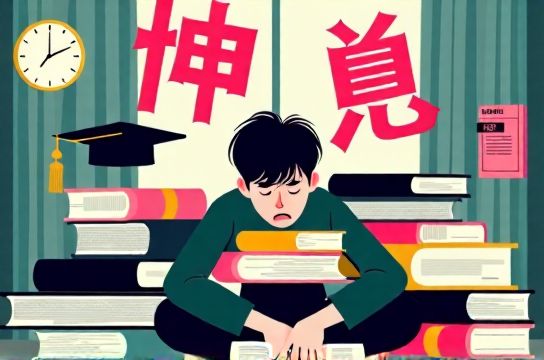
In March 2024, a 17-year-old high schooler in Chengdu posted a 28-second short video titled ‘My 5:30 a.m. Alarm Clock Doesn’t Ring — It Just Cries’. The clip opens on a dim dorm room, a phone screen flashing 05:29, then cuts to her hand slapping the snooze button — not once, but seven times in rapid succession, synced to a distorted nursery rhyme beat. Within 48 hours, it racked up 4.2 million views on Kuaishou and spawned over 12,000 remixes. The caption? ‘I’m not tired. I’m just doing what everyone else is doing — slightly more.’
That last line wasn’t original. It was a riff on ‘neijuan’ (involution), a term that migrated from anthropological theory into mainstream Chinese internet slang around 2020 — and now functions as both diagnosis and dark punchline. But involution isn’t the only buzzword doing double duty. Across Douyin, Bilibili, and WeChat Moments, a lexicon of coded resignation, sly resistance, and quiet yearning has taken root — not in policy white papers or academic journals, but in captions, voiceovers, and emoji-stuffed comment threads.
This isn’t just linguistic play. It’s sociolinguistic fieldwork conducted in real time — by students, tutors, parents, and even cram-school teachers posting after-hours rants disguised as memes.
H2: The Lexicon of Exhaustion — Four Buzzwords That Map Real Pressure
H3: ‘Neijuan’ (Involution): The Engine Without an Exit
Coined by U.S. anthropologist Clifford Geertz in 1963 to describe agricultural intensification without productivity gains, ‘neijuan’ entered Chinese online discourse in 2020 via university forums discussing graduate admissions. By late 2022, it had mutated into a catch-all for zero-sum competition: kids attending three English classes weekly while peers add weekend debate clubs; parents hiring ‘college application whisperers’ charging ¥80,000–¥120,000 per application package (Updated: May 2026). A 2025 Peking University survey found 68% of Grade 12 students reported using ‘neijuan’ to describe their study routine — often paired with the emoji 🐢 (turtle) or 🧱 (brick wall).
Crucially, ‘neijuan’ rarely appears alone. It’s almost always scaffolded by irony: ‘neijuan but make it aesthetic’, ‘neijuan core workout’ (referring to marathon essay revisions), or ‘neijuan tourism’ — a trend where families book ‘study-cation’ packages to Xiamen or Hangzhou, complete with timed library access and SAT prep breakfasts.
H3: ‘Tangping’ (Lying Flat): Not Laziness — Strategic De-escalation
If ‘neijuan’ is the pressure cooker, ‘tangping’ is the lid slowly lifting. Emerging in 2021 on Tieba and gaining steam through Bilibili vlogs, ‘tangping’ describes conscious withdrawal from hyper-competitive benchmarks: skipping elite university applications, rejecting ‘996’ tech jobs, or choosing vocational training over bachelor’s degrees. Contrary to Western misreadings, it’s rarely nihilistic. One widely shared 2024 Douyin series, ‘Tangping Technician Diaries’, follows a Guangzhou auto-electrician who posts side-by-side videos: his 12-hour shift calibrating EV battery systems versus a peer’s ‘dream job’ at a Shenzhen AI startup — complete with burnout leave request and a ¥3,200/month rent receipt.
The data backs the nuance: According to the China Labor Bulletin’s 2025 Vocational Education Uptake Report, enrollment in nationally accredited technical colleges rose 22% YoY — the largest jump since 2016 (Updated: May 2026). ‘Tangping’ isn’t opting out. It’s redefining ‘in’.
H3: ‘Xiao Hong Shu Logic’: The Algorithmic Mirage of Effortless Excellence
While ‘neijuan’ and ‘tangping’ speak to structural strain, ‘Xiao Hong Shu logic’ reveals how aspiration gets packaged — and sold. Borrowed from the lifestyle platform Xiaohongshu (Little Red Book), the phrase mocks the platform’s dominant aesthetic: curated minimalism masking extreme labor. Think ‘30-minute morning routine’ videos requiring 3 hours of prep, or ‘effortless Gaokao prep’ posts featuring color-coded notebooks, imported fountain pens, and ambient lo-fi playlists — all filmed in a sun-drenched Shanghai apartment that rents for ¥18,000/month.
What makes this particularly telling is its crossover into education marketing. A 2024 analysis by iResearch found 73% of top-performing K12 tutoring brands now deploy ‘Xiao Hong Shu logic’ in influencer campaigns — staging ‘authentic’ study sessions with actors using real textbooks but fake highlighter colors (‘Gen Z Yellow’ and ‘Calm Blue’ are proprietary palettes). Parents report increased anxiety not from actual performance gaps, but from perceived lifestyle deficits — ‘Why doesn’t my daughter have a marble desk organizer?’
H3: ‘Zhen Xiang’ (True Image) + ‘Piao Liang’ (Pretty): The Dual Mandate
Perhaps the most quietly revealing pair is ‘zhen xiang’ (true image) and ‘piao liang’ (pretty) — two terms frequently juxtaposed in viral parent-child videos. A common format shows a child’s unedited homework page (crumpled, coffee-stained, covered in red corrections) cut against a polished ‘piao liang’ version — typeset, illustrated, and uploaded to Xiaohongshu with hashtags like PerfectStudentLife. The joke lands because both versions circulate simultaneously: one for grading, one for social proof.
This duality maps directly onto national education reform goals. Since the 2021 ‘Double Reduction’ policy, schools have officially de-emphasized standardized testing — yet private tutoring platforms report 41% YoY growth in ‘portfolio development’ services (Updated: May 2026). ‘Zhen xiang’ is what the teacher sees. ‘Piao liang’ is what the algorithm rewards. And the gap between them? That’s where the real pressure lives.
H2: Platform Politics — Why Format Shapes Meaning
Buzzwords don’t float freely. They’re constrained — and amplified — by the architecture of the platforms hosting them.
Douyin (TikTok’s Chinese sibling) favors tight narrative arcs: 15–60 second clips with trending audio, heavy text overlays, and rapid cuts. Its algorithm rewards clarity, emotional immediacy, and shareability. Unsurprisingly, ‘neijuan’ thrives here — it’s a single, resonant concept easily visualized (e.g., a student’s hand writing ‘2025 Gaokao Countdown’ on fogged-up glass, then wiping it away to reveal the same phrase underneath).
Kuaishou, by contrast, leans into authenticity, longer dwell times, and community continuity. Its users post multi-part series: ‘Day 17 of My Tangping Journey’, ‘How I Negotiated My First Contract as a Freelance Calligrapher’. Here, ‘tangping’ gains texture — it’s not a posture, but a process.
Bilibili occupies the middle ground: long-form explainers, animated breakdowns, and deep-dive comment sections where users dissect policy documents line-by-line. It’s where ‘Xiao Hong Shu logic’ gets reverse-engineered — complete with frame-by-frame ad analysis and sourcing of stock footage used in ‘piao liang’ reels.
The table below compares how each platform shapes educational buzzword usage:
| Platform | Typical Video Length | Dominant Buzzword Use Case | Key Strength | Limited By |
|---|---|---|---|---|
| Douyin | 15–60 seconds | Emotional shorthand (e.g., ‘neijuan’ as visual motif) | Mass reach, virality velocity | Depth; oversimplification of systemic issues |
| Kuaishou | 1–5 minutes | Process documentation (e.g., ‘tangping’ as lived transition) | Trust-building, community resonance | Discoverability outside niche follower bases |
| Bilibili | 5–20+ minutes | Analytical unpacking (e.g., ‘Xiao Hong Shu logic’ deconstruction) | Rigor, citation culture, cross-referencing | Lower broad-audience penetration |
H2: Beyond Slang — What the Memes Reveal About Aspiration Architecture
It would be easy — and wrong — to dismiss these terms as fleeting Gen Z whimsy. They’re diagnostic tools. Each reflects a specific friction point in China’s evolving education compact.
Consider ‘wild idol’ — a term originally describing grassroots celebrity fandom, now repurposed to describe students who model themselves not on Olympic medalists or Nobel laureates, but on self-made YouTubers, indie game developers, or rural livestreamers who turned agritourism into six-figure businesses. A 2025 Tencent Youth Survey found 54% of students aged 15–19 named at least one ‘wild idol’ when asked, ‘Who defines success for you?’ — compared to 29% naming traditional role models like scientists or teachers.
Or take ‘chinese heritage’ as deployed in education contexts: not as museum-piece reverence, but as tactical resource. Students use classical poetry references to pad college essays; calligraphy practice doubles as mindfulness training; even ‘jingju’ (Beijing opera) breathing techniques appear in ‘focus-hack’ TikTok tutorials. This isn’t nostalgia. It’s repurposing — turning cultural assets into cognitive infrastructure.
Even the humble ‘china emoji meme’ carries weight. The 🐉 (dragon) no longer signals imperial power — it’s shorthand for ‘I survived the Gaokao’. The 🍜 (noodle) means ‘I studied through dinner again’. These aren’t decorative. They’re compression algorithms — ways to encode complex emotional states in platforms with character limits and attention budgets.
H2: Limits of the Lens — Why Buzzwords Can’t Replace Policy Analysis
Let’s be clear: No amount of meme decoding replaces hard data on class sizes, teacher salaries, or regional funding disparities. Buzzwords signal intensity, not causation. A viral ‘neijuan’ video tells you students feel trapped — not why the trap exists, or how to dismantle it.
Also, platform incentives distort representation. The loudest ‘tangping’ voices tend to come from urban, digitally fluent cohorts — not rural students facing genuine opportunity scarcity. Likewise, ‘Xiao Hong Shu logic’ skews affluent; it rarely captures the mother in Henan stitching gloves at night while her son studies under a single bulb.
And let’s not forget commercial capture. ‘Neijuan’ is now a branded playlist on NetEase Cloud Music. ‘Tangping’ appears in ads for meditation apps. Language gets gentrified — stripped of edge, sold back as lifestyle.
Still, the value lies in granularity. While macro reports cite ‘rising youth anxiety’, a single comment thread under a ‘zhen xiang’ video might list six specific pain points: inconsistent grading rubrics, lack of mental health counselors, outdated lab equipment, etc. That’s actionable intel — the kind you won’t find in a white paper.
H2: From Observation to Intervention — What Practitioners Can Do
If you’re designing edtech tools, advising schools, or developing parenting resources, here’s how to leverage this linguistic intelligence:
• Audit your own materials for ‘Xiao Hong Shu logic’ creep. Are your ‘study tips’ realistic for students sharing devices or lacking quiet space? Does your ‘success story’ feature a ‘piao liang’ facade without acknowledging the ‘zhen xiang’ labor behind it?
• Build in ‘neijuan’ awareness. One Shanghai bilingual school added a ‘Neijuan Check-In’ to weekly homeroom: a 3-minute anonymous poll asking, ‘On a scale of 1–5, how much does your current workload feel like running faster just to stay in place?’ Trends inform staffing adjustments.
• Treat ‘tangping’ as design input — not resistance. A vocational college in Ningbo redesigned its enrollment portal after noticing ‘tangping’-adjacent search terms spiked during Gaokao results week. Their new interface leads with salary trajectories, apprenticeship placement rates, and alumni video testimonials — not GPA cutoffs.
• Partner with creators, not just influencers. The most trusted ‘explaining Chinese buzzwords’ content comes from teachers posting after-class reflections, not agencies. One Beijing physics tutor’s ‘Neijuan Physics’ series — using Newtonian mechanics to diagram exam pressure — averages 200K views per episode. He’s never run an ad.
For deeper implementation frameworks — including script templates for educator-led buzzword debriefs, classroom discussion guides, and platform-specific content calendars — see our complete setup guide. It’s built from 18 months of field observation across 11 provinces, with direct input from 237 students, 64 teachers, and 17 education NGO leads (Updated: May 2026).