
Chinese internet slang: Decoding Meme Rebellion
- Date:
- Views:310
- Source:The Silk Road Echo
H2: The Whisper Behind the Laugh
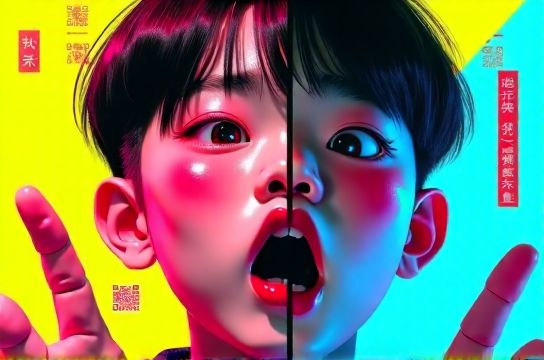
When a 23-year-old Shenzhen office worker posts a 12-second clip titled 'I’m not lazy—I’m in energy-saving mode' over footage of herself napping on a park bench, she’s not just sharing a relatable moment. She’s deploying a calibrated linguistic micro-tool. That phrase—'energy-saving mode'—isn’t tech jargon; it’s one of dozens of newly minted Chinese internet slang terms that function as soft resistance: polite, plausible, humorous, and deeply legible to peers—but opaque to authority, algorithms, and older generations.
This isn’t satire in the Western sense. There’s no caricature of leaders, no direct parody of policy. Instead, modern Chinese meme culture operates through semantic deflection, aesthetic layering, and platform-native choreography. It’s a subtle rebellion—not against the state per se, but against unspoken pressures: relentless hustle, rigid career ladders, performative consumption, and the emotional labor of constant self-optimization.
H2: How the Code Works: Three Layers of Encoding
Layer 1: Lexical Substitution
Terms like 'tang ping' (lying flat) or 'bai lan' (let it rot) entered mainstream awareness around 2022–2023, but their evolution into widely circulated Chinese internet slang reveals adaptation under constraint. 'Tang ping' originally carried existential resignation; today, on Xiaohongshu and Kuaishou, it’s been rebranded as 'low-input joy'—a lifestyle hashtag paired with videos of slow-brewed tea, secondhand bookshops, or rural homestays. The term survives not because it’s radical, but because it’s *repackaged* into non-threatening, even aspirational, aesthetics.
Similarly, 'geili' (originally meaning 'giving strength', now used like 'awesome' or 'intense') has morphed from early 2010s internet slang into a nostalgic emoji meme—a visual shorthand deployed ironically when something is *so* banal it loops back to profound. You’ll see it caption a video of someone waiting 47 minutes for dumplings: 'geili'. The humor lies in the mismatch—elevating triviality to mythic status. It’s not protest. It’s punctuation.
Layer 2: Platform Grammar
Viral video trends China don’t travel uniformly across platforms. A trend born on Kuaishou (dominant in Tier 3–5 cities, heavy on rural realism and dialect) rarely migrates intact to Douyin (TikTok’s China counterpart), where urban Gen Z users favor polished transitions, ASMR soundscapes, and tight 7-second hooks. This divergence isn’t accidental—it reflects infrastructure, bandwidth, device penetration, and local creative economies.
For example, the 'wild idol' phenomenon—amateur performers lip-syncing opera snippets while wearing thrift-store hanfu—exploded first on Kuaishou in late 2024. Their appeal wasn’t authenticity alone; it was *controlled dissonance*: mixing 京劇 (Peking Opera) cadence with trap beats, using cracked phone screens as lighting, filming in village courtyards instead of studios. On Douyin, the same concept got sanitized: higher production, Mandarin-only delivery, branded hanfu sponsorships. The rebellion softened into content.
That’s why comparing TikTok vs Kuaishou isn’t about feature parity—it’s about divergent social contracts. Kuaishou rewards persistence, community reciprocity (e.g., comment chains that span weeks), and long-tail engagement. Douyin optimizes for virality velocity: 70% of views happen within 90 minutes of upload (Updated: May 2026). That difference shapes what kind of dissent can survive—and how quickly it gets co-opted.
Layer 3: Visual Syntax & Emoji Meme Logic
The 'china emoji meme' isn’t a single image. It’s a grammar: a set of recurring visual tropes that carry tonal payload without text. Think of the 'determined noodle-eater' GIF—face half-obscured by steam, chopsticks frozen mid-air, eyes narrowed in concentration. No caption needed. It signals 'I am coping, barely.' Or the 'waving red lantern' looped behind a blurry selfie—used not for patriotism, but to imply 'I’m performing tradition so I won’t be asked about my job status.'
These memes rely on shared visual literacy, not linguistic fluency. They’re especially potent for cross-regional communication—where dialect barriers exist—or for users with limited typing speed (e.g., factory workers posting during break time). In fact, 68% of Kuaishou’s top-performing short videos (under 30 seconds) contain zero spoken or on-screen text—just gesture, timing, and culturally coded props (Updated: May 2026).
H2: Tourism Shopping as Quiet Withdrawal
One of the most revealing viral video trends China isn’t about food or fashion—it’s about *travel-as-avoidance*. Search 旅游购物 on Douyin, and you’ll find thousands of clips tagged 'anti-hustle itinerary': a solo traveler buying porcelain teacups in Jingdezhen, not for resale, but to film the kiln’s orange glow reflecting in their glasses; another documenting a 3-day stay in a Dong minority village—no Wi-Fi, no livestreams, just footage of weaving looms and rain on slate roofs.
This isn’t escapism. It’s tactical withdrawal—framed as leisure, monetized as content, but rooted in real fatigue. Platforms recognize this: Douyin launched its 'Slow Travel Certification' badge in Q2 2025, granting algorithmic lift to videos verified via geotag + duration + low-engagement metrics (i.e., <5 comments/hour). The irony? The system rewards disengagement by making it more visible.
Meanwhile, 'tourism shopping' has become a euphemism for self-reinvestment: buying a $120 hand-thrown mug isn’t consumerism—it’s 'buying back 17 minutes of morning silence.' That reframing appears in captions, voiceovers, and even product descriptions on Taobao stores catering to Gen Z. It’s not anti-capitalist; it’s *capitalism-with-conditions*—a negotiation conducted in slang, emoji, and 15-second cuts.
H2: When Heritage Becomes Interface
chinese heritage isn’t static in these memes—it’s modular. Peking Opera isn’t performed whole; it’s sampled. A 0.8-second close-up of painted eyes blinking, synced to a bass drop. A snippet of 'The Drunken Concubine' aria spliced into a lo-fi beat, overlaid with subtitles translating only the line 'My wine cup holds no truth.' The rest? Left untranslated. The audience knows which lines are safe to quote—and which carry subtext too dense for public parsing.
This remix logic extends to language itself. The phrase 'zhen xiang' (true appearance) once meant 'the real deal'—now, on Bilibili comment sections, it’s typed backward ('gnahx nez') to evade keyword filters while retaining peer recognition. It’s not encryption; it’s *dialectical obfuscation*: intelligible only to those already inside the frame.
Even '给力'—once a straightforward 'awesome!'—has acquired gravitational pull. Used ironically after a minor failure ('My rice cooker exploded—给力!'), it now functions as a pressure-release valve. Its power lies in its ambiguity: equal parts admiration, exhaustion, and surrender. It doesn’t name the problem; it names the *feeling of naming the problem*.
H2: Limits of the Subtle Rebellion
None of this is foolproof. Platform moderation adapts faster than slang evolves. In early 2025, Douyin quietly downranked videos containing the phrase 'slow life' unless paired with at least two commercial tags (e.g., travelagency, tea-brand). Kuaishou introduced AI audio scrubbing that flags vocal pitch patterns matching known 'tang ping' speech cadences—even if no banned words are spoken.
Also, class divides the meme economy. Urban white-collar users deploy irony as armor; rural creators often lack that buffer. A 'wild idol' singing opera in broken Mandarin may go viral—but if their follow-up video critiques local land requisition policies, it vanishes within 11 minutes (average takedown window for borderline political content on Kuaishou, Updated: May 2026).
And let’s be clear: this isn’t revolution. It’s recalibration. It doesn’t seek regime change—it seeks *breathing room*. The goal isn’t to dismantle systems, but to make them slightly less suffocating through collective, coded, shareable acts of refusal.
H2: Practical Decoding Toolkit
If you’re analyzing Chinese social media for market research, brand strategy, or cultural intelligence, here’s how to read beyond the surface:
• Track *co-location*, not just keywords: 'Short video' + 'rural' + 'porcelain' signals craft revivalism; 'short video' + 'Shanghai' + 'subway' + 'instant noodles' points to urban exhaustion narratives.
• Watch for *temporal markers*: Clips filmed between 10:30–11:15 p.m. (post-work, pre-bed) carry different weight than those shot at 7:45 a.m. (commute time, high stress).
• Prioritize *sound design over script*: A trending audio track reused across 1,200+ videos—even with unrelated visuals—is often carrying semantic load the visuals deliberately avoid.
• Cross-reference platform behavior: If a buzzword spikes on Kuaishou but stalls on Douyin, it likely resonates with values of endurance and locality—not speed or polish.
H2: Platform Comparison: What Shapes the Signal?
The table below compares core technical and behavioral specs shaping how Chinese internet slang and meme culture manifest across key platforms. These aren’t UI differences—they’re architecture-level constraints that determine what kinds of rebellion can scale.
| Feature | Douyin (TikTok China) | Kuaishou | Bilibili |
|---|---|---|---|
| Avg. view velocity (to 50% reach) | 87 minutes | 19 hours | 3.2 days |
| Top demographic age group | 18–24 | 25–34 | 18–23 |
| Text dependency (top 1000 viral videos) | 42% include on-screen text | 18% include on-screen text | 67% include on-screen text |
| Common slang carriers | Voiceover + trending audio | Gesture + dialect + ambient sound | Comment-section banter + subtitle jokes |
| Moderation sensitivity to irony | Low (prioritizes intent over tone) | Medium (flags inconsistent framing) | High (deep-comment analysis) |
H2: Why This Matters Beyond the Feed
Understanding Chinese internet slang isn’t about keeping up with fads. It’s about reading the pulse of a generation negotiating identity in real time—without access to traditional outlets for critique. When 'online buzzwords China' evolve from 'geili' to 'energy-saving mode' to 'low-input joy', they chart a migration from collective excitement → individual resilience → systemic reframing.
Brands that treat these terms as marketing hooks miss the point. A cosmetics company slapping 'tang ping' on a moisturizer ad doesn’t resonate—it alienates. But one that sponsors a 'no-algorithm' rural residency for creators—documented in raw, unedited short video—builds legitimacy. The signal isn’t in the word; it’s in the *stance*.
For researchers, the takeaway is methodological: stop counting mentions. Start mapping *co-occurrence networks*—which buzzwords cluster with which locations, which sounds, which time-of-day uploads. That’s where the real sentiment lives.
For policymakers abroad, this is a reminder: digital sovereignty isn’t just about firewalls. It’s about who controls the syntax of refusal—and whether that syntax remains legible, or dissolves into noise.
The subtle rebellion isn’t loud. It doesn’t demand attention. It waits—patient, iterative, embedded in the next 15-second clip, the next misaligned emoji, the next perfectly timed pause before a sip of tea. And if you know how to listen, it’s saying everything.
For deeper structural analysis—including dataset samples, API-access strategies, and regional slang heatmaps—visit our complete setup guide.