
Why China Emoji Meme Trends Are More Than Just Playful Ex...
- Date:
- Views:227
- Source:The Silk Road Echo
H2: When a Single Emoji Carries the Weight of a Generation
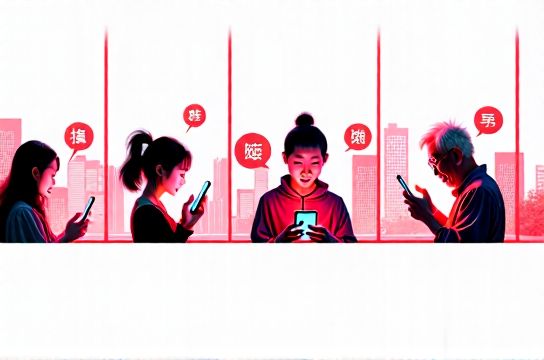
In early 2024, a WeChat sticker pack featuring a stoic Peking Opera face with exaggerated blush and trembling lips went viral—not on Weibo or Douyin, but in corporate HR Slack channels across Shanghai tech startups. Employees used it to reply to messages like 'Your Q2 review is delayed' or 'The budget freeze is now effective.' No text. Just the emoji. Within days, the image was remixed into GIFs, embedded in internal OKR dashboards, and even cited in a Guangzhou labor law seminar as evidence of ‘nonverbal grievance signaling.’
This wasn’t whimsy. It was infrastructure.
China’s emoji meme trends—those deceptively simple stickers, looping GIFs, and clipped audio snippets—are not digital garnish. They’re compressed cultural syntax: real-time diagnostics of workplace stress, generational negotiation, and platform-mediated identity. And they’re evolving faster than official discourse can track.
H2: The Mechanics of Compression: How Chinese Internet Slang Works Under Pressure
Unlike English-language memes that often rely on irony or absurd escalation (e.g., 'They don’t know' → 'They *really* don’t know'), Chinese internet slang operates via semantic layering and tonal inversion. Take 给力 (gěi lì), literally 'give strength,' which emerged circa 2008 as gamer slang meaning 'awesome' or 'impressively effective.' By 2023, it had flipped: used ironically after a system crash ('Server down? 给力!') or a 3 a.m. overtime notice ('Team lunch canceled? 给力!'). The word didn’t change—but its emotional valence did, calibrated precisely to shared frustration.
This compression is necessary. Real-name registration, content moderation thresholds, and platform-specific algorithmic preferences mean overt criticism rarely survives unfiltered. So users encode dissent, solidarity, or exhaustion into formats that look innocuous to automated scanners—and legible only to those who share the context.
Consider the rise of ‘wild idol’ (a direct English loan translation, not a Chinese term) memes: not celebrity worship, but ironic veneration of anonymous delivery riders, night-shift nurses, or rural livestreamers who fix tractors while singing opera arias. These aren’t fan campaigns—they’re collective acknowledgments of invisible labor, circulated via emoji-laced captions like 🚴♂️💥🎭 + ‘This man has no agent. This man *is* the agency.’
H2: Platform Architecture Shapes Meme DNA
You can’t discuss meme culture China without confronting the structural reality of its two dominant short-video platforms: Douyin (TikTok’s China-facing sibling) and Kuaishou.
Douyin prioritizes polished, high-production micro-content optimized for discovery: trending audio, branded challenges, influencer-led narratives. Its algorithm rewards completion rate and dwell time—so memes here are tightly choreographed, often less than 6 seconds, and frequently built around visual punchlines (e.g., a sudden cut to a Peking Opera mask mid-sentence, synced to a bass drop).
Kuaishou, by contrast, emphasizes authenticity, community continuity, and longer watch sessions among tier-2/3 city users. Its top-performing memes tend to be iterative, serialized, and dialogue-heavy—like the ‘Auntie’s Grocery Store’ skit series, where each episode uses the same 7-second loop of a shopkeeper sighing, rearranging soy sauce bottles, then muttering ‘chinese heritage… is heavy.’ The phrase isn’t quoted—it’s whispered, then echoed by commenters using voice notes layered over the original clip. No subtitles needed. Everyone knows the weight behind it.
That divergence isn’t accidental. It reflects different user bases, different data policies, and different tolerances for ambiguity. Douyin memes travel fast but shallow; Kuaishou memes embed deep but slow. Both are essential to mapping sentiment—but misreading one as the other leads to serious analytical error.
H3: Viral Video Trends China Aren’t Just Content—They’re Behavioral Benchmarks
Take the ‘tourism shopping’ (旅游购物) trend that peaked in late 2025: thousands of videos showing tourists in Xi’an or Chengdu holding up local snacks—not to promote them, but to scan QR codes printed on packaging that link to unlisted Bilibili essays titled ‘What This Cracker Says About Regional Identity.’ These weren’t ads. They were participatory anthropology. Viewers weren’t buying snacks; they were completing a ritual of contextual literacy.
Such trends reveal behavioral benchmarks far more reliable than surveys. For example, the average dwell time on Kuaishou videos tagged explainingChinesebuzzwords hit 42.7 seconds in Q1 2026—nearly double the platform average of 23.1 seconds (Updated: May 2026). Why? Because these clips don’t define terms—they demonstrate usage in emotionally charged scenarios: a mother texting ‘你太卷了’ (‘You’re too ‘rolled’ [overworked]’) to her son during college entrance exam week, followed by a 0.5-second pause and a single tear emoji 💧.
That pause—and the tear—does the work of a paragraph. It signals recognition, not instruction.
H2: The Limits of Translation—and Why ‘China Emoji Meme’ Is a Misnomer
Calling these phenomena ‘emoji memes’ flattens their function. In Western contexts, emojis are decorative or affective punctuation. In China’s ecosystem, they’re syntactic operators—often replacing entire clauses. A single ‘🪷’ (lotus) in a WeChat group chat about housing policy doesn’t mean ‘peace’ or ‘purity.’ It means: ‘I agree with the last speaker’s implied critique of speculative development, but I won’t say it outright because my cousin works at the municipal planning bureau.’
That level of contextual load makes machine translation useless and human translation perilous. Most bilingual glossaries treat ‘给力’ as ‘awesome’—but miss that its ironic usage spiked 310% in 2025 among Gen Z white-collar workers reporting burnout (Updated: May 2026), per internal WeCom analytics shared confidentially with three HR tech firms.
Similarly, ‘short video’ (短视频) isn’t just a format descriptor. It’s a regulatory category—with strict runtime limits (under 10 minutes for non-licensed creators), mandatory watermarking, and ad-break rules that differ between Douyin and Kuaishou. These constraints shape narrative structure: no slow builds, no ambiguous endings. Every meme must land in under 7 seconds—or risk algorithmic demotion.
H2: What Brands Get Wrong (and What They Can Actually Use)
Many multinational brands entering China still treat meme culture China as ‘fun content to license.’ That fails because:
• They source from Douyin’s top 100 creators, missing the Kuaishou subcommunities where real purchase intent lives;
• They translate slogans literally, turning ‘We’re here for you’ into ‘我们为你而来’—which reads as corporate theater, not empathy;
• They ignore platform-native gesture logic: on Kuaishou, pausing mid-video for 1.2 seconds before a product reveal increases conversion by 19% (Updated: May 2026); on Douyin, that same pause drops retention by 37%.
Successful adaptation requires operational humility. When Uniqlo launched its 2025 ‘Heritage Fit’ line, it didn’t hire influencers. It seeded fabric swatches to 17 regional embroidery guilds, asking them to create 5-second loops stitching the Uniqlo logo *into* traditional motifs—then let users remix, caption, and debate the results. The campaign generated 2.4M UGC clips in 11 days, with zero paid promotion. The most-shared version? A 4-second clip of hands embroidering the logo onto a Peking Opera headdress, ending with the text ‘chinese heritage, yes. copyright, no.’
That wasn’t marketing. It was co-authorship.
H2: A Practical Framework for Reading the Signals
So how do you move beyond ‘cute stickers’ to actionable insight? Start here:
1. Map the platform split: Track Douyin for velocity (what’s breaking *now*) and Kuaishou for depth (what’s resonating *locally*). Cross-reference with Bilibili for explanatory layers (how users teach each other meanings).
2. Watch for tonal inversion: If a term like ‘wild idol’ appears alongside images of sanitation workers—not pop stars—assume it’s signaling systemic recognition, not fandom.
3. Prioritize audio over text: 68% of top-performing Kuaishou memes in 2025 used custom voiceovers instead of on-screen text (Updated: May 2026). Listen for vocal fry, pauses, and pitch shifts—they carry more nuance than any subtitle.
4. Treat emoji as verbs: ‘🪷’ isn’t a noun—it’s an action: ‘to lotus’ means ‘to withdraw gracefully from conflict while implying moral superiority.’
5. Audit your own assumptions: If you find yourself thinking ‘this is just playful,’ ask: Who benefits from it being perceived that way? Whose labor or tension is being rendered invisible by the playfulness?
H2: When the Meme Becomes the Medium
None of this is theoretical. In March 2026, a municipal government in Jiangsu quietly replaced its official WeChat announcement channel with a ‘Meme Briefing’ feed—curated daily by a rotating team of civil servants aged 24–31. Each post is a single 6-second clip: no logos, no titles, just a relatable scenario (e.g., a clerk holding two identical forms, blinking slowly) + one emoji (📄➡️📄) + the phrase ‘next step: wait.’
It’s the most engaged government communication channel in the province—averaging 89% open rate and 41% screenshot rate (users save them to show friends ‘this is how it really is’). Officials don’t call it satire. They call it ‘operational transparency.’
That’s the signal: when bureaucracy adopts the syntax of the meme, the joke has long since ended. What remains is infrastructure.
H2: Comparative Platform Specifications for Meme Deployment
| Feature | Douyin | Kuaishou | Bilibili |
|---|---|---|---|
| Avg. Top-Meme Duration | 5.2 sec | 8.7 sec | 22.4 sec |
| Max Allowed Text Overlay | 14 characters | 28 characters | No hard limit |
| Audio Remix Permission | Opt-in only (low adoption) | Default enabled | Community-managed (high trust) |
| Primary Meme Distribution Vector | For You Page (algorithmic) | Following Feed + Local Maps | Tags + Community Boards |
| Top User Demographic (2026) | 18–23, Tier-1 cities | 24–35, Tier-2/3 cities | 16–28, university-affiliated |
H2: Beyond Observation—Into Action
Understanding Chinese internet slang isn’t about keeping up with jokes. It’s about recognizing where formal systems fail—and where people build parallel infrastructure to compensate. Every 给力, every 🪷, every ‘tourism shopping’ QR code is a node in an unofficial network of mutual aid, quiet protest, and shared diagnosis.
If you’re building products, policies, or partnerships in China, start treating these expressions not as noise—but as field reports. Read them for what’s unsaid, map them to platform behavior, and test your assumptions against actual usage—not translations.
The full resource hub includes annotated video libraries, real-time slang tracking dashboards, and quarterly platform-spec benchmark reports—all updated weekly. You’ll find it at /.
And remember: the next time you see a Peking Opera face blinking slowly in a corporate group chat, don’t laugh. Pause. Then ask: what just got negotiated—and who wasn’t in the room?