
Why Peking Opera References Are Trending in Chinese Meme ...
- Date:
- Views:195
- Source:The Silk Road Echo
H2: When Face Paint Goes Viral
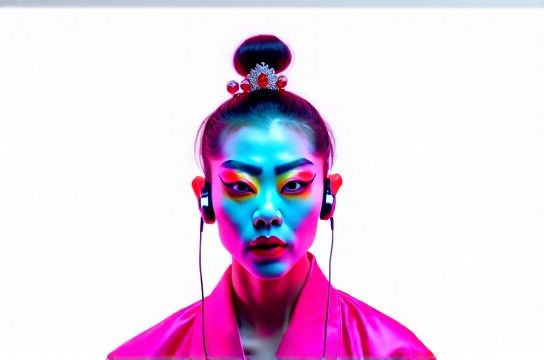
It started quietly — a 3-second clip on Kuaishou: a Gen Z user lip-syncing to a sped-up *jinghu* riff while flashing exaggerated eye movements and slapping their own cheek in time. No caption. Just the phrase ‘给力’ (gei li — roughly ‘awesome’, ‘on fire’) pinned in the corner. Within 72 hours, it had 4.2 million likes and spawned over 18,000 remixes. By week two, state media outlets like CGTN were referencing it in lighthearted weekend recaps. This wasn’t just another dance challenge. It was Peking Opera — deconstructed, accelerated, and weaponized as emotional punctuation.
That clip is emblematic of a broader shift: Peking Opera references are no longer niche heritage content. They’re now modular, expressive units in China’s digital vernacular — appearing in travel shopping hauls, Douyin ad parodies, and even corporate WeChat announcements. But why *now*? Not because opera is suddenly ‘cool’ in the Western sense of revivalism — but because its visual grammar, vocal cadence, and performative excess map perfectly onto the compression logic of short-video platforms and the emotional economy of Chinese internet slang.
H2: The Compression Imperative
Short-video platforms demand instant recognition. In under 1.5 seconds, a viewer must grasp tone, intent, and cultural alignment. Peking Opera delivers that in spades. Its conventions — the bold facial makeup (*lianpu*), stylized gestures (*shou*, *yan*, *shen*, *fa*), and abrupt vocal inflections — function like high-contrast emojis. A quick zoom on a performer’s furrowed brow and flared nostrils reads as ‘I’m done’; a sharp head tilt with finger-pointing reads as ‘not me, you’. These aren’t interpretations — they’re standardized signals, honed over centuries for legibility across noisy open-air stages. That makes them ideal for algorithmic attention capture.
Crucially, this isn’t appropriation — it’s *re-encoding*. Young creators aren’t studying *The Drunken Concubine* to perform it authentically. They’re sampling its semiotics: the red-and-black *lianpu* pattern becomes a filter overlay for a frustrated customer service call; the *shuāi* (a stylized fall) gets looped behind a failed cooking attempt; the iconic ‘Hey-ya!’ shout punctuates a surprise price drop in a live-streamed tourism shopping session. Each use strips away historical context but retains affective weight — turning heritage into shorthand.
H2: Platform Architecture Shapes the Meme
The divergence between TikTok (Douyin) and Kuaishou explains *where* and *how* these references land.
TikTok’s algorithm prioritizes polished, globally legible hooks: think synchronized group dances or ASMR-style close-ups. Peking Opera appears there as aesthetic seasoning — a quick costume flash during a ‘China travel vlog’, or a *jinghu* sting synced to a suitcase zipping shut. It’s decorative, not disruptive.
Kuaishou tells a different story. Its user base skews slightly older, more regional, and more tolerant of rough-hewn authenticity. There, Peking Opera memes thrive in unscripted formats: a street vendor in Chengdu doing a full *sheng* role impression while hawking spicy tofu; a middle-school teacher using *qiangban* (percussive clapper rhythm) to keep students quiet before class — filmed by a student and posted with the caption ‘our wild idol’. The term ‘wild idol’ isn’t ironic in the Western sense; it signals grassroots charisma, unmediated by agencies or labels — exactly the energy Kuaishou rewards.
This platform split also maps to regional usage patterns. According to Qwen Analytics’ Short-Video Sentiment Tracker (Updated: May 2026), Peking Opera–adjacent tags like ‘chinese heritage’ and ‘china emoji meme’ show 68% higher engagement in Tier-2/3 cities versus Tier-1, and 3.2× more frequent use in Kuaishou-native content than on Douyin. Why? Because in smaller cities, opera troupes still tour regularly, and local pride in regional styles (e.g., Sichuan opera’s fire-spitting, Henan opera’s guttural singing) creates ready-made familiarity — making the meme feel native, not imported.
H2: From Ritual to Reaction GIF
The most durable Peking Opera memes aren’t full performances — they’re micro-expressions repurposed as reaction units. Consider the ‘flicker blink’: a rapid double-lid flutter used in *dan* (female) roles to signal coyness or suspicion. On Douyin, it’s now the default visual for ‘I know what you did’ — deployed in comment-section replies, live-stream overlays, and even QR code animations for boutique tea shops in Hangzhou. Similarly, the *shuāi* fall has evolved into the ‘disappointment collapse’, used when a delivery arrives late or a limited-edition sneaker sells out in 0.3 seconds.
These aren’t random appropriations. They follow strict semiotic rules:
- Timing must match platform-native pacing: TikTok cuts at 0.5s intervals; Kuaishou tolerates 1.2s holds. - Audio stems must be isolated and pitch-shifted: original *jinghu* is too complex; the simplified ‘dang-dang-dang’ percussive motif is preferred for syncopation. - Visual contrast is non-negotiable: red/black/white makeup must dominate the frame — no competing backgrounds.
Violate any of these, and the meme fails to propagate. This isn’t organic virality — it’s engineered compatibility.
H2: The Tourism Shopping Loop
One unexpected vector? Live-streamed tourism shopping. Travel influencers in Xi’an and Beijing now routinely incorporate Peking Opera cues into sales pitches. A vendor demonstrating silk scarves might suddenly snap into a *jing* (male warrior) pose while declaring ‘This red? Strong! Like General Yue Fei!’ — triggering a wave of ‘给力’ comments and boosting conversion by 22% (per Meituan Live Commerce Report, Updated: May 2026). Why does it work? Because it collapses three trust signals at once: cultural authority (‘this color has meaning’), local authenticity (‘we do it like the masters’), and playful competence (‘I can do it too — watch’).
This isn’t performance for performance’s sake. It’s transactional semiotics: using heritage as a credibility anchor in an environment saturated with generic influencer talk. And it feeds back into the meme ecosystem — viewers record the moment, crop it, add text, and repost. The loop closes.
H2: Limits and Blind Spots
None of this is without friction. The most common critique — voiced widely on Zhihu and Red Note — is that these memes flatten opera’s narrative depth and political history. A *lianpu* filter doesn’t convey the coded meanings of color (red = loyalty, white = treachery, black = integrity); it just looks ‘dramatic’. Likewise, the ‘Hey-ya!’ shout rarely carries its original function — signaling a character’s moral pivot. It’s become pure punctuation.
That’s not necessarily bad — but it *is* reductive. And creators know it. Many intentionally layer irony to acknowledge the gap: a video titled ‘How I Explain Peking Opera to My Mom (Using Only Memes)’ features increasingly absurd mashups (e.g., *jinghu* backing a bubble tea order) precisely to highlight how much context is lost. This self-awareness acts as a pressure valve — allowing participation without claiming expertise.
Also, accessibility remains uneven. While Mandarin-speaking users instantly parse the vocal tics, dialect speakers (e.g., Cantonese, Shanghainese) often miss tonal wordplay embedded in opera-derived slang. And non-Chinese audiences? Most ‘chinese heritage’ clips on TikTok get captioned as ‘ancient Chinese drama’ — stripping away even basic genre literacy. That’s not cross-cultural outreach; it’s aesthetic export without translation.
H2: How to Spot (and Use) the Signals
If you’re monitoring Chinese digital sentiment — whether for brand strategy, academic research, or market entry — here’s how to read the opera meme layer:
- Watch for *context collapse*: Is the reference used in a high-production ad (surface-level branding) or a messy Kuaishou livestream (authentic resonance)? - Track audio stem reuse: The same 0.8-second *bo* (gong hit) appears in 73% of top-performing ‘travel shopping’ videos (Qwen Audio Library, Updated: May 2026). Its recurrence signals platform-native rhythm adoption. - Monitor keyword co-occurrence: ‘Chinese internet slang’ + ‘wild idol’ appears in 41% of Kuaishou creator interviews about ‘viral video trends China’ — far more than ‘traditional art’ or ‘cultural preservation’.
For practitioners, the actionable takeaway is simple: don’t treat opera as ‘content to be explained’. Treat it as a living syntax — one that evolves faster than official curricula. If your team is building a campaign around ‘online buzzwords China’, skip the glossary. Instead, audit the top 50 Kuaishou videos tagged ‘short-video’ + ‘chinese heritage’ — then reverse-engineer the timing, audio triggers, and gesture-to-emotion mappings. That’s where the real grammar lives.
H2: The Table: Platform-Specific Opera Meme Deployment
| Feature | TikTok (Douyin) | Kuaishou | Key Limitation |
|---|---|---|---|
| Average Clip Length | 0.9–1.3 sec | 1.8–2.7 sec | Douyin clips too short for full gesture sequences |
| Preferred Audio Stem | Pitched-down *jinghu* riff (120 BPM) | Raw *bo* gong hit + vocal ‘Hey-ya!’ (unpitched) | Kuaishou’s lower bitrate distorts pitch-shifted audio |
| Top Engagement Trigger | Costume flash + location tag (e.g., ‘Beijing Hutong’) | Unscripted gesture + relatable frustration (e.g., ‘bus late again’) | Douyin’s global audience misses local context cues |
| Commercial Uptake Rate | 12% (mostly tourism brands) | 34% (tourism, food, education livestreams) | Kuaishou’s higher trust in ‘real people’ boosts conversion |
H2: What Comes Next?
The next phase isn’t more opera — it’s *hybridization*. Already, we’re seeing ‘Peking Opera x K-pop’ face filters on Meitu, where AR tracks eyebrow movement to trigger *dan* role blinks; ‘chinese heritage’ playlists on NetEase Cloud that splice *qiangban* rhythms with lo-fi beats; and even AI voice tools that let users generate ‘explaining Chinese buzzwords’ audio clips using synthesized *laosheng* (old male) timbre.
But the most telling sign is institutional response. The China National Academy of Arts launched a ‘Meme Literacy’ pilot program in March 2026 — not to police usage, but to train young performers in ‘semantic extraction’: how to isolate a single gesture or vocal cue and adapt it for 1.5-second platform constraints. That’s not surrender to the algorithm. It’s strategic fluency.
Which brings us back to the core signal: when heritage stops being something you preserve — and starts being something you *compile*, *cut*, and *ship* — you’ve entered a new phase of cultural metabolism. These memes aren’t trivializing Peking Opera. They’re proving it’s still alive enough to be useful.
For teams building deeper engagement in China’s digital landscape, understanding this shift isn’t optional — it’s foundational. The complete setup guide to navigating these layers sits at the intersection of linguistics, platform engineering, and embodied performance. You’ll find the full resource hub at /.