
Why '996' Still Haunts China’s Tech Workers—Even in Jokes
- Date:
- Views:308
- Source:The Silk Road Echo
If you've ever laughed at a meme about coding till dawn or eating instant noodles at 2 a.m., you're not alone. But behind the humor lies a harsh truth: the '996' work culture—9 a.m. to 9 p.m., 6 days a week—is still deeply embedded in China’s tech industry, despite widespread backlash.
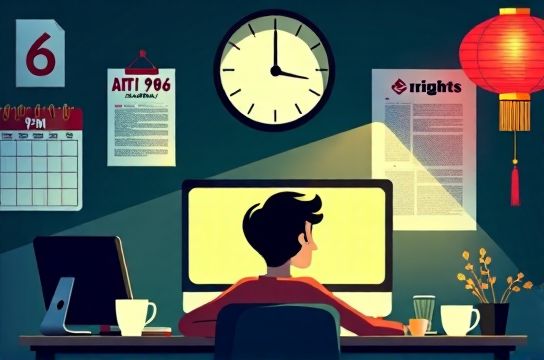
Originating in startups and fueled by hyper-competitive giants like Alibaba and Tencent, '996' was once glorified as a badge of honor. Jack Ma called it "a huge blessing." But over time, workers pushed back. In 2019, the 996.ICU GitHub repo went viral, warning: "If you work 996, you’ll end up in the ICU." Since then, legal actions, public outcry, and burnout have forced some change—but not nearly enough.
So why does '996' persist? Let’s break it down with real data.
The Reality Behind the Memes
A 2023 survey by Zhaopin revealed that 62% of tech employees in Beijing and Shenzhen still work over 60 hours weekly. Meanwhile, official stats from China’s Ministry of Human Resources show only 18% of companies comply fully with labor laws on working hours.
Here’s a snapshot of average weekly hours across major Chinese tech hubs:
| City | Avg. Weekly Hours | Overtime Rate (%) | Employee Satisfaction |
|---|---|---|---|
| Beijing | 58 | 65% | 5.8/10 |
| Shenzhen | 61 | 70% | 5.4/10 |
| Hangzhou | 56 | 60% | 6.0/10 |
| Shanghai | 55 | 58% | 6.1/10 |
Despite court rulings declaring '996' illegal, enforcement is weak. Many workers fear retaliation for speaking up. A Peking University study found that 74% of employees who refused overtime faced demotions or pay cuts.
Culture, Competition, and Silent Acceptance
The issue isn’t just policy—it’s mindset. In a performance-driven ecosystem, long hours are often equated with loyalty. Managers may not explicitly mandate '996', but expectations linger through peer pressure and promotion bias.
And let’s be real: job insecurity plays a role. With youth unemployment hovering around 14.2% (Q2 2023), many choose endurance over exit.
What’s Changing?
Some companies are shifting. ByteDance tested a 4-day workweek in 2022. Huawei introduced flexible clocking for R&D teams. Yet these remain exceptions.
The rise of remote work post-pandemic hasn’t helped much—many now work longer from home without boundaries.
Final Thoughts
'996' lives on—not in boardroom policies, but in workplace culture. It hides in Slack messages at midnight, in unspoken rules, and yes, in memes that laugh because crying hurts too much.
Real change needs stronger enforcement, cultural shifts, and worker solidarity. Until then, the joke’s on the workers.