
Neijuan Nation: Why Chinese Youth Are Trapped in Self-Eating Competition
- Date:
- Views:448
- Source:The Silk Road Echo
Ever heard of 'neijuan'? It’s not a new fitness trend or a viral TikTok dance. It’s the quiet, grinding burnout sweeping through China’s youth like wildfire. Picture this: you're running on a treadmill—fast, furious, sweating buckets—but going absolutely nowhere. That’s neijuan in a nutshell: intense competition that leads to zero real progress.
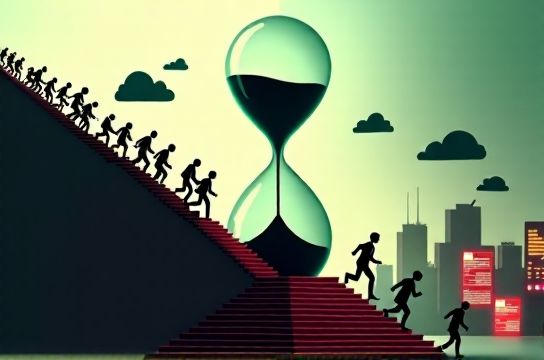
The term, literally meaning 'involution,' has exploded across Chinese social media. From college students pulling all-nighters for grades that don’t matter, to white-collar workers answering emails at midnight just to look busy, neijuan is the invisible force draining ambition and turning effort into emptiness.
Let’s break it down with some hard facts:
Neijuan by the Numbers
| Statistic | Data | Source |
|---|---|---|
| Youth unemployment (ages 16–24) | 21.3% (peak in 2023) | National Bureau of Statistics |
| Avg. workweek for tech employees | 54–60 hours | China Labor Watch |
| Students studying over 10 hrs/day | ~38% (in top high schools) | Peking University Survey |
| Workers fearing job loss without overtime | 67% | Zhihu Poll, 2023 |
Yikes. These aren’t just numbers—they’re lives stuck in overdrive. The education system kicks it off early. Imagine spending 12 years racing toward the Gaokao, China’s brutal college entrance exam, only to land a degree in a saturated job market where a master’s is now the new bachelor’s.
And it doesn’t stop there. In offices, 'performance theater' reigns. Employees stay late not because they’re working, but because leaving first looks bad. One WeChat post went viral: 'I finished my tasks by 6 PM, but I can’t leave until my boss does.' Sound familiar?
So why does neijuan persist? Two words: scarcity and pressure. With limited top-tier jobs, elite schools, and housing in mega-cities, everyone’s fighting for the same shrinking pie. Add sky-high parental expectations and a cultural emphasis on face-saving, and you’ve got a pressure cooker.
But here’s the twist: neijuan isn’t laziness. It’s over-efforting. It’s students memorizing formulas they’ll never use. It’s professionals replying to emails at 2 AM to prove loyalty. It’s energy wasted on appearances, not outcomes.
The good news? Awareness is growing. Terms like 'tang ping' (lying flat) and 'jiti baba' (collective burnout) are pushing back. Some young people are opting out—choosing simpler lives, lower pay, but more peace. And reforms? Slow, but happening. Pilot programs reducing homework loads and companies experimenting with 4-day weeks hint at change.
In the end, beating neijuan isn’t about working harder—it’s about working smarter and valuing well-being over endless grind. Because no one should win the race just to realize they were on a broken treadmill.