
Hotpot of Humor: How Chinese Netizens Cook Up Creative Online Expressions
- Date:
- Views:277
- Source:The Silk Road Echo
Let’s face it—scrolling through Chinese social media sometimes feels like cracking a secret code. One minute someone’s calling you a ‘shrimp’ (not exactly a compliment, right?), the next they’re saying they’ve been ‘lying flat’ all day. Welcome to the wild, wacky world of China’s internet slang—where humor simmers like a spicy Sichuan hotpot and language gets remixed faster than a viral TikTok dance.
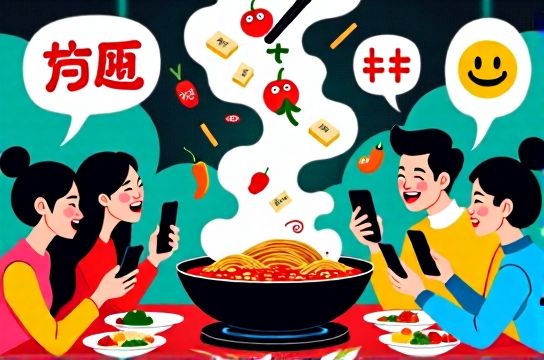
Chinese netizens aren’t just typing—they’re cooking up linguistic feasts. Forget formal grammar; here, creativity reigns supreme. Take the term “neijuan” (内卷), literally meaning 'involution.' Originally an academic concept, it’s now slang for that exhausting rat race where everyone’s working harder but going nowhere. Imagine studying until 2 a.m. only to find your classmate pulled an all-nighter *again*. That’s neijuan—a burnout anthem wrapped in one snappy syllable.
Then there’s “tang ping” (躺平), or 'lying flat.' It’s the Gen Z rebellion against hustle culture. Instead of grinding 9-to-9 jobs, people are choosing chill mode. No promotions? No problem. Just lie down, sip bubble tea, and let the chaos swirl. It’s less laziness, more low-key protest—and honestly, kind of refreshing.
But the real magic? Wordplay. Chinese characters are like LEGO blocks—you can stack them into endless combos. Homophones rule the game. For example, “886” means “bye-bye, later!” because the numbers sound like “ba-ba-liu” in Mandarin. Cute, right? Or how about “xíng guāng” (星光), which means 'starlight,' but also sounds like “Starbucks.” So when someone says “I’m drinking starlight,” they might actually be sipping a latte, not stargazing.
Emojis? Pfft. Here, netizens use whole phrases as punchlines. “I’m a little shrimp” (我是一只小虾米) is humble bragging at its finest—calling yourself tiny but tough. Meanwhile, “true love” (真香) started as sarcasm from a reality show when a guy refused food… then devoured it. Now it’s used whenever someone backtracks in the funniest way possible.
And let’s not forget the memes. From angry cats with bold captions to ancient poetry turned roast battles, Chinese meme culture blends tradition with trolling. A single phrase dropped in a Weibo comment can spark days of remixes, debates, and inside jokes only the online in-crowd gets.
So why does this matter? Because this digital dialect isn’t just cute—it’s powerful. It builds community, dodges censorship (sometimes), and gives young people a voice when real-world expression is tight. It’s language evolving at internet speed, shaped by millions of thumbs tapping screens late at night.
In short, the Chinese internet isn’t just talking—it’s performing stand-up comedy, one clever character at a time. So next time you see a confusing post, don’t panic. Just grab a seat, add some spice, and enjoy the hotpot of humor bubbling online.