
Meme Warfare: How Chinese Netizens Use Humor to Navigate Social Pressure
- Date:
- Views:318
- Source:The Silk Road Echo
Let’s be real for a second—life in modern China can feel like being stuck in a pressure cooker. Between sky-high housing prices, the endless grind of 9-to-9 work culture (yeah, that’s 12-hour days, six days a week), and the not-so-subtle family hints about when you’re finally getting married, it’s enough to make anyone want to scream into a pillow. But here’s the twist: instead of breaking down, millions of Chinese netizens are hitting back—with memes. Yep, that’s right. A well-timed frog sticker, a sarcastic image of a sleepy cat, or a viral video of someone dramatically sighing while eating instant noodles can say more than any political speech ever could.
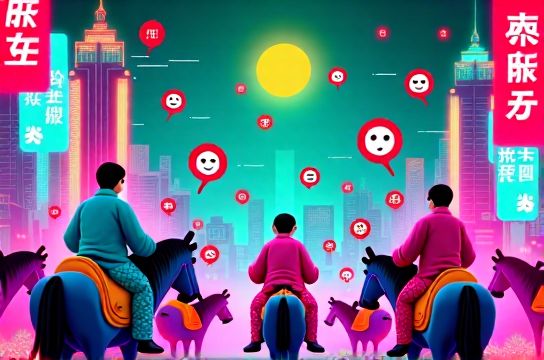
Welcome to the world of meme warfare, where humor isn’t just entertainment—it’s survival.
Now, if you’ve ever scrolled through Weibo, Douyin (China’s TikTok), or even private WeChat groups, you’ve probably seen them: absurd, surreal, and sometimes deeply relatable images and videos that somehow capture the mood of an entire generation. These aren’t just random jokes—they’re social commentary wrapped in irony, served with a side of absurdity. And they’re everywhere.
Take the whole 'tang ping' thing—translated as 'lying flat.' It started as a quiet rebellion against hustle culture. Instead of chasing promotions, buying luxury goods, or trying to keep up with society’s expectations, young people said, 'Nah, I’ll just… lie down.' Not literally, of course (well, sometimes literally). But the idea was to opt out of the rat race. And how did this movement spread? Through memes. Picture this: a cartoon guy lying on a bed made of clouds, captioned 'I contribute nothing, yet I am at peace.' Or a photo of a half-eaten bowl of ramen with the words 'My dreams taste like MSG.' It’s funny, sure, but also painfully true for a lot of people.
Then there’s 'neijuan,' or 'involution'—basically, when everyone works harder and harder just to stay in the same place. Imagine studying 16 hours a day only to get the same job as someone who studied 8. It’s exhausting, and honestly, kind of ridiculous. So what do people do? They meme it to death. You’ll see fake university posters saying 'Master’s in Overworking' or parody apps like 'Sleep Deficiency Simulator.' The humor softens the blow, but it also calls out the system in a way that feels safe—because hey, it’s just a joke, right?
But here’s the thing: these memes aren’t just coping mechanisms. They’re a form of resistance. In a country where direct criticism of authority can be risky, sarcasm and satire become powerful tools. You can’t arrest a sad frog with big eyes and a tiny hat—well, technically you could, but it would look really bad. So netizens use animals, cartoons, and absurd metaphors to talk about things they can’t say outright.
Like the famous 'Grass Mud Horse' phenomenon from years ago—a pun that sounds like a curse word but translates to 'grass mud horse' (which doesn’t exist). It became a symbol of online defiance, spawning songs, animations, and merchandise. It was silly, yes, but also brilliant. By wrapping dissent in nonsense, people found a way to speak up without crossing red lines.
Fast forward to today, and the game has evolved. Now, it’s less about coded language and more about emotional resonance. Memes express burnout, loneliness, financial stress, and the general feeling of being lost in a rapidly changing society. A popular meme format shows a person staring blankly at their phone with the caption: 'I didn’t skip class, I didn’t stay up late, I didn’t play games… so why am I still failing life?' It’s not political—it’s personal. But when millions share it, it becomes political anyway.
And let’s talk about the aesthetics. Chinese internet humor has its own vibe—low-fi, slightly chaotic, often using pixelated images or poorly edited videos. It’s not polished like Western memes; it’s raw. There’s a charm in that imperfection. It feels real, like something your friend sent at 2 a.m. when they couldn’t sleep again.
Platforms like Bilibili have become meme incubators, where users remix old TV clips, dub speeches with ridiculous voices, or animate historical figures complaining about modern rent prices. One viral video showed Confucius opening a LinkedIn profile and getting zero connection requests. Another had Chairman Mao giving a TED Talk titled 'How to Stay Relevant After 100 Years.' It’s absurd, yes—but it also reflects a desire to question tradition, hierarchy, and the unspoken rules everyone’s supposed to follow.
Even brands have caught on. Some companies now use meme language in ads, pretending to understand the struggle. A beverage brand once released a campaign with the slogan: 'Drink alone, cry quietly, but keep going.' It wasn’t selling soda—it was selling solidarity. And it worked, because people felt seen.
But of course, it’s not all fun and games. The government hasn’t stayed silent. Over the years, there have been crackdowns on 'negative energy' online. Certain meme formats get banned, hashtags disappear, and influencers get warnings. Yet the memes adapt. When one joke dies, ten more pop up. It’s like a digital version of whack-a-mole—except the moles are armed with irony.
And that’s the beauty of it. As long as there’s pressure, there will be pushback—and humor is the easiest, safest weapon. You don’t need a megaphone or a protest sign. All you need is a phone, Wi-Fi, and the ability to laugh at how messed up everything is.
So next time you see a Chinese netizen posting a picture of a duck wearing sunglasses with the caption 'I’m not stressed, I’m just horizontally rested,' don’t just scroll past. Recognize it for what it is: a tiny act of rebellion, a shared moment of understanding, and maybe, just maybe, the beginning of change.
Because sometimes, the loudest statements come not from slogans or speeches—but from a perfectly timed meme.