
From 'Lying Flat' to 'Involution': Decoding China's Internet Slang in 2024
- Date:
- Views:454
- Source:The Silk Road Echo
So, you’ve been scrolling through Chinese social media lately and suddenly see terms like ‘tang ping’ (lying flat), ‘neijuan’ (involution), or maybe even ‘daziwo’ (beat your own drum)? And you’re sitting there like… wait, what does any of this actually mean? Don’t worry — you’re not alone. Even native speakers sometimes scratch their heads at the wild new slang popping up every few months. But here’s the tea: these aren’t just random buzzwords. They’re actually a mirror reflecting how young people in China are feeling about life, work, and society in 2024. So let’s break it down — no textbook jargon, just real talk.
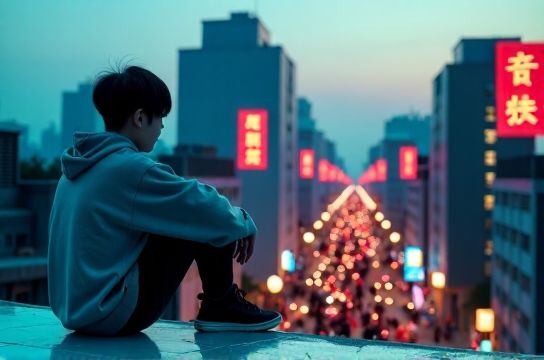
First up: ‘Lying flat’ — or as we say in Mandarin, ‘tang ping.’ This whole vibe started blowing up around 2021, but it’s still very much alive in 2024. Imagine this: you’ve been grinding non-stop since college, pulling all-nighters, surviving on instant noodles, and chasing that dream job… only to realize the dream kinda sucks. Long hours, zero work-life balance, and your boss still doesn’t respect you. So what do you do? You lie down. Literally and metaphorically. You stop trying so hard. You reject the rat race. That’s ‘lying flat’ in a nutshell.
It’s not about being lazy — well, not exactly. It’s more like a quiet protest. A way of saying, ‘I’m opting out of this endless competition because it’s exhausting and honestly, not worth it.’ People who ‘lie flat’ might choose part-time jobs, live with their parents, or just chill while doing freelance gigs online. The goal? Peace. Mental health. Not burning out by 30.
But then comes the flip side: ‘neijuan,’ which literally means ‘involution.’ Sounds academic, right? But in internet slang, it’s used to describe that insane level of over-competition where everyone’s working harder and harder… for basically no extra reward. Picture this: one person stays late at the office. Then everyone else feels they have to stay later too. Soon, the whole team is pulling 12-hour days just to look busy — even though nothing’s getting done faster. That’s neijuan. It’s like running on a treadmill that keeps speeding up, but you’re going nowhere.
In schools, it’s kids taking five tutoring classes after school just to keep up. In tech companies, it’s engineers coding through weekends because promotions go to whoever looks the most ‘dedicated.’ Neijuan is everywhere, and honestly? It’s draining. No wonder so many young people are choosing to ‘lie flat’ instead.
But here’s the twist: lying flat isn’t always possible. Rent’s high. Parents expect you to succeed. Society judges you if you’re not climbing some invisible ladder. So what do people do? Enter: ‘daziwo’ — which translates to ‘beat your own drum.’ This one’s kind of poetic. Instead of following the crowd or collapsing under pressure, you create your own rhythm. Maybe you start a small YouTube channel reviewing bubble tea. Or you sell handmade jewelry on Xiaohongshu. Or you become a digital nomad traveling rural China while blogging about it. Daziwo is about finding your own path — quietly, creatively, and without asking for permission.
And get this — these terms aren’t just floating around online. They’ve sparked real conversations. Schools are rethinking exam pressures. Some companies are actually trying shorter workweeks. The government’s even commented on ‘preventing excessive competition’ in education. So yeah, internet slang? It’s shaping policy now. Wild.
Then there’s ‘fan’e’ — which means ‘to rebel against the norm.’ Like when everyone expects you to marry by 30, but you’re like, nah, I’m good. Or when coworkers gossip about your single status, and you just post a selfie with your cat captioned ‘my soulmate.’ Fan’e is low-key defiance. It’s not loud protests; it’s living differently and owning it.
Another fun one: ‘kengdie’ — literally ‘pit brother,’ but used to describe those friends who drag you into trouble… usually funny, relatable trouble. Like when your buddy convinces you to skip work for a spontaneous road trip, and you end up lost, broke, but laughing your ass off. Kengdie is that chaotic friend you hate-love. But deep down? You’d miss them.
And can we talk about ‘zheng rongma’? That’s ‘positive energy horse’ — a sarcastic term for people who force optimism no matter what. ‘Just think positive!’ they say while you’re drowning in debt and deadlines. Zheng rongma types are always like, ‘Happiness is a choice!’ Meanwhile, you’re choosing survival. It’s kind of a roast — poking fun at toxic positivity culture.
Now, why does all this matter? Because language evolves with society. These slang terms aren’t just cute phrases — they’re coping mechanisms. They help young people name their struggles, find community, and laugh at the absurdity of modern life. When you say ‘I’m so in neijuan mode today,’ it’s not just complaining — it’s bonding. It’s saying, ‘Hey, I see you. We’re in this mess together.’
Also, let’s be real: censorship in China means you can’t always speak directly about social issues. So people get creative. They use metaphors, memes, and irony to talk about stress, inequality, and burnout. Saying ‘I’m lying flat’ is safer than criticizing the system outright. It’s subtle resistance wrapped in humor.
And the cycle never stops. As soon as one term gets popular, a new one pops up. In 2023, we had ‘lese xingzhe’ — ‘happy loser,’ someone who embraces failure with a smile. Like failing an exam but throwing a party anyway. It’s anti-perfectionism. Anti-pressure. It’s saying, ‘I didn’t win, but I’m still cool.’
By 2024, we’re seeing things like ‘yun gan jue’ — ‘cloud emotion.’ That’s when you don’t even feel real feelings anymore. You’re so numb from stress and screen time that emotions just float by like clouds. You see sad news, but you’re like, ‘meh.’ You should care, but you can’t. It’s emotional exhaustion turned into slang. Kinda depressing, but also… accurate?
And then there’s ‘xiaofu niuma’ — ‘little rich bull horse.’ Nope, not a zoo animal. It’s a mashup mocking luxury brand addicts who flex designer bags they can’t afford. Think fake Gucci sneakers and rented Lambos for Instagram. It’s calling out materialism and the pressure to look successful even when you’re broke. Relatable?
The thing is, none of these words exist in isolation. They form a kind of emotional ecosystem. One person lies flat, another fights neijuan, someone else beats their own drum — and they all connect online, sharing memes, stories, and solidarity. It’s like a digital support group disguised as slang.
Even brands are jumping on it. Fast food chains drop ‘tang ping’ themed burgers. Fashion labels release ‘anti-neijuan’ hoodies. It’s capitalism co-opting rebellion — which, honestly, is its own kind of irony.
But beneath the humor and trends, there’s a deeper story. Young people in China are redefining success. It’s not just about money, titles, or owning an apartment anymore. For many, it’s about freedom, mental peace, and authenticity. They’re not rejecting ambition — they’re just rewriting the rules.
So next time you hear ‘tang ping’ or ‘neijuan,’ don’t just scroll past. Pause. Think about what’s behind the word. Because more often than not, it’s not laziness or drama — it’s a cry for balance in a world that never slows down.
And who knows? Maybe the next big slang term will be ‘guanji’ — ‘turn it off.’ As in, phone, job, expectations… just power down and breathe. Now *that* sounds like a movement I can get behind.