
The Art of Slow Living: How Chinese Communities Savor Tea
- Date:
- Views:257
- Source:The Silk Road Echo
You know what’s wild? In a world where everyone’s glued to their phones, rushing from one Zoom call to the next, and guzzling down cold brew like it’s water—there’s this whole other vibe happening in parts of China. It’s called slow living, and honestly, it’s kind of beautiful. And at the heart of it? Tea. Not just any tea—like, forget those dusty teabags you’ve got hiding in your kitchen cabinet. We’re talking about real, intentional, soul-soothing tea moments that stretch out for hours. It’s not about caffeine; it’s about connection, rhythm, and breathing.
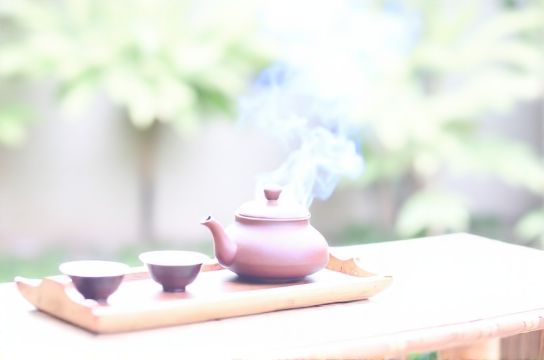
Let me paint you a picture. Imagine an old stone courtyard tucked in a quiet alley of Guangzhou. Wooden stools, a wobbly table, steam rising from tiny porcelain cups. An elderly uncle pours oolong from a small clay pot—Yixing, probably—and does it with the calm precision of someone who’s done this every day for 50 years. No rush. No notifications. Just the sound of leaves unfurling in hot water and laughter bubbling between friends. That’s not just tea time—that’s a lifestyle.
In many Chinese communities, especially among older generations, tea isn’t something you ‘grab’ on the go. It’s not fuel. It’s ritual. It’s how people check in—with themselves, with each other, with life. You don’t drink tea to get somewhere faster. You drink it to realize you’re already there.
And here’s the thing: this isn’t some ancient tradition fading into obscurity. Walk through neighborhoods in Chengdu, Hangzhou, or Fuzhou, and you’ll still see folks gathered around low tables in parks, unpacking thermoses and little tins of tea like they’re opening treasure chests. They’re not influencers. They’re not posting stories. They’re just… being. And man, does it feel refreshing to witness.
Now, I know what you might be thinking—'Isn’t all tea just… tea?' Nope. Not even close. In China, tea is culture, geography, history, and craft all rolled into one leaf. There’s green tea from Longjing (Dragon Well), delicate and grassy. Tieguanyin oolong, floral and smooth, with layers that unfold over multiple steeps. Pu-erh, fermented and earthy, aged like fine wine. Each type has its own mood, its own moment.
But more than the flavor, it’s the process that matters. The way the water is heated—not boiling, but just under, so it doesn’t scald the leaves. The way the pot is warmed first, then rinsed. The first pour, often discarded, called 'washing the tea'—kind of like clearing the throat before speaking. Every step is deliberate. Every gesture means something.
And get this—people will steep the same leaves five, six, even ten times. With each infusion, the taste changes. First bold, then soft, then sweet, then almost whisper-like. It’s like the tea is telling a story, and if you’re too busy to listen past the first chapter, you miss the whole plot.
This whole approach is the opposite of our Western 'fast living' grind. We’re obsessed with efficiency—maximizing output, minimizing downtime. But in these tea circles, downtime *is* the point. It’s where ideas spark, relationships deepen, and stress melts. A two-hour tea session isn’t wasted time—it’s investment. In peace. In presence. In people.
I remember visiting a tea house in Suzhou, right by a classical garden. The owner, a woman in her 60s with silver-streaked hair and hands full of character, served me a fresh batch of Bi Luo Chun. She didn’t just hand me a cup—she took me through it. The harvest season (early spring, only the tenderest buds). The region (grown near fruit trees, which gives it a faint fruity aroma). Even the name—'Green Snail Spring'—because the leaves curl up like tiny snails.
As she poured, she said something that stuck with me: 'When you rush tea, you lose the soul.' Boom. Mic drop. I realized how much of my own life was spent rushing things that weren’t meant to be rushed—conversations, meals, even emotions. But here, everything slowed down, not because it had to, but because it *wanted* to.
And it’s not just elders keeping this alive. A lot of young people in cities like Shanghai and Beijing are rediscovering tea—not as a chore or a cliché, but as rebellion. Against burnout. Against digital overload. They’re joining tea clubs, hosting gongfu tea sessions in their apartments, even blending modern music with traditional ceremonies. It’s not about going backwards—it’s about choosing depth in a shallow world.
There’s also a spiritual side to it, though not in a preachy way. In Daoism and Zen Buddhism, tea has long been linked to mindfulness and clarity. Sitting with tea is like meditation with flavor. You focus on the warmth of the cup, the color of the liquor, the way the scent hits your nose. It grounds you. Brings you back to your body. No apps needed.
And let’s talk about social glue for a sec. In China, sharing tea is how you build trust. Business deals start over tea. Family disputes get smoothed over tea. New friendships bloom over tea. It’s the great equalizer. Doesn’t matter if you’re rich or poor—when you sit down for tea, you’re just a person with another person, taking a breath together.
One afternoon in Fuzhou, I watched a grandfather teach his granddaughter how to handle a Yixing pot. She was maybe eight, all giggles and clumsy fingers. He didn’t rush her. Didn’t take over. Just guided her hands, showed her how to tilt the pot just right so the tea flows evenly. That moment wasn’t just about tea—it was about passing down patience, attention, care. Values brewed slowly, like the perfect cup.
Of course, modern life is creeping in. Fast food chains pop up next to century-old tea houses. Kids text instead of talk. But the tea culture? It’s holding strong. Because it’s not rigid—it evolves. You’ll see people using glass pitchers for transparency, or mixing chrysanthemum with green tea for a modern twist. The form changes, but the heart stays.
So what can we learn from this? Maybe it’s time to stop treating every minute like it owes us something. To stop filling silence with noise. To rediscover what it feels like to just… sit. To watch steam rise. To sip something warm and say nothing for a while.
You don’t need a fancy setup to start. Just a good leaf, some hot water, and the courage to go slow. Brew it once. Then again. Notice how it changes. Invite a friend. Or enjoy it alone. Either way, you’re doing it right.
Because tea, in the Chinese way, isn’t about perfection. It’s about presence. It’s about showing up—for the moment, for yourself, for life—cup in hand, heart open. And honestly? We could all use a little more of that.