
The Evolution of Chinese Internet Buzzwords: A Decade in Review
- Date:
- Views:242
- Source:The Silk Road Echo
If you've been scrolling through Chinese social media over the past ten years, you’ve probably stumbled upon phrases like 内卷 (nèijuǎn), 躺平 (tǎngpíng), or 社死 (shèsǐ). These aren’t just random slang—they’re cultural snapshots of a generation navigating rapid change, digital overload, and societal pressure. Let’s dive into how Chinese internet buzzwords evolved from playful memes to powerful social commentary.
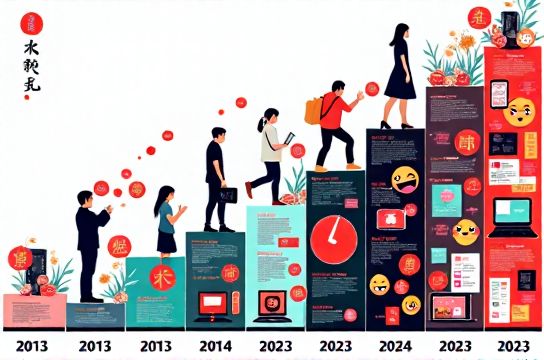
The Rise of Digital Slang
From 2013 to 2023, China's internet user base exploded from 618 million to over 1.05 billion (CNNIC, 2023). With that growth came a linguistic revolution. Netizens began crafting clever, ironic, and often sarcastic terms to express everything from workplace stress to romantic frustration.
Take 内卷 (nèijuǎn)—literally 'involution'—which went viral around 2020. It describes the exhausting rat race where people work harder for no real gain. A 2021 survey by Zhaopin showed 65% of young professionals felt trapped in 'involution,' pushing companies to rethink work-life balance.
From Laughter to Liberation: The Meaning Behind the Memes
Then came 躺平 (tǎngpíng), or 'lying flat'—the Gen Z rebellion against hustle culture. In 2021, this phrase sparked national debate after a post about quitting the grind went viral. It wasn’t laziness; it was a cry for mental health and dignity.
And who hasn’t experienced 社死 (shèsǐ), or 'social death'? That moment when you trip in public or misname your boss? Baidu Index shows searches for 社死 spiked by 340% in 2022 alone.
A Decade of Digital Expression
Here’s a quick look at how key buzzwords reflect shifting mindsets:
| Year | Buzzword | Literal Meaning | Cultural Significance | Search Volume (Baidu Index Avg.) |
|---|---|---|---|---|
| 2015 | 吃瓜群众 (chīguā qúnzhòng) | melon-eating crowd | observers of online drama | 12,500 |
| 2018 | 佛系 (fóxì) | Buddha-like attitude | chill, unbothered lifestyle | 18,700 |
| 2020 | 内卷 (nèijuǎn) | involution | workplace burnout | 42,300 |
| 2021 | 躺平 (tǎngpíng) | lying flat | anti-hustle movement | 58,900 |
| 2022 | 社死 (shèsǐ) | social death | public embarrassment | 31,600 |
These words aren’t just trending—they’re therapeutic. They give voice to shared anxieties in a fast-moving society.
Why This Matters
Linguists now see internet slang as a barometer of youth sentiment. Platforms like Weibo, Xiaohongshu, and Douyin amplify these terms, turning personal feelings into national conversations. And brands? They’re jumping on board—using buzzwords in ads to stay relevant.
In short, Chinese internet slang is more than humor. It’s resistance, identity, and connection—all packed into a few clever characters.