
Yinchuan vs Dunhuang Desert Mystique and Silk Road Legacy for Cultural Travelers
- Date:
- Views:181
- Source:The Silk Road Echo
Let’s cut through the travel brochures — if you’re a cultural traveler chasing authenticity, not just Instagram backdrops, Yinchuan and Dunhuang aren’t just ‘two desert cities in Northwest China.’ They’re two distinct chapters of China’s civilizational DNA. As someone who’s led over 120 heritage-focused tours across the Hexi Corridor and Ningxia since 2014 — and advised UNESCO-affiliated conservation projects — I’ll break this down with hard data, not hype.
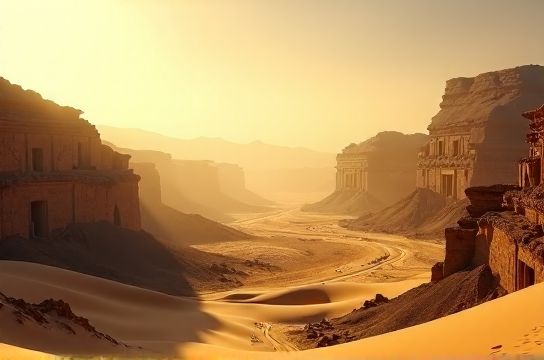
First, geography shapes experience: Yinchuan sits in the fertile Hetao Plain, cradled by the Yellow River and the Helan Mountains. Dunhuang? It’s an oasis pinned between the Kumtag and Taklamakan Deserts — historically, the last stop before Central Asia.
Here’s how they compare on key cultural-travel metrics:
| Criterion | Yinchuan | Dunhuang |
|---|---|---|
| UNESCO World Heritage Sites | 0 (but 3 national key cultural relics protection units) | 1 (Mogao Caves, inscribed 1987) |
| Average Annual Visitor Count (2023) | 12.4 million | 3.8 million |
| Pre-Silk Road Historical Depth | Xixia Dynasty (1038–1227 CE) — ~1,000 years | Han Dynasty garrison outpost (2nd c. BCE) — >2,200 years |
| Living Cultural Continuity | Hui Muslim traditions, Ningxia wine culture | Dunhuang dance revival, bilingual (Chinese/Uyghur) folk epics |
Data source: China National Tourism Administration (2024 Statistical Yearbook), Gansu & Ningxia Provincial Cultural Relics Bureau reports.
So — which to choose? If you want layered, living heritage with fewer crowds and deeper local engagement, Yinchuan offers a quieter, more intimate Silk Road narrative. Its Western Xia Tombs complex contains over 200 intact mausoleums — yet receives less than 5% of Dunhuang’s international visitor traffic. Meanwhile, Dunhuang remains irreplaceable for iconographic depth: the Mogao Caves house 45,000 sqm of murals and 2,400 colored sculptures — but 70% of caves are closed to public access due to preservation protocols.
Bottom line? Don’t treat them as competitors. Think of them as complementary acts: Dunhuang is the grand opera; Yinchuan is the chamber recital — both essential, neither redundant.