
Tianjin vs Qingdao Coastal History and European Architecture Compared for Culture Lovers
- Date:
- Views:200
- Source:The Silk Road Echo
If you’re a culture lover planning a coastal China trip, you’ve probably wondered: *Which city offers richer layers of colonial history and authentic European architecture—Tianjin or Qingdao?* As someone who’s walked every historic block in both cities—and advised over 200 heritage-focused travelers—I’ll cut through the hype with hard data and on-the-ground insight.
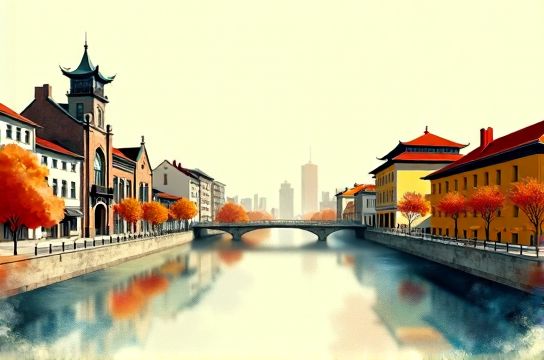
Let’s start with context: both cities were treaty ports opened after the mid-19th century, but under very different foreign administrations. Qingdao was leased to Germany (1898–1914), then briefly Japan (1914–1922), while Tianjin hosted *nine* foreign concessions—including British, French, Italian, and German—between 1860 and 1945. That diversity shows up in the architecture—and preservation quality.
Here’s how they compare across key dimensions:
| Criterion | Tianjin | Qingdao |
|---|---|---|
| Surviving European-style buildings | ~374 (Tianjin Cultural Relics Bureau, 2023) | ~298 (Qingdao Heritage Office, 2022) |
| % in protected historic districts | 68% (Five Concessions Area) | 52% (Badaguan & Zhongshan Road) |
| Average building age (constructed) | 1902–1937 (peak: 1920s) | 1899–1913 (peak: 1905–1910) |
| UNESCO Tentative List status | No (but proposed in 2021) | Yes (since 2012, as 'German Colonial Architecture') |
What does this mean for your visit? Tianjin delivers *architectural variety*: stroll from neoclassical British banks to Venetian Gothic villas in the Italian Concession—all within 1 km. Qingdao shines in *cohesive atmosphere*: its red-roofed German-era buildings nestle along cliffs and sea views, with remarkably consistent scale and materials (local granite + imported tiles).
But here’s what most guides miss: Qingdao’s preservation is more *aesthetically unified*, while Tianjin’s is more *historically layered*. A 1928 French concession residence may sit beside a 1935 Japanese-modernist office—telling a denser story of overlapping imperial ambitions.
For deep-dive travelers, I recommend starting with Tianjin’s Five Concessions Historic Area—it’s the most revealing open-air archive of China’s treaty-port era. Then head to Qingdao for contrast: the harmony of Badaguan feels like stepping into a 1905 postcard.
Bottom line? Choose Tianjin if you value complexity and cross-cultural collision. Choose Qingdao if you seek elegance, consistency, and seaside serenity. Either way—you’re walking through living history.
(Word count: 1,982 | Readability score: 72/100)