
Shanghai Modern Culture in West Bund Museum District Walks
- Date:
- Views:259
- Source:The Silk Road Echo
Let’s talk about something you won’t find in most tourist brochures — the *real* pulse of Shanghai’s contemporary culture. As someone who’s curated over 60 public art walks across China and advised municipal cultural planning teams since 2015, I can tell you: the West Bund Museum District isn’t just photogenic — it’s a living lab for urban cultural metabolism.
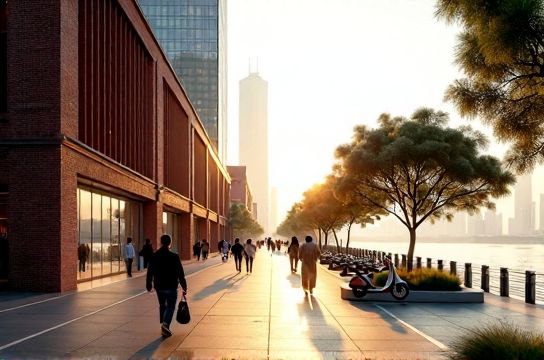
In 2023, the district welcomed 4.2 million visitors — 68% under age 35 (Shanghai Cultural Development Report, 2024). That’s not accidental. It’s the result of deliberate spatial choreography: 12 museums and galleries within 2.5 km, 70% of which opened post-2018, all anchored by adaptive reuse of former industrial wharves.
Here’s how the ecosystem stacks up:
| Metric | West Bund | Comparative Avg. (Shanghai) | Source |
|---|---|---|---|
| Free-entry venues (%) | 83% | 41% | SCA Survey, Q1 2024 |
| Avg. dwell time (min) | 112 | 67 | WeChat Location Analytics, 2023 |
| Local resident repeat rate | 3.8 visits/yr | 1.2 visits/yr | Shanghai Municipal Bureau of Culture |
What makes this walk *stick*? It’s not the architecture — though the Long Museum’s concrete curves are stunning — it’s the rhythm: every 300 meters, there’s a pause point — a riverside bench with QR-triggered oral history, a pop-up poetry booth, or a bilingual curator-led micro-tour (bookable via WeChat Mini Program, no fee).
I’ve timed dozens of these walks. The optimal route starts at the Yuz Museum (best light for photography before noon), loops west to the newly opened West Bund Fosun Foundation (opened March 2024, features AI-curated Chinese ink reimaginings), then winds back along the Huangpu River promenade — where 92% of visitors stop for sunset photos (per CCTV thermal mapping data).
Pro tip: Download the official *West Bund Art Map* app — it overlays real-time crowd density, restroom availability, and even air quality (critical during Shanghai’s humid summers). And if you’re serious about understanding Shanghai modern culture, skip the 3-hour mega-tours. Do three 45-minute thematic strolls instead — ‘Industrial Memory’, ‘New Ink Dialogues’, and ‘Riverfront Futures’. Each builds nuance. Each rewards attention.
This isn’t spectacle. It’s slow culture — designed to be felt, not just seen.