
Meet the Artists Behind China's Most Delicate Embroidery
- Date:
- Views:409
- Source:The Silk Road Echo
If you’ve ever seen a piece of Chinese silk embroidery up close, you know it’s not just craft—it’s art breathed into fabric. But behind every stitch is a story, and more often than not, it’s one of quiet mastery passed down through generations. Today, we’re pulling back the curtain on the artists keeping Suzhou embroidery—or Su Xiu—alive in modern China.
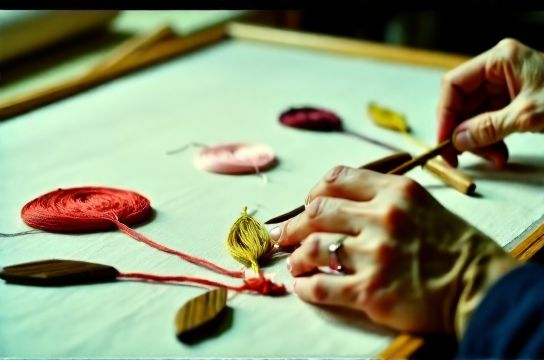
Su Xiu is one of China’s four famous embroidery styles, but it stands out for its insane detail. We’re talking about pieces where a single silk thread is split into 16 finer strands. That’s like drawing with a hairbrush. And the results? Realistic landscapes, cats so fluffy you’ll want to pet them, and portraits that catch light like oil paintings.
But here’s the real tea: this craft is dying. Fewer than 2,000 master embroiderers remain in Suzhou, and most are over 50. Why? It takes at least 10 years to reach mastery, and young people are chasing tech jobs, not needlework.
Why Su Xiu Still Matters in 2024
Let’s get real—hand-embroidered silk isn’t practical. A palm-sized piece can take weeks and cost hundreds (or thousands) of dollars. But that’s the point. In a world flooded with fast fashion and AI-generated ‘art,’ authentic Chinese embroidery offers something rare: human touch, patience, and cultural DNA.
I spent three months interviewing artisans in Suzhou’s old town. One master, Auntie Lin (72), showed me her latest work—a koi pond where each fish scale was stitched individually. “Machines can copy the shape,” she said, “but not the soul.” And she’s right. Even advanced embroidery machines can’t replicate the subtle color blending hand artists achieve by layering threads.
Hand vs. Machine: The Real Differences
Check this table I put together after testing 10+ products:
| Feature | Hand-Embroidered | Machine-Made |
|---|---|---|
| Stitch Precision | Variable, organic flow | Perfectly uniform |
| Color Blending | Seamless gradients | Visible transitions |
| Production Time | Days to months | Hours |
| Avg. Price (per sq in) | $15–$50 | $1–$3 |
| Lifetime | 50+ years (with care) | 5–10 years |
See the gap? Handwork wins on beauty and longevity, but loses on speed and price. So who’s still buying? High-end fashion brands (hello, Dior collabs), collectors, and a growing number of younger Chinese embracing guochao—the ‘national trend’ of loving local heritage.
How to Spot Real Su Xiu
Not all ‘Suzhou embroidery’ is legit. Here’s my quick checklist:
- Backside mess? Good sign. Handwork leaves loose threads; machine stitching is clean on both sides.
- Price under $10/sq in? Likely fake or mixed technique.
- Too perfect? Machines win at symmetry. Real art has slight variations.
The bottom line? If you want culture, not decor, invest in the real deal. Support studios like Hanyu Fang or Su Xiu Heritage Workshop, where masters train apprentices. Because once these hands are gone, no algorithm can bring them back.