
Photographing Daily Life in Remote Qiang Villages After the Earthquake Recovery
- Date:
- Views:203
- Source:The Silk Road Echo
Ever thought about how life quietly rebuilds after a disaster? In the remote highlands of Sichuan, the Qiang people have done just that—rising from the rubble of the 2008 earthquake with resilience, color, and tradition. As a photographer and cultural explorer, I recently trekked through these mountain villages, camera in hand, to capture not just recovery, but rebirth.
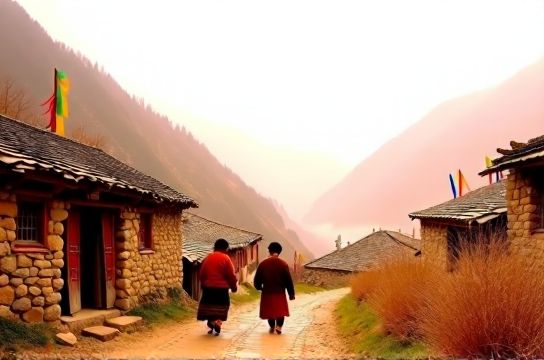
The Qiang ethnic group, one of China’s smallest recognized minorities (around 300,000 people), call the steep slopes near Ngawa and Beichuan home. Their stone watchtowers, known as diao lou, once crumbled under the quake’s force. Today? They stand taller, rebuilt with both government support and ancestral pride.
The Heartbeat of the Village: What to Capture
Forget staged poses. The real story is in the details: an elder weaving indigo-dyed cloth, kids laughing beside a re-erected gate tower, women in embroidered tunics carrying firewood uphill. These are moments of quiet triumph.
I spent mornings in Zhenjiangguan and Taoping—two of the most photogenic Qiang villages. Taoping, especially, is a maze of cobbled paths and six-story碉楼 (watchtowers), now reinforced with modern materials but keeping their ancient design.
Best Times & Lighting Tips
Golden hour here is magic. Between 6–8 AM and 5:30–7 PM, the sun hits the valley at a slant, painting stone walls in warm amber. Mist rolls in from the Min River, giving shots a dreamy softness.
Pro tip: Use a polarizing filter. The natural light reflects sharply off slate roofs and river rocks.
Cultural Sensitivity Meets Great Photos
You can’t just snap and run. The Qiang value respect. Always ask before photographing people—many will say yes if you smile and gesture your camera politely. Some even invite you in for yak butter tea!
Learn a few phrases: “Diá gū niú?” means “How are you?” in Qiang. It goes a long way.
Photo Subjects You Can’t Miss
- Watchtowers at dawn – Symbolic of strength and heritage.
- Women’s headdresses – Silver ornaments and red tassels tell stories of lineage.
- Prayer flags – Fluttering across trails, they carry blessings into the wind.
- Rebuilt homes – A mix of timber frames and concrete, blending old and new.
Data Snapshot: Qiang Village Recovery (2008–2023)
| Metric | 2008 (Post-Quake) | 2023 (Current) |
|---|---|---|
| Village Homes Rebuilt | ~40% | 98% |
| Tourism Visitors Annually | 12,000 | 85,000 |
| Cultural Heritage Sites Restored | 15 | 43 |
| Local Artisans Employed | ~200 | ~1,100 |
This recovery isn’t just physical—it’s cultural. Tourism now funds embroidery collectives and folk music schools. One village elder told me, “We didn’t just rebuild houses. We rebuilt pride.”
Final Thoughts: Lens with Purpose
Photographing these villages isn’t about chasing likes. It’s about witnessing resilience. Every cracked wall repaired, every child in traditional dress, every restored tower—they’re testaments to survival.
So bring your camera, but also bring curiosity and kindness. Let your photos tell stories that matter. Because in the quiet hills of Sichuan, the Qiang aren’t just recovering—they’re thriving.