
Preserving Tradition: Why Ethnic Minority Villages Matter in Modern China
- Date:
- Views:201
- Source:The Silk Road Echo
In the fast-paced rhythm of modern China, where skyscrapers rise and bullet trains zip across provinces, a quieter story unfolds in the misty hills and remote valleys — the story of ethnic minority villages. These cultural gems, often overlooked, are more than just scenic escapes; they’re living museums of language, craft, and tradition. From the Dong’s breathtaking wooden drum towers to the Mosuo’s matrilineal lifestyle, these communities offer a rare glimpse into ways of life that have survived centuries.
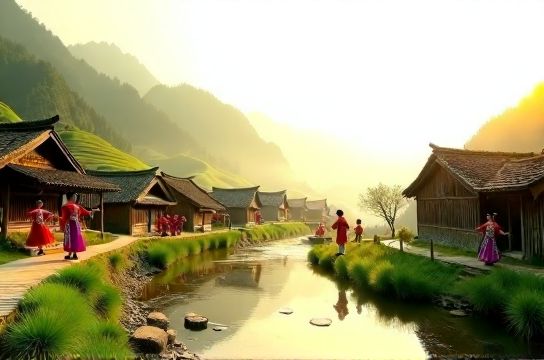
Yet as urbanization accelerates, many of these villages face existential threats. UNESCO reports that over 30% of China’s traditional villages have vanished since 2000. That’s not just lost architecture — it’s lost identity.
The Cultural Wealth Beneath the Surface
China officially recognizes 56 ethnic groups, with 55 classified as minorities. While Han Chinese make up over 91% of the population, the remaining 9% speak more than 130 languages and dialects and celebrate hundreds of unique festivals.
Take the Dai people in Yunnan, whose Water Splashing Festival draws thousands each April. Or the Tujia in Hunan, known for their ‘Swing Dance’ and intricate brocade weaving. These traditions aren’t performative — they’re woven into daily life.
| Ethnic Group | Population (approx.) | Main Region | Unique Cultural Feature |
|---|---|---|---|
| Zhuang | 18 million | Guangxi | Largest minority; Singing Festival |
| Hui | 11 million | Ningxia | Islamic heritage; Halal cuisine |
| Miao | 10 million | Guizhou | Silver jewelry; Lusheng festival |
| Dong | 3 million | Hunan/Guizhou | Drum towers; polyphonic singing |
Why Preservation Matters
You might ask: why protect these villages when progress calls? Simple — diversity is resilience. When one culture dominates, we lose alternatives to living, farming, healing, and governing.
Take architecture. The Dong’s wind-and-rain bridges are built without nails, using interlocking wood — a sustainable technique modern engineers now study. Or consider agriculture: Miao terraced farming prevents soil erosion in mountainous regions, a lesson in eco-friendly land use.
Beyond practicality, there’s emotional value. As one elder in Guizhou told me, “When our young leave and forget the songs, it’s like losing our soul.”
Tourism: Blessing or Curse?
Tourism brings money — over 200 million visitors went to ethnic regions in 2023 — but it’s a double-edged sword. In some places, traditions get reduced to photo ops. Authentic crafts are replaced by factory-made souvenirs.
But when done right, tourism empowers. In Xijiang Qianhu Miao Village, entrance fees fund school programs and cultural performances led by locals. Income from homestays has helped reduce youth migration by 40% since 2018.
How You Can Help
- Travel responsibly: Choose community-run homestays and avoid exploitative tours.
- Support local artisans: Buy directly from craft markets, not chain stores.
- Spread awareness: Share stories, not just selfies.
These villages aren’t relics — they’re resilient communities fighting to keep their flame alive. And in their survival, we find a deeper truth: modernity doesn’t mean erasing the past. It means carrying it forward.