
Beyond the Great Wall: Finding Solitude on China’s Forgotten Frontier Trails
- Date:
- Views:261
- Source:The Silk Road Echo
Think China is all about bustling cities and crowds at the Great Wall? Think again. Beyond the tourist hotspots, a wilder, quieter China waits—where ancient footpaths wind through misty mountains, forgotten trade routes cross high plateaus, and solitude isn’t just possible, it’s guaranteed.
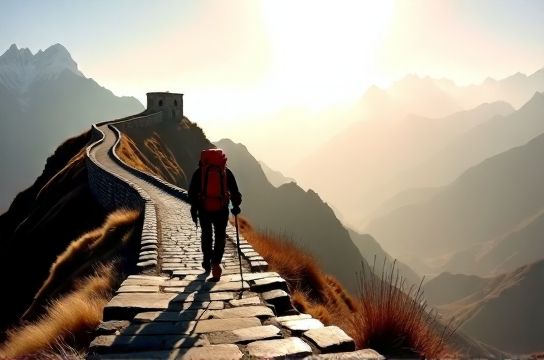
Welcome to China’s frontier trails—remote, raw, and breathtakingly beautiful. These aren’t your average hiking paths. They’re remnants of old caravan roads, pilgrimage routes, and military passes that once connected empires. Today, they offer adventurous travelers a rare chance to walk where few have ventured in centuries.
The Hidden Gems: Top 3 Off-the-Beaten-Path Trails
- Tiger Leaping Gorge – Yunnan: While not entirely unknown, its upper trail sees far fewer hikers than the lower route. With sheer cliffs and roaring rapids below, this 2-day trek offers epic views of the Jinsha River.
- Karakoram Pass Trek – Xinjiang: Nestled near the Pakistan border, this high-altitude route (over 5,000m) follows ancient Silk Road traders. Expect barren landscapes, yaks, and star-filled skies.
- Duolun Nomadic Trail – Inner Mongolia: A grassland horseback trek blending culture and nature. Ride with herders, sleep in gers, and feel the wind of the steppe on your face.
Why These Trails Matter
These paths aren’t just scenic—they’re cultural lifelines. Many were used for centuries by Tibetan monks, Mongol horsemen, and Silk Road merchants. Walking them today is like stepping into a living history book.
And let’s talk numbers. According to China’s Ministry of Culture and Tourism, only about 8% of international tourists venture beyond Beijing, Shanghai, or Xi’an. That means over 90% miss the real magic—the silence of a Himalayan ridge at dawn, the call of a red fox in Sichuan’s forests, or the warmth of a nomad’s butter tea after a long day’s hike.
Trail Stats at a Glance
| Trail | Location | Duration | Difficulty | Elevation (max) |
|---|---|---|---|---|
| Tiger Leaping Gorge (Upper) | Yunnan | 2–3 days | Moderate | 2,600m |
| Karakoram Pass Trek | Xinjiang | 7–10 days | Challenging | 5,200m |
| Duolun Nomadic Trail | Inner Mongolia | 4–5 days | Easy–Moderate | 1,400m |
Tips for Treading Lightly
These places are pristine because few visit. Let’s keep it that way. Stick to marked paths, pack out all waste, and respect local customs. In Tibetan areas, always ask before photographing people or monasteries. In Xinjiang, check permit requirements—some zones need official clearance.
Best time to go? Late spring to early autumn. June to September offers mild weather and clear skies, though July and August bring rain in the south.
The Takeaway
China’s soul isn’t just in its skyscrapers or ancient walls—it’s in the quiet footsteps along a mountain pass, the echo of hooves on an open plain, the shared silence between strangers on a remote trail. If you’re craving adventure with authenticity, lace up your boots and head west. The real China is waiting—and it’s absolutely worth the journey.