
Discovering China’s Cold Climate Countryside: Yak Herding in Northern Xinjiang
- Date:
- Views:288
- Source:The Silk Road Echo
Ever dreamed of swapping city chaos for snow-draped mountains and a life tethered to nature? Let’s talk about one of China’s best-kept rural secrets—yak herding in northern Xinjiang. Nestled in the Altai Mountains, this frost-kissed corner of northwest China offers more than just jaw-dropping scenery. It's a living culture where nomadic traditions thrive despite freezing winters that plunge below -30°C.
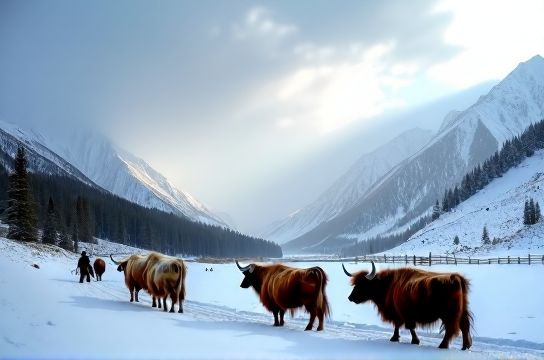
Yaks aren’t just livestock here—they’re lifelines. Hardy, sure-footed, and built for extreme cold, these shaggy beasts provide milk, meat, wool, and even transport across rugged terrain. For Kazakh herders who’ve roamed these lands for generations, yaks symbolize resilience. And today, curious travelers can experience this high-altitude lifestyle firsthand.
Why northern Xinjiang? Unlike Tibet or Qinghai, Xinjiang’s northern pastures see fewer tourists, meaning authentic encounters without the crowds. The region averages 280 days of cold weather annually, with winter lasting from late October to early April. But it’s precisely this harsh climate that preserves traditional ways.
What Makes Yak Herding Unique Here?
The Kazakh herding families rotate seasonal pastures—summer up in alpine meadows over 2,500 meters, winter down in sheltered valleys. This transhumance system has sustained them for centuries. And while yaks are central, they often herd alongside sheep and goats, creating a balanced ecosystem.
Here’s a snapshot of what yak-based life looks like:
| Aspect | Detail |
|---|---|
| Average Yak Weight | 400–600 kg (male), 250–350 kg (female) |
| Milk Yield per Day | 1.5–3 liters |
| Wool Production Annually | 1.5–2.5 kg per yak |
| Common Uses of Yak Products | Milk → cheese & fermented drinks; Wool → tents & clothing; Dung → fuel |
| Temperature Tolerance | Survives -40°C to 20°C |
Visitors can join short homestays with herding families, helping milk yaks at dawn, shaping butter by hand, or weaving wool into warm garments. Some eco-tourism operators even offer multi-day treks following herder migration routes—complete with portable yurts and campfire-cooked kumis (fermented mare’s milk).
But it’s not all poetic sunrises. Climate change is testing this ancient way of life. Pasture degradation and unpredictable snowfall patterns have made grazing harder. Still, many herders are adapting—using solar panels, mobile vet services, and partnering with sustainable tourism programs.
If you're planning a visit, aim for June to September. That’s when the highlands bloom with wildflowers, trails are passable, and temperatures hover around a bearable 10–18°C. Pack layers—you’ll need them!
In a world racing toward digital overload, northern Xinjiang’s yak country reminds us of slower rhythms, deeper roots, and the quiet strength of humans and animals surviving together. It’s not just travel—it’s transformation.