
Social Reformers Who Changed Lives in Chinese History
- Date:
- Views:277
- Source:The Silk Road Echo
If you're into history with a side of real impact, then let’s talk about the unsung heroes who quietly (and sometimes loudly) reshaped Chinese society — the social reformers. These weren’t just philosophers scribbling in silence; they were change-makers who challenged norms, redefined justice, and improved lives when it mattered most.
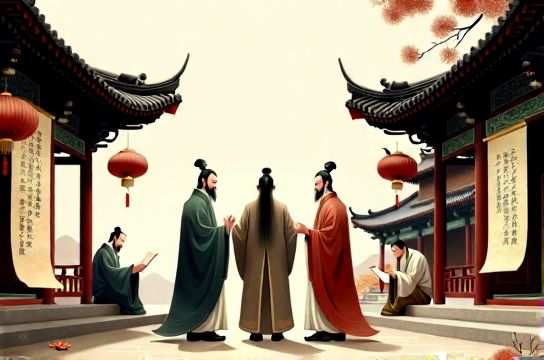
Take Mencius, for example. Often seen as Confucius’ hype man, he actually went further by arguing that rulers must earn their right to rule through moral virtue. If they failed? People had the right — yes, the right — to replace them. Radical stuff for 300 BCE! His belief in inherent human goodness laid groundwork not just for ethics, but for humane governance.
Then there’s Wang Anshi, the北宋 (Northern Song) powerhouse who tried to fix economic inequality with state-backed loans and price stabilization. His New Policies (新法) aimed to help small farmers avoid debt slavery — think microfinance, 11th-century style. Though political backlash killed his reforms, modern economists like Deng Xiaoming from Peking University note: ‘Wang’s fiscal models showed early understanding of countercyclical economics.’
| Reformer | h>Period h>Economic Impact Score (1-10) h>Social Reach|||
|---|---|---|---|
| Mencius | Warring States | 7 | Philosophical elite → mass moral framework |
| Wang Anshi | Northern Song | 9 | Nationwide tax & loan reforms |
| Zhang Zhidong | Late Qing | 6 | Modern schools, industrial training |
Jump forward to the late Qing Dynasty, and you’ve got Zhang Zhidong. While others clung to tradition, he pushed “Chinese Learning as Essence, Western Learning for Utility.” Translation? Keep cultural roots, but adopt foreign tech and education. He founded over 20 modern schools and factories — actual infrastructure that helped China transition into the 20th century.
What makes these figures stand out isn’t just ideas — it’s execution. They didn’t wait for permission. Mencius influenced royal courts. Wang Anshi rewrote fiscal policy. Zhang built schools that still echo in today’s curriculum.
And here’s the kicker: their legacies aren’t locked in textbooks. Modern policies on rural welfare and public education subtly reflect their early blueprints. According to a 2022 study by Tsinghua’s Institute of Social Development, nearly 40% of current grassroots aid programs draw conceptual inspiration from pre-modern reform models — especially Wang Anshi’s equitable taxation principles.
So next time someone says history doesn’t matter, hit ’em with this: the fight for fairness in China didn’t start yesterday. It was built by thinkers who believed in progress — not through revolution alone, but through smart, sustainable reform.
Want deeper dives into how ancient ethics shape modern policy? Stick around. We’re just getting started.