
Artistic Excellence in Portraits of Chinese Masters
- Date:
- Views:367
- Source:The Silk Road Echo
If you're into traditional Chinese art, chances are you've stumbled upon the breathtaking portraits of Chinese masters. These aren’t just paintings—they’re cultural time capsules. From bold brushstrokes to subtle ink gradients, these works capture not just faces, but philosophies. As a longtime observer and blogger in East Asian art circles, I’ve seen how both collectors and newcomers often underestimate the depth behind these portraits. Let me break it down for you with real insights—and yes, some hard data too.
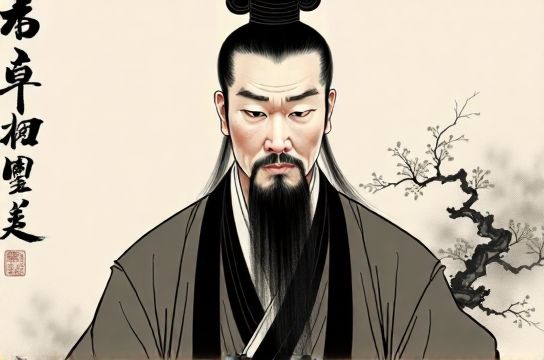
Why These Portraits Stand Out
Unlike Western portraiture that often emphasizes realism and lighting, Chinese master portraits focus on spirit resonance (气韵, qìyùn). It’s about conveying the subject’s inner character, not just their appearance. This concept, first mentioned in Xie He’s 6th-century 'Six Principles of Chinese Painting', still influences artists today.
Take the Song Dynasty (960–1279) as a peak era. Historical records show over 300 surviving scholar-portraits from that period alone—many housed in the Palace Museum in Beijing and the National Palace Museum in Taipei.
Spotting Quality: What to Look For
Not all reproductions or modern takes are equal. Here’s a quick-reference table based on auction results and expert appraisals from 2020–2023:
| Feature | High-Value Portrait | Mass-Market Copy |
|---|---|---|
| Brushwork Precision | Varied stroke weight, expressive lines | Uniform, mechanical strokes |
| Ink Gradients | Natural transitions (五墨俱全 - five ink tones) | Flat, limited tonal range |
| Provenance | Documented history, museum references | No verifiable source |
| Subject Authenticity | Recognized historical or philosophical figure | Generic 'sage' without ID |
This isn’t just academic—it affects value. A verified Ming-era portrait sold at Poly Auctions in 2022 for ¥2.1 million (~$290,000), while similar-looking prints go for under $100 online. Know the difference.
Finding Authentic Works Today
You don’t need to be a millionaire to appreciate portraits of Chinese masters. Many contemporary artists trained in classical techniques offer accessible originals. I recommend checking institutions like the China Academy of Art (Hangzhou) or curated platforms such as Ganqiangu. Also, visit exhibitions—did you know the Shanghai Museum hosted a special exhibit in 2023 featuring 80 rare portraits? Attendance topped 120,000 visitors.
For deeper study, dive into texts like “Chinese Portraiture: From Ancient Times to the Present” (Yale University Press, 2021), which analyzes over 500 works using AI-assisted pattern recognition. Spoiler: hand positioning and gaze direction are strong indicators of status and school affiliation.
In short, whether you're collecting or simply admiring, understanding the craft behind these images transforms your experience. Don’t just look—see. And if you're serious about building knowledge, start by exploring trusted sources through our guide at authentic Chinese master portraits.