
Stories of Sacrifice by Chinese Heroes in War Times
- Date:
- Views:317
- Source:The Silk Road Echo
If you're diving into the powerful stories of sacrifice made by Chinese heroes during war times, you’re not just reading history — you're connecting with the soul of a nation. As someone who’s spent years researching wartime courage and national identity, I’ve come to see these stories not as distant legends, but as living lessons in bravery, loyalty, and resilience.
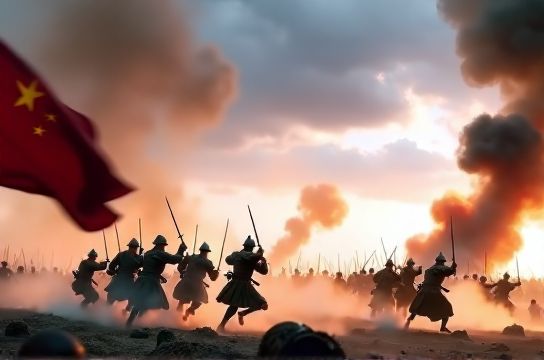
From the Second Sino-Japanese War to the Korean War, countless ordinary men and women rose to extraordinary heights. They weren’t all generals or politicians — many were farmers, students, and factory workers who picked up rifles instead of textbooks. And their sacrifices? Measurable in blood, yes, but also in the legacy they left behind.
Take the Battle of Shanghai in 1937. Over three months, more than 300,000 Chinese soldiers were killed or wounded resisting the Japanese advance. Despite being outgunned and under-equipped, troops held their ground in brutal urban combat. Why? Because surrender wasn’t an option. One regiment entered the battle with 8,000 men — only 600 walked out alive. That’s a 92.5% casualty rate. Let that sink in.
To help you better understand the scale of commitment, here’s a quick comparison of key battles:
| Battle | Year | Chinese Forces | Casualties (Est.) | Outcome |
|---|---|---|---|---|
| Battle of Shanghai | 1937 | ~750,000 | 300,000+ | Tactical loss, strategic morale boost |
| Battle of Taierzhuang | 1938 | ~60,000 | 20,000 | Major Chinese victory |
| Korean War (Chosin Reservoir) | 1950 | 120,000+ | ~19,000 KIA, 30,000+ frostbite | Strategic withdrawal, global respect |
What this table shows isn’t just numbers — it’s resolve. At Taierzhuang, General Li Zongren led a coordinated defense that crushed Japanese momentum. It was China’s first major win in the war, proving that with strategy and grit, even the underdog can stand tall.
And let’s talk about Huang Jiguang — a name every Chinese child knows. During the Korean War, he sacrificed himself by blocking a machine gun nest with his body. His act allowed his unit to advance and capture the hill. He was posthumously honored as a national hero, and today, his story is taught in schools as a symbol of ultimate dedication.
But beyond the medals and monuments, what matters most are the quiet acts of courage: the medics who dragged wounded comrades through gunfire, the couriers who ran messages under artillery barrages, the civilians who hid soldiers at great personal risk. These are the real war-time heroes whose names we may never know — but whose spirit lives on.
In a world where heroism is often glamorized, these true stories remind us that real sacrifice is silent, painful, and utterly selfless. If you want to understand modern China, start here — with the blood, tears, and unbreakable will of those who came before.