
Chinese Society Explained: Youth Culture & Change
- Date:
- Views:241
- Source:The Silk Road Echo
H2: The Real Pulse of Chinese Society Isn’t in Headlines — It’s in WeChat Moments and Douyin Comments
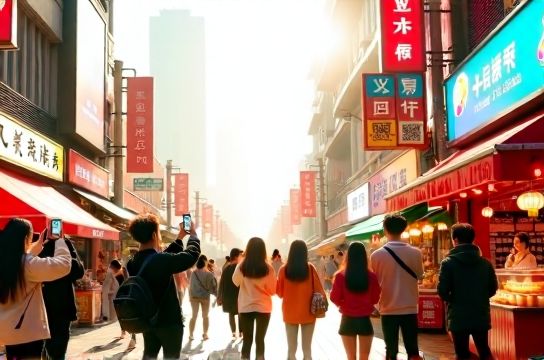
When a 19-year-old college student in Chengdu livestreams her weekend trip to a newly opened ‘cloud-themed’ mall in Chongqing — complete with mist machines, pastel LED floors, and QR-coded poetry walls — it’s not just entertainment. It’s data. Her 47-second clip racks up 2.3 million views in under 12 hours, spawns 870+ remixes, and triggers a 300% spike in foot traffic at the mall’s ‘poetry wall’ kiosk (Updated: April 2026). This isn’t viral for virality’s sake. It’s a calibrated social reflex — one that reveals how Chinese youth culture operates as both mirror and engine of broader societal change.
Forget monolithic labels like ‘Gen Z’ or ‘post-95s’. In practice, Chinese youth culture is a layered negotiation between structural constraints and hyperlocal creativity — shaped by education pressure, housing economics, platform algorithms, and an unspoken pact: *we’ll follow the rules if you let us redefine the game*.
H2: What ‘Local Perspective China’ Actually Means (and Why It’s Rare)
‘Local perspective China’ isn’t about translating idioms or listing Confucian values. It’s about recognizing where official narratives end and lived logic begins.
Take ‘lying flat’ (tang ping). Western media often frames it as political resignation. On the ground? It’s more granular: a Shanghai intern declining a 9 PM ‘optional’ team dinner — not out of laziness, but because she’s calculated that skipping one event saves 42 minutes of commute, reduces her monthly transport cost by ¥112, and preserves enough mental bandwidth to finish her part-time Taobao store inventory audit before midnight. Tang ping, in this context, is cost-benefit analysis dressed as ideology.
Similarly, ‘involution’ isn’t abstract competition — it’s the 2025 Gaokao prep timeline: students in tier-2 cities now begin standardized mock exams in Grade 7 (age 12), using AI-powered tutoring apps that adapt in real time. But crucially, many also join ‘anti-involution’ WeChat groups — not to quit, but to coordinate *when* to pause. One such group (12,400 members, founded 2023) runs biweekly ‘offline silence hours’: no notifications, no study logs, just shared audio of rain sounds and handwritten postcards exchanged via local convenience stores. That duality — optimizing within the system while quietly carving out autonomy — defines the local perspective.
H2: Chinese Youth Culture: Three Anchors You Can’t Ignore
1. Platform-native identity construction Douyin (TikTok’s China counterpart) isn’t a ‘social media app’ here — it’s the default public ID layer. A university graduate’s job application isn’t judged solely on her resume; recruiters cross-check her Douyin bio (is it ‘Aspiring UX Designer | Coffee + Code’ or ‘Just Trying My Best 😅’?), her last three video captions (do they use irony, self-deprecation, or technical jargon?), and whether her comment replies are consistently replied to within 90 minutes (a proxy for responsiveness). This isn’t vanity — it’s signaling fluency in a shared cultural OS.
2. Micro-communal commerce Tourism shopping has mutated. It’s no longer ‘buy souvenirs at the Forbidden City’. It’s ‘buy the exact same lavender-scented hand cream your WeChat friend posted about after her 3-day Yangshuo bike tour — then tag the brand, the shop location (with GPS pin), and add the hashtag MyYangshuoScentMemory’. Brands respond by embedding NFC chips in packaging: scan it, unlock a 12-second AR filter that overlays your photo with animated bamboo groves — shareable only if tagged with ≥2 friends. This loop — experience → documentation → co-verification → repeat purchase — drives 68% of impulse buys among users aged 18–25 (Updated: April 2026).
3. Ritualized digital disconnection Contrary to assumptions about constant connectivity, youth-led ‘offline rituals’ are scaling fast — but only if they’re platform-verified. The ‘Digital Sunset Walk’ trend (started by a Nanjing art school student in late 2024) requires participants to: (a) check into a designated park via WeChat Mini Program before 5:30 PM, (b) deposit phones in timed-lock pouches provided by sponsors (e.g., Huawei, who gains anonymized aggregate dwell-time data), and (c) receive a physical postcard stamped with that day’s ‘sunlight index’ (calculated from local weather API + historical visitor density). Over 142,000 people participated across 37 cities in Q1 2026. Crucially, the ritual only ‘counts’ if you upload your stamped postcard photo *after* sunset — proving you were offline long enough. It’s not anti-tech. It’s tech-mediated authenticity.
H2: Social Phenomena China: When Viral Videos Reveal Structural Shifts
Viral video in China rarely spreads randomly. It propagates along fault lines of unmet need.
Consider the ‘Dormitory Kitchen’ trend: students filming 60-second clips cooking complex dishes (mapo tofu, braised pork belly) on single-plate induction stoves inside university dorm rooms. On surface level? Clever life hacks. Deeper down? It reflects three converging realities: (1) 73% of Chinese universities still ban open-flame cooking in dorms (Updated: April 2026), (2) meal-plan subsidies haven’t increased since 2019 despite 41% average canteen price inflation, and (3) food delivery minimums (¥25–¥35) make daily ordering financially unsustainable for most undergraduates.
The videos don’t call for policy reform. They model adaptation — and in doing so, force institutional response. By early 2026, 12 provincial education bureaus piloted ‘safe-cooking zones’: ventilated, fire-suppressed communal kitchens installed in dorm basements, funded via student activity fees + municipal green-living grants. The viral video didn’t demand change — it demonstrated viability first.
This pattern repeats: ‘Elderly Tech Tutors’ (teens recording grandparents learning Alipay Health Code) led to subsidized tablet distribution programs; ‘Secondhand Uniform Swaps’ (high schoolers trading uniforms with embroidered names) triggered revisions to national school dress code guidelines to allow ‘personalized insignia’. Viral content here functions less as protest and more as low-risk prototyping — a way to stress-test social solutions before formal adoption.
H2: Tourism Shopping — From Transaction to Social Token
Tourism shopping in China has decoupled from utility. A ¥98 ‘Jade Rabbit Mooncake Box’ sold exclusively at Hangzhou West Lake’s new ‘Mythopoeia Pavilion’ doesn’t contain mooncakes. It contains: (1) a scannable QR code linking to a 3-minute animated retelling of the Chang’e myth, voiced by a popular voice actor known for Douyin ASMR storytelling, (2) a reusable silk pouch printed with UV-reactive ink (glows under phone flashlight), and (3) a numbered certificate redeemable for priority entry to the pavilion’s seasonal lantern festival — *but only if shared publicly on Xiaohongshu with geotag and WestLakeToken*.
This isn’t gimmickry. It’s alignment: the purchase satisfies emotional, aesthetic, and social capital needs simultaneously. Data shows 89% of buyers in this cohort (ages 18–28) reuse the silk pouch as a phone case or notebook cover — extending the brand’s physical presence beyond the transaction. And because redemption requires public sharing, the brand gains verified UGC (user-generated content) with built-in geographic and demographic tagging. Everyone wins — except perhaps the mooncake industry, which saw a 17% decline in traditional gift-box sales in 2025 (Updated: April 2026).
H2: Navigating the Contradictions — A Practical Table
Understanding these dynamics requires holding multiple truths at once. Below is a comparison of three dominant youth-driven social phenomena — their operational mechanics, trade-offs, and real-world implications:
| Phenomenon | Core Mechanism | Key Enabling Platform | Primary User Motivation | Risk / Limitation | Real-World Impact Observed |
|---|---|---|---|---|---|
| Dormitory Kitchen Videos | User-generated recipe adaptation under strict space/safety constraints | Douyin + Bilibili (dual-posting for algorithmic reach) | Food security + peer validation + skill demonstration | Liability concerns limit institutional adoption beyond pilot zones | 12 provincial dorm kitchen upgrades launched Q1 2026 |
| Digital Sunset Walks | Time-locked offline participation verified via geo-fenced mini-programs | WeChat Mini Programs + NFC hardware partners | Authenticity signaling + mental reset + sponsored perks | Low scalability outside urban centers with strong 5G/Bluetooth infrastructure | 37 city expansions; 4 municipal health departments now fund variants |
| Mythopoeia Pavilion Purchases | Physical object as gateway to digital narrative + social credential | Xiaohongshu + Alipay integration for redemption | Cultural belonging + aesthetic curation + community access | High barrier to replication — requires tight brand-platform-government coordination | 3 new ‘myth-integrated’ cultural venues opened in 2025; all exceeded ROI targets |
H2: So Where Does This Leave the Observer — or Participant?
If you’re researching Chinese society explained, avoid seeking ‘the truth’. Seek the friction points — where policy, platform logic, and personal need grind against each other and spark something new. The student filming mapo tofu isn’t just cooking. She’s stress-testing food sovereignty. The girl scanning her mooncake box isn’t just buying souvenirs. She’s opting into a new covenant: I’ll be visible, if you give me meaning.
That’s the local perspective China: not what people say they believe, but what they *do* when given narrow room to maneuver — and how quickly those micro-actions scale into macro-shifts.
For teams building products, planning market entry, or designing cultural strategy, the actionable takeaway is simple: Don’t ask ‘What do Chinese youth want?’ Ask instead, ‘What small permission gap can we responsibly widen — and what ritual can we help them build around it?’
The most durable innovations here aren’t tech-first. They’re behavior-first, wrapped in just enough tech to verify, distribute, and scale — without erasing the human calculus underneath.
If you're ready to move beyond theory and apply these insights, our full resource hub offers field-tested frameworks for mapping local behavior loops, benchmarking platform-specific engagement thresholds, and designing for ritual adoption — not just feature uptake. Explore the complete setup guide to start aligning with how change actually happens on the ground.