
The Hidden Stress Behind China’s Exam-Obsessed Education System
- Date:
- Views:275
- Source:The Silk Road Echo
If you've ever wondered why Chinese students seem to live and breathe exams, buckle up—this deep dive reveals the emotional toll behind one of the world’s most competitive education systems. Spoiler: it's not just about grades.
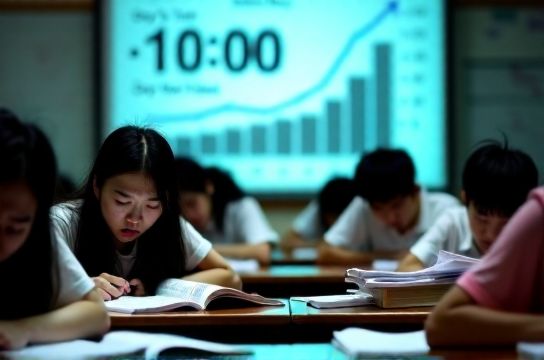
China’s academic culture is legendary. From early mornings to midnight study sessions, students grind hard for one golden ticket: the Gaokao, the national college entrance exam. But beneath the surface of high scores and elite university admissions lies a silent crisis—mental health.
Let’s break it down with real data.
The Gaokao Grind: By the Numbers
The pressure starts young. According to a 2023 Ministry of Education report, over 12 million students took the Gaokao last year. That’s more than the entire population of Switzerland sitting for a single test—once.
But it’s not just volume; it’s intensity. A survey by Peking University found that 46% of high schoolers show signs of anxiety, while 37% report depressive symptoms. Yikes.
| Statistic | Data |
|---|---|
| Average daily study hours (urban students) | 9.2 hrs |
| Students sleeping less than 6 hours/night | 58% |
| High schoolers with anxiety symptoms | 46% |
| Youth suicide rate (ages 15–24) | 10.3 per 100,000 |
That last number? It’s especially alarming when compared to Western countries like Canada or Germany, where youth suicide rates hover around 3–5 per 100,000. Something’s off.
Why Is the Pressure So Intense?
In China, the Gaokao isn’t just an exam—it’s destiny. Your score can decide your career, social status, even marriage prospects (yes, really). Families invest heavily—time, money, emotional energy—all riding on two days of testing.
Private tutoring is a $120 billion industry. Parents shell out big bucks for cram schools, online courses, and one-on-one mentors. And while the government cracked down on after-school tutoring in 2021, demand hasn’t dropped—it’s gone underground.
The Human Cost
We’re raising a generation of high achievers who are emotionally drained. Teachers report students breaking down during exams. Hospitals see spikes in teen psychiatric admissions every June—right after the Gaokao.
And here’s the irony: even top scorers aren’t happy. Many enter prestigious universities only to feel lost, lacking purpose beyond passing tests.
Is Change Possible?
Signs point to yes. Some provinces are experimenting with holistic evaluations, including interviews and extracurriculars. Mental health education is now mandatory in secondary schools. Small steps, but progress.
Still, real change means redefining success—not by scores, but by well-being. Because no kid should trade their childhood for a perfect transcript.