
The Loneliness of the Chinese Metropolis: Why Young Adults Are Choosing Solitude
- Date:
- Views:305
- Source:The Silk Road Echo
In the neon glow of Shanghai's skyline or the rush-hour crowds of Beijing's subway, a quiet truth echoes beneath the urban roar: more young Chinese adults are choosing solitude over social connection. It’s not that they don’t want love or friendship — they do. But in China’s fast-paced metropolises, loneliness isn’t just emotional; it’s structural.
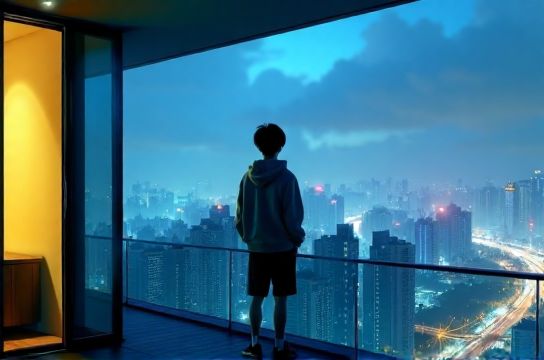
A 2023 survey by China Youth Daily found that over 64% of urban millennials feel lonely 'often' or 'very often.' Meanwhile, the National Bureau of Statistics reports that single-person households now make up nearly 18% of all Chinese homes — a sharp rise from just 7% in 2010. In megacities like Shenzhen and Guangzhou, that number jumps to over 25%.
So why are so many young people embracing solitude? Let’s break it down.
The Cost of Connection
Living in cities like Beijing or Hangzhou means sky-high rents, long commutes, and exhausting work cultures (think '996': 9 a.m. to 9 p.m., 6 days a week). When you’re drained from surviving, building deep relationships becomes a luxury few can afford.
| City | Avg. Rent (1-bedroom) | Commute Time (one-way) | % Living Alone |
|---|---|---|---|
| Beijing | ¥8,500 | 47 min | 22% |
| Shanghai | ¥9,200 | 51 min | 26% |
| Shenzhen | ¥7,800 | 45 min | 28% |
| Hangzhou | ¥6,500 | 40 min | 21% |
These numbers aren’t just stats — they’re life stories. Imagine working 70 hours a week, then spending three hours commuting and cooking. Who has energy for dinner dates or late-night talks?
Social Media: The Loneliness Amplifier
You’d think WeChat, Xiaohongshu, and Douyin would help us connect. But paradoxically, they deepen isolation. A Peking University study showed that heavy social media users report 30% higher loneliness levels. Why? Because online interactions often replace real ones — likes instead of hugs, comments instead of conversations.
Choosing Solitude, Not Loneliness
Here’s the twist: many aren’t suffering from loneliness — they’re choosing solitude. For young professionals, alone time is self-care. It’s reclaiming control in a world that demands everything. As one 28-year-old designer in Shanghai put it: 'I’m not lonely. I’m finally free.'
This shift is redefining urban life. Co-living spaces, solo dining restaurants, and 'quiet economy' trends (like silent yoga and solo travel) are booming. Loneliness isn’t disappearing — but it’s being transformed into something intentional, even empowering.
In the end, the loneliness of the Chinese metropolis isn’t just sadness. It’s a mirror reflecting a generation navigating pressure, progress, and the quiet search for self.