
Local Perspectives on China’s Changing Family Dynamics
- Date:
- Views:294
- Source:The Silk Road Echo
China's family life is evolving faster than a TikTok trend. From the one-child policy to rising divorce rates, the traditional Confucian household is getting a 21st-century makeover. But what does family really mean in today’s China? Let’s dive into real stories, surprising stats, and how urbanization, gender roles, and economic pressure are reshaping homes across the country.
The Shift: From Big Clans to Nuclear Units
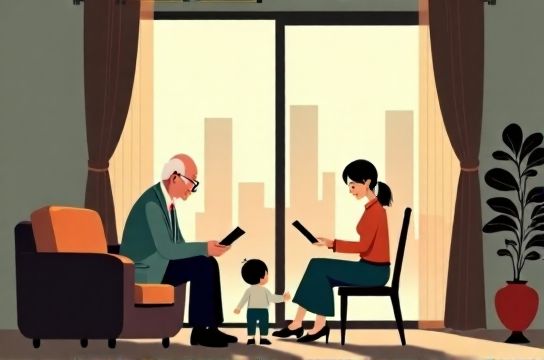
Just two generations ago, it was common to see three or more generations living under one roof. Today? Over 65% of Chinese households are nuclear families—just parents and kids (National Bureau of Statistics, 2023). Urban migration has pulled young adults from rural villages to cities like Shanghai and Shenzhen, leaving elders behind.
One-Child Policy Echoes
Launched in 1979, the one-child policy may be gone, but its impact lingers. Many millennials are '4-2-1' families: four grandparents, two parents, one child. That single kid? Carrying emotional and financial weight like a backpack full of bricks.
| Year | Avg. Household Size | Urban Families | Rural Families |
|---|---|---|---|
| 1982 | 4.4 | 4.1 | 5.0 |
| 2000 | 3.5 | 3.2 | 4.0 |
| 2020 | 2.6 | 2.4 | 2.9 |
Source: National Census Data
Marriage? Not So Fast
In Beijing, the average age for a first marriage is now 31.2 for men and 29.5 for women. Why the delay? Career focus, sky-high housing prices, and changing attitudes—especially among women who value independence over tradition.
'I don’t need a man to complete me,' says Mei Lin, a 30-year-old teacher in Chengdu. 'I’d rather travel, grow my business, and maybe marry later—if at all.'
Divorce on the Rise
Divorce rates have nearly doubled since 2010. In 2023, China recorded 4.3 million divorces, though a recent 'cooling-off period' law has slightly slowed the pace. Still, love marriages are replacing arranged ones, and with that freedom comes higher expectations.
Empty-Nest Parents & Left-Behind Kids
With millions working in distant cities, elderly parents often live alone—dubbed 'empty-nest seniors.' Meanwhile, an estimated 6.9 million children grow up without their parents, raised by grandparents in rural areas. These invisible families highlight the human cost of China’s economic miracle.
The Future: Smaller, Freer, More Complex
Young Chinese aren't rejecting family—they're redefining it. Cohabitation without marriage, LGBTQ+ partnerships, and pet parenting ('fur babies') are quietly gaining ground. The core value isn’t disappearing; it’s just wearing new clothes.
As one Hangzhou student put it: 'Family used to mean duty. Now it means choice.'