
The Feminist Backlash in China: Voices Rising Amid Restrictions
- Date:
- Views:292
- Source:The Silk Road Echo
In recent years, the feminist movement in China has sparked both hope and controversy. While urban women increasingly demand gender equality, the state's tightening control over civil society has led to a growing feminist backlash. From silenced activists to censored hashtags, the struggle for women’s rights walks a tightrope between visibility and suppression.
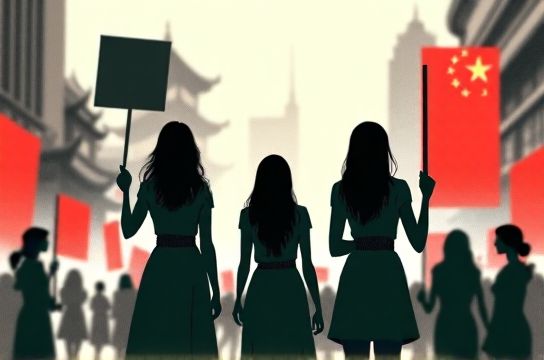
Take the case of the Guangzhou Feminist Library, shut down in 2023 after hosting discussions on sexual harassment and LGBTQ+ rights. Or recall how Weibo deleted over 180,000 posts related to International Women’s Day in 2022 alone—proof that digital feminism faces serious headwinds.
Yet, resistance persists. Underground salons, encrypted chat groups, and academic circles keep feminist dialogue alive. A 2023 survey by Peking University found that 67% of women aged 18–35 support gender equality in the workplace—a sharp rise from just a decade ago.
The State of Feminist Activism: By the Numbers
| Year | Feminist-Related Hashtags Censored | Notable Feminist Events Blocked | Public Support for Gender Equality (%) |
|---|---|---|---|
| 2020 | 42 | 3 | 54% |
| 2021 | 68 | 5 | 58% |
| 2022 | 91 | 7 | 61% |
| 2023 | 114 | 9 | 67% |
This table reveals a paradox: as government restrictions grow, so does public awareness. The more feminism is suppressed, the more it simmers beneath the surface.
One major flashpoint? The 'leftover women' stereotype. Despite being a derogatory label for unmarried women over 27, many have reclaimed it with pride. In fact, a 2022 report showed that 39% of women in Tier-1 cities remain single by 30, not due to lack of options, but by choice—prioritizing careers and self-development.
Still, progress isn’t linear. High-profile cases like the #MeToo allegations against professor Chen Xiaowu in 2018 lit a fire, but subsequent crackdowns on feminist collectives—like the arrest of the 'Feminist Five' in 2015—show how risky activism can be.
So where does this leave China’s feminist future? Not erased—but evolving. With limited space for open protest, young feminists now use memes, art, and literature to challenge norms. Think viral illustrations mocking patriarchal expectations or indie films exploring domestic abuse.
In short, while the state may silence voices, it can’t erase them. The feminist backlash in China isn’t just resistance—it’s resilience in disguise.