
The New Rural Returnees: Educated Youth Moving Back to the Countryside
- Date:
- Views:237
- Source:The Silk Road Echo
Forget Silicon Valley startups and city high-rises—some of China’s brightest young minds are trading skyscrapers for soil, swapping office desks for rice paddies. Welcome to the era of the new rural returnees: college-educated millennials and Gen Zers choosing countryside life over urban hustle.
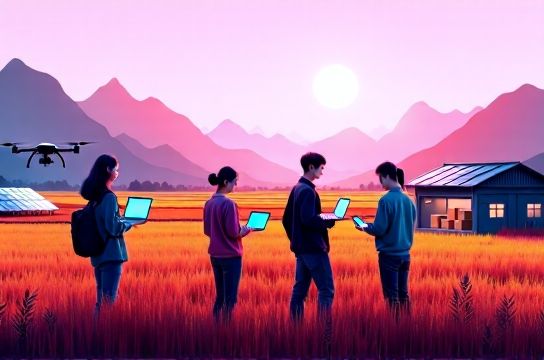
This isn’t nostalgia-driven escapism—it’s a calculated shift fueled by digital opportunity, policy support, and a redefined dream of success. According to the Ministry of Agriculture, over 11.2 million returnees had started businesses in rural areas by 2023, with nearly 35% holding bachelor's degrees or higher—a sharp rise from just 18% a decade ago.
The Why: More Than Just Fresh Air
Let’s be real—no one moves back to the village just for quieter nights (though that helps). The real pull? Opportunity. E-commerce platforms like Pinduoduo and Douyin have turned remote villages into direct-to-consumer hubs. One graduate from Hunan Agricultural University launched an organic tea brand via livestreaming and hit ¥2.3 million in sales in under a year.
Plus, local governments are rolling out red-carpet incentives: interest-free loans, free training, even housing subsidies. In Zhejiang province, returnees can get up to ¥500,000 in startup funding.
Rural Renaissance in Numbers
| Year | Number of Educated Returnees (Bachelor+) | Avg. Annual Income (RMB) | Main Sectors |
|---|---|---|---|
| 2018 | 1.8 million | 68,000 | Farming, E-commerce |
| 2021 | 2.9 million | 94,500 | Agri-tech, Tourism, Logistics |
| 2023 | 3.9 million | 127,000 | Digital Farming, Branding, Cold Chain |
Notice the trend? It’s not just farming anymore. These aren’t your grandparents’ villagers—they’re data-savvy entrepreneurs using drones for crop monitoring and blockchain for supply chain transparency.
Challenges? Absolutely.
Let’s not sugarcoat it. Internet lag? Still a thing. Finding skilled workers? Tough. And let’s talk about dating—"Who’s single in the next three villages?" becomes a real question. But many say the trade-off is worth it: lower living costs, stronger community ties, and yes, cleaner air.
The Ripple Effect
These returnees aren’t just changing their own lives—they’re revitalizing entire villages. Schools reopen, convenience stores upgrade to mini-marts, and youth culture sneaks in through café pop-ups and weekend music gigs. In Guizhou, a returned software engineer set up a coding bootcamp for rural teens—now five students have interned at Tencent.
The message is clear: success doesn’t have to mean Shanghai or Shenzhen. Sometimes, it grows best in the soil you left behind.