
Social Phenomena China Studying the Afterlives of Ghost Cities
- Date:
- Views:432
- Source:The Silk Road Echo
Ever heard of a city so quiet you can hear your own echo bouncing off skyscrapers—with barely a soul in sight? Welcome to China’s infamous ghost cities. Once labeled as eerie symbols of overdevelopment and economic missteps, these urban spaces have undergone a fascinating transformation. But what’s the real story behind them? Let’s dive into the social phenomena shaping modern China and uncover how ghost cities are quietly coming back to life.
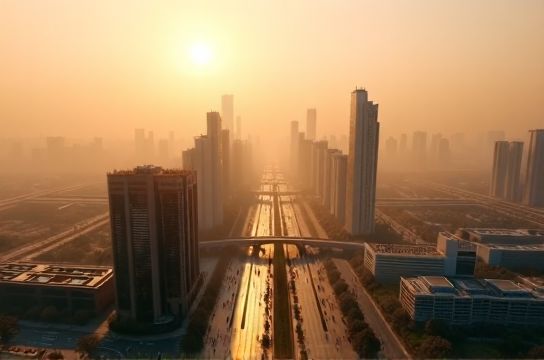
From Empty Skyscrapers to Thriving Communities
The term ghost city became popular in the early 2010s when satellite images revealed massive developments—like Ordos Kangbashi and Zhengzhou’s new district—standing nearly empty. Critics called them "white elephants," products of speculative construction and local debt-fueled growth. But fast forward to today, and many of these places are no longer ghosts—they’re evolving into real communities.
A 2023 study by Tsinghua University found that over 65% of once-vacant units in major ghost cities are now occupied. In Kangbashi, population rose from just 20,000 in 2010 to over 120,000 in 2023. That’s not overnight success—it’s a slow burn fueled by government incentives, infrastructure investment, and shifting demographics.
Why Did Ghost Cities Emerge?
It wasn’t just reckless spending. China’s rapid urbanization—adding roughly 20 million people to cities each year—demanded forward planning. Local governments built ahead of demand, banking on future migration. Add in land-sale revenues (a key income source for local authorities), and you’ve got a recipe for overbuilding.
But here’s the twist: many so-called ghost cities weren’t truly abandoned. They were under-occupied transitional zones, waiting for transportation links, schools, hospitals, and jobs to catch up.
Revival in Numbers: The Turnaround
Check out this snapshot of three once-dead districts and their revival:
| City District | Population (2010) | Population (2023) | Occupancy Rate | Key Growth Driver |
|---|---|---|---|---|
| Kangbashi, Ordos | 20,000 | 120,000 | 78% | Tourism & Government Relocation |
| Nanhui New City, Shanghai | 15,000 | 85,000 | 70% | Free Trade Zone Expansion |
| Zhengdong New Area, Zhengzhou | 10,000 | 400,000 | 90% | Transport Hub & Tech Investment |
As you can see, Zhengdong New Area is practically unrecognizable from its hollow beginnings. Today, it hosts the headquarters of Alibaba’s regional operations and connects to high-speed rail lines—proving that timing and connectivity are everything.
Social Shifts Fueling Urban Rebirth
The comeback isn’t just about buildings—it’s about people. Young professionals and rural-to-urban migrants are increasingly priced out of core city areas. Ghost cities, with their lower rents and modern amenities, offer a fresh start.
Local governments are also getting smarter. In Kangbashi, free housing was offered to teachers and healthcare workers. In others, tech startups receive tax breaks. These aren’t handouts—they’re strategic population seeding.
So… Are Ghost Cities Still a Problem?
Not exactly. While some remote developments still struggle, the narrative has shifted. What looked like failure was often long-term urban incubation. China’s ability to build infrastructure first and populate later challenges Western models of organic growth.
Still, risks remain. Overreliance on property-led growth contributed to recent crises, like Evergrande’s collapse. Sustainable development needs jobs, culture, and community—not just concrete.
Final Thoughts: Beyond the Hype
The ghost city phenomenon teaches us that urban development isn’t always instant. It’s messy, experimental, and deeply tied to social policy. Today’s vacant streets might be tomorrow’s bustling neighborhoods. So next time you see an empty skyline, don’t call it dead—call it pending activation.