
Social Phenomena China Examining the Hukou System Impact
- Date:
- Views:360
- Source:The Silk Road Echo
Ever wondered why moving cities in China isn’t as simple as packing a suitcase? Blame it on the Hukou system—a decades-old household registration policy that quietly shapes lives, opportunities, and even love stories across the Middle Kingdom. Let’s dive into how this invisible barrier impacts education, healthcare, jobs, and social mobility—with real data, straight talk, and zero jargon.
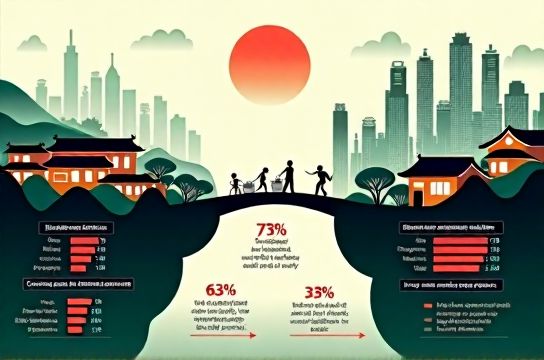
What Is the Hukou System, Anyway?
Think of Hukou as China’s internal passport. Introduced in the 1950s, it ties citizens to their place of birth—rural or urban. Urban Hukou holders enjoy better schools, hospitals, and housing perks. Rural ones? Often left playing catch-up. Despite massive urbanization (over 64% of Chinese live in cities now), about 290 million migrant workers remain stuck with rural Hukou, limiting their access to city benefits.
The Great Inequality Engine
It’s not just paperwork—it’s life-altering. A Beijing-born kid gets top-tier public schools. A migrant worker’s child? Might attend underfunded private schools or be sent back to the village. Healthcare? Urban residents average 8.7 doctor visits per year, while rural peers manage only 3.2. The gap is real, and it starts at birth.
| Metric | Urban Hukou Holders | Rural Hukou Holders |
|---|---|---|
| Average Annual Income (2023) | ¥87,000 | ¥45,000 |
| Public School Enrollment Rate | 98% | 76% |
| Access to Social Housing | High | Very Low |
| Pension Coverage | 89% | 52% |
This isn’t just unfair—it’s economically inefficient. Migrants fuel city economies but can’t fully integrate. No Hukou? No access to subsidized housing, local exams for college, or even marriage registration in some megacities like Shanghai.
Reforms: Progress or Paper Tiger?
In recent years, China’s tried loosening the rules—especially in second-tier cities like Chengdu and Hangzhou. Some offer “points-based” Hukou access for skilled workers. But Beijing and Shanghai? Still tight. You’d need a PhD, property, and maybe a gold medal in something to qualify.
Still, change is brewing. Over 100 million people have gained urban Hukou since 2014, mostly in smaller cities. But the dream of true mobility? Not quite there yet.
Human Cost: Stories Behind the Stats
Zhang Wei, a factory worker in Guangzhou, sends his paycheck home to Hunan every month. His daughter studies there—because without local Hukou, she can’t take the Guangzhou high school entrance exam. Millions face this daily dilemma: work where the jobs are, raise kids where the rights are.
Why Should You Care?
If you’re investing in China, studying its society, or just curious about global inequality, the Hukou system is a masterclass in how policy shapes destiny. It’s also a ticking clock—demographic decline and labor shortages mean China needs to unlock its human potential. And that means fixing Hukou.
So next time someone says “China moves fast,” remind them: not everyone gets to move freely. The Hukou system remains one of the world’s most enduring social experiments—and its legacy will define China’s future.