
Decoding Chinese Society Explained in Everyday Contexts
- Date:
- Views:280
- Source:The Silk Road Echo
Ever wondered why your Chinese friend insists on paying the bill—even when you're treating? Or why 'saving face' seems more important than being right? Welcome to the fascinating world of Chinese society, where tradition dances with modernity and every gesture tells a story.
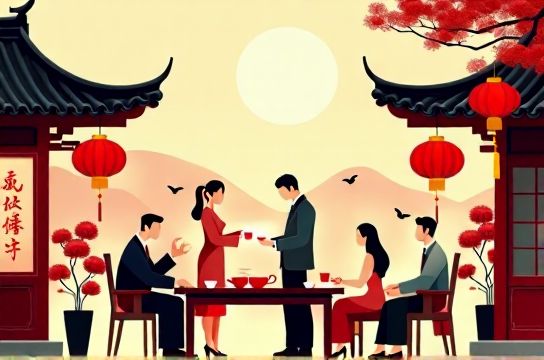
China isn’t just about skyscrapers and high-speed trains. Beneath its rapid development lies a cultural fabric woven from Confucian values, family loyalty, and subtle social codes. Let’s break it down—no textbook jargon, just real-life insights.
The Power of Guanxi (关系): It’s Who You Know
In China, guanxi—personal connections—is the invisible currency. Need a hospital appointment fast? A school spot for your kid? Chances are, you’ll call an uncle’s cousin’s friend. It’s not corruption; it’s how trust is built.
According to a 2023 survey by Pew Research, over 68% of urban Chinese adults say personal networks influence job opportunities significantly—compared to just 32% in the U.S.
| Country | Reliance on Personal Networks for Jobs (%) | Social Trust Index (Out of 10) |
|---|---|---|
| China | 68% | 6.1 |
| United States | 32% | 7.3 |
| Germany | 29% | 8.0 |
Face Culture: More Than Just Politeness
'Saving face' isn’t vanity—it’s social survival. In Chinese culture, public embarrassment can damage relationships permanently. That’s why criticism is often indirect, and compliments are strategic.
Imagine turning down a gift directly. Big no-no. Instead, people might refuse twice before accepting—this ritual preserves everyone’s dignity. It’s like a polite tango: step forward, step back, then meet in the middle.
Family First: The Backbone of Identity
If individualism rules the West, collectivism reigns in China. Family isn’t just mom and dad—it’s grandparents, uncles, cousins, all linked by duty and expectation.
A 2022 study found that 74% of young Chinese adults live with parents until marriage—versus 35% in France and 28% in Canada. Why? Filial piety isn’t outdated; it’s baked into daily life.
During Lunar New Year, over 3 billion trips are made as people return home. That’s the largest annual human migration on Earth—all for one meal with family.
Work Ethic & Education: The Long Game
Remember the phrase 'tiger mom'? It stems from a real mindset: success through relentless effort. Chinese students average 53 hours of study per week—nearly double the OECD average.
And it shows. In PISA rankings, Shanghai students rank #1 globally in math and science. But at what cost? Rising youth anxiety has pushed mental health to the national agenda.
Modern Shifts: Tradition Meets TikTok
Yes, elders are respected. But Gen Z is rewriting the rules. Meet 'lying flat' (tan si)—a quiet rebellion against grind culture. Young workers are saying 'no' to 996 (9 am–9 pm, 6 days a week) and chasing work-life balance.
Yet, even rebels honor roots. Over 60% still send monthly money home—a digital-era twist on filial duty.
Final Thoughts: Understanding > Judging
Chinese society isn’t mysterious—it’s meaningful. Once you see the logic behind the customs, interactions become richer. Whether you’re doing business, traveling, or making friends, respect the rhythm.
So next time someone refuses your offer three times before accepting? Smile. They’re not being difficult—they’re keeping harmony alive.