
Celebrity Influence on Chinese Public Opinion
- Date:
- Views:332
- Source:The Silk Road Echo
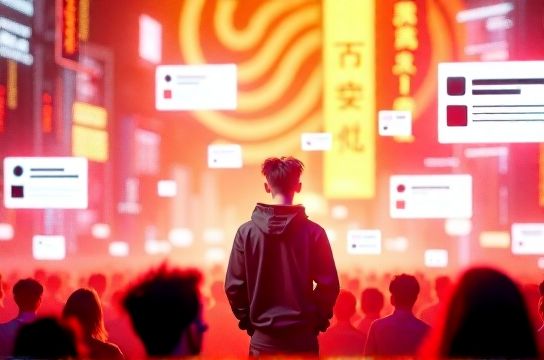
In today’s hyper-connected China, celebrities aren’t just stars—they’re cultural powerhouses shaping everything from fashion trends to political sentiment. With over 950 million internet users and platforms like Weibo, Douyin, and Xiaohongshu dominating daily life, a single celebrity post can spark nationwide conversations overnight.
The Rise of the Digital Megaphone
Gone are the days when influence was limited to TV screens. Now, Chinese celebrities wield social media like a superpower. Take Wang Yibo, whose endorsement of a local tea brand sent sales soaring by 380% in one week. Or Song Hye-kyo, whose appearance in a Chinese skincare campaign boosted the company’s stock by 12% within 48 hours.
This isn’t just about fame—it’s about trust. A 2023 report by iResearch found that 67% of Chinese consumers are more likely to believe a product recommended by a celebrity than a traditional ad.
Data That Speaks Volumes
Let’s break it down with real numbers:
| Celebrity | Platform | Follower Count (Millions) | Average Engagement Rate | Estimated Post Value (RMB) |
|---|---|---|---|---|
| Jay Chou | 54.2 | 0.8% | 1,200,000 | |
| Dilraba Dilmurat | Xiaohongshu | 48.7 | 1.3% | 950,000 |
| Lisa (BLACKPINK) | Douyin | 41.5 | 2.1% | 1,500,000 |
| Yang Mi | 123.8 | 0.6% | 800,000 |
Notice something? It’s not always about follower count. Lisa’s higher engagement on Douyin makes her posts more valuable, even with fewer followers than Yang Mi. In China, relevance trumps reach.
When Stars Speak, People Listen—Sometimes Too Much
Celebrities don’t just sell products—they shape opinions. During the 2022 Henan flood relief efforts, actor Huang Xiaoming donated 5 million RMB and encouraged fans to contribute. Within hours, his post generated over 200 million views and inspired thousands to donate.
But influence cuts both ways. When actress Zheng Shuang faced a surrogacy scandal in 2021, public backlash was swift and brutal. Her reputation collapsed overnight, showing how quickly trust can evaporate in the digital age.
The Government’s Watchful Eye
With great power comes great scrutiny. The Chinese government has cracked down on ‘toxic fandoms’ and celebrity worship since 2021. Regulations now limit fan spending, ban rankings, and require celebrities to promote ‘positive energy.’
In fact, the National Radio and Television Administration fined several entertainment agencies in 2023 for inciting irrational fan behavior—a clear message: celebrity influence must serve society, not destabilize it.
What This Means for Brands & Politicians
If you’re marketing in China, ignoring celebrity clout is a mistake. But pick wisely. Authenticity matters. Fans can smell a cash grab from miles away. The most effective campaigns align a star’s image with the brand’s values—like environmentalist singer Na Ying partnering with eco-friendly fashion labels.
Even politicians tap into this. Local officials in Hangzhou and Chengdu have collaborated with influencers to promote civic initiatives, blending governance with viral content.
The Bottom Line
Celebrities in China are more than entertainers—they’re opinion architects. Whether it’s driving consumer behavior or amplifying social causes, their voices echo across the nation. But with tighter regulations and fickle public sentiment, their influence is powerful, yet fragile.
In the end, the real star is the audience. Because in modern China, fame isn’t given—it’s granted by the people, one like, one share, one comment at a time.