
Why Chinese Students Study So Hard
- Date:
- Views:347
- Source:The Silk Road Echo
If you've ever wondered why Chinese students seem to live in libraries, cram schools, and exam prep zones, you're not alone. From sky-high Gaokao scores to dominating international math rankings, the academic hustle of Chinese students is real — and intense. But what's really driving this culture of relentless studying? Let’s break it down with data, context, and a bit of cultural insight.
The Gaokao: The Ultimate Academic Gatekeeper
At the heart of China’s study culture lies the Gaokao, the national college entrance exam. Think of it as the SAT on steroids — one test that can shape your entire future. Over 12 million students take the Gaokao each year, competing for limited spots at top universities like Tsinghua and Peking University.
Why so much pressure? Because university prestige directly impacts job opportunities, social status, and even marriage prospects in some circles. A high Gaokao score isn’t just about pride — it’s a ticket to upward mobility.
| Year | Number of Gaokao Test-Takers (in millions) | Top University Admission Rate |
|---|---|---|
| 2021 | 10.78 | ~1.5% |
| 2022 | 11.93 | ~1.4% |
| 2023 | 12.91 | ~1.3% |
Family Pressure & Cultural Values
In many Chinese households, education isn’t just personal — it’s familial duty. Parents often invest heavily in their children’s studies, sometimes sacrificing their own comfort. This stems from Confucian values that emphasize respect for learning and filial piety.
A 2022 survey by China Youth Daily found that 78% of parents expect their kids to attend a key university. That kind of expectation doesn’t just motivate — it pushes.
School Life: Long Hours, Few Breaks
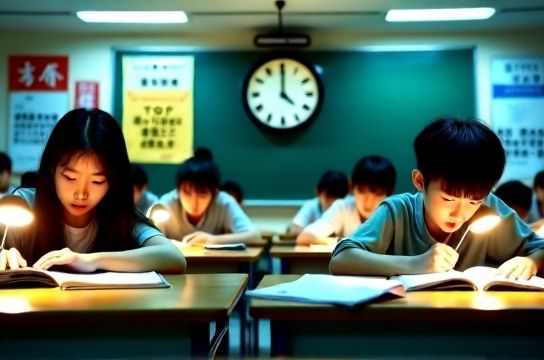
Chinese students don’t just study hard — they study long. In cities like Beijing and Shanghai, it’s common for high schoolers to start school at 7:00 AM and not leave until 9:00 PM, with self-study sessions after dinner.
- Weekly class hours: 40–50 (vs. ~30 in the U.S.)
- Homework time: 2–3 hours per night on average
- Weekend classes: Common, especially in Grade 12
The Role of Private Tutoring
Even with long school days, many students attend after-school tutoring. Before the 2021 "Double Reduction" policy cracked down on private tutoring, families spent billions annually on cram schools.
According to iResearch, the K-12 tutoring market was worth over $120 billion before the crackdown. Though now regulated, underground tutoring still exists — a sign of how deeply embedded the study culture runs.
Global Comparisons: How Do They Stack Up?
It’s not just effort — it’s results. In the latest PISA (Programme for International Student Assessment) rankings:
- Math: China ranked #1 (average score: 591 vs. OECD avg: 472)
- Reading: #1 (530 vs. 487)
- Science: #1 (590 vs. 485)
These numbers aren’t flukes — they reflect a system built around discipline, repetition, and mastery.
Is It Sustainable?
Not everyone agrees this grind is healthy. Rising rates of student anxiety and depression have sparked national debate. In 2023, the Ministry of Education introduced policies to reduce homework and improve mental health support.
Still, change is slow. For most families, the belief remains: study hard, succeed later.
Final Thoughts
Chinese students study so hard because the stakes are sky-high, the culture is deeply rooted, and the competition is fierce. It’s a mix of tradition, ambition, and survival in a crowded system. Love it or critique it — you can’t ignore its impact.