
The Illusion of Meritocracy in Chinese Education
- Date:
- Views:280
- Source:The Silk Road Echo
In China, the idea that hard work equals success—especially through education—is deeply embedded in the national psyche. From a young age, students are told: Study hard, ace the Gaokao, and you’ll secure a bright future. Sounds fair, right? But scratch beneath the surface, and you’ll find that the so-called 'meritocracy' of Chinese education isn’t nearly as equal as it claims to be.
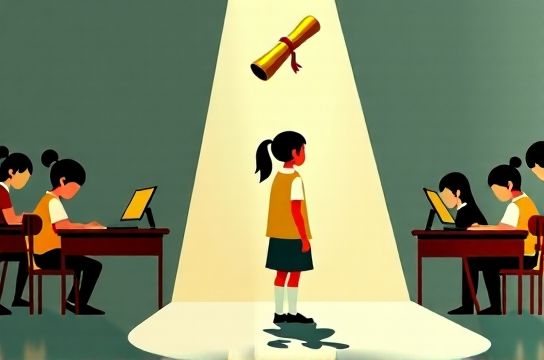
The Gaokao, China’s grueling national college entrance exam, is often hailed as the ultimate equalizer—a test where every student, regardless of background, competes on the same playing field. In theory, yes. In reality? Not quite.
Consider this: urban students consistently outperform their rural peers. Why? Because access to quality education isn’t evenly distributed. Top-tier schools, experienced teachers, tutoring centers, and digital learning tools are concentrated in wealthy cities like Beijing and Shanghai. Rural provinces? Not so much.
Let’s look at some numbers:
| Region | Average Gaokao Score (2023) | University Enrollment Rate (%) | Students with Private Tutoring (%) |
|---|---|---|---|
| Beijing | 580 | 87% | 76% |
| Shanghai | 575 | 85% | 72% |
| Sichuan (Rural) | 460 | 49% | 28% |
| Gansu (Rural) | 445 | 42% | 19% |
These disparities aren’t accidental—they’re structural. A student in Beijing doesn’t just benefit from better schools; they also enjoy family networks, financial stability, and cultural capital that rural students simply can’t match. Meanwhile, kids in remote villages might walk miles to school, lack internet access, or even share textbooks.
And let’s talk about the pressure. The Gaokao isn’t just an exam—it’s a high-stakes lottery that determines your life trajectory. Students routinely study 12+ hours a day, sacrificing sleep, mental health, and childhood joy. The suicide rate among Chinese teens has risen sharply in recent years, with academic stress cited as a major factor.
Yet, despite all this effort, social mobility remains limited. A 2022 Peking University study found that over 60% of students at elite universities like Tsinghua and Peking University come from families in the top 20% income bracket. If the system were truly meritocratic, you’d expect a more diverse mix.
So what’s the solution? Reform is slow, but there are glimmers of change. Some provinces have introduced bonus points for rural students. Others are investing in online education platforms to bridge the urban-rural gap. But real equity requires more than tech fixes—it demands a rethinking of how resources are allocated and who gets to succeed.
The myth of meritocracy in Chinese education persists because it’s comforting. It tells us that success is earned, not given. But when the starting line is miles apart, no amount of hard work can close the gap alone. True fairness means leveling the field—not just praising those who sprint fastest on uneven ground.