
Chinese Society Explained Through Modern Urban Living
- Date:
- Views:231
- Source:The Silk Road Echo
If you've ever strolled through Shanghai's neon-lit streets or squeezed onto a Beijing subway at rush hour, you’ve touched the pulse of modern Chinese society. Urban life in China isn’t just about skyscrapers and high-speed trains—it’s a cultural tapestry woven with ambition, tradition, and digital innovation. Let’s dive into how city living shapes Chinese identity today.
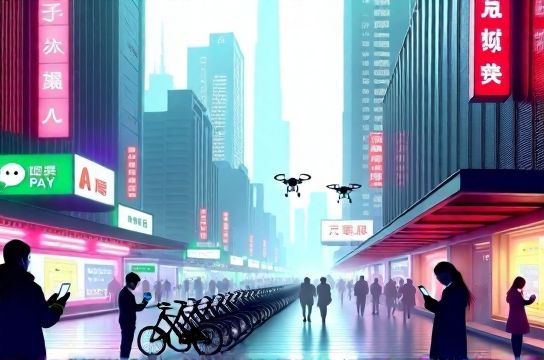
The Rise of the Urban Middle Class
Over the past two decades, China has witnessed one of the fastest urban migrations in human history. By 2023, over 65% of China’s population—nearly 900 million people—live in cities, up from just 36% in 2000 (World Bank). This shift didn’t just change skylines; it redefined lifestyles, values, and social mobility.
The urban middle class now drives consumer trends, from premium coffee to smart homes. They’re tech-savvy, brand-conscious, and fiercely competitive when it comes to education and housing. In first-tier cities like Shenzhen and Guangzhou, the average annual income exceeds 180,000 RMB (~$25,000), fueling a boom in lifestyle spending.
Digital Life: WeChat as a Way of Life
Try imagining a world where your wallet, bank, social media, and grocery store all live in one app. That’s WeChat for 1.3 billion users. From paying street vendors with QR codes to booking hospital appointments, urban Chinese rely on super-apps for nearly every daily task.
This digital ecosystem reflects deeper societal traits: efficiency, connectivity, and trust in mobile infrastructure. Even grandparents use facial recognition to withdraw cash. It’s not just convenience—it’s a cultural embrace of seamless integration between physical and digital worlds.
Housing Pressures and the 'Tang Ping' Movement
But urban life isn’t all smooth scrolling. Skyrocketing property prices have made homeownership a distant dream for many. In Shanghai, the average price per square meter hits 70,000 RMB (~$9,700). That’s more than New York or London on a purchasing power basis.
Faced with this pressure, a growing number of young professionals are embracing tang ping (lying flat)—a quiet rebellion against the grind. They downsize ambitions, reject overtime culture, and seek work-life balance. It’s not laziness; it’s a philosophical pushback on unsustainable expectations.
Family Dynamics in High-Rise Apartments
Urbanization has reshaped family structures too. The traditional extended family is giving way to nuclear units crammed into compact apartments. Yet filial duty remains strong—many millennials send monthly allowances to parents in rural villages while navigating dating pressures from qinmu (marriage markets) in city parks.
Interestingly, despite busy lives, family-centric values endure. Weekend dinners, holiday reunions, and ancestral worship still anchor urban identities. Modernity hasn’t erased tradition—it’s compressed it into tighter spaces.
Green Spaces and Mental Wellness
As pollution and pace take tolls, cities are fighting back with green initiatives. Beijing added over 300 urban parks since 2018. Chengdu’s ‘Park City’ model integrates nature into urban planning, with rooftop gardens and forest corridors.
These aren’t just aesthetic upgrades—they respond to rising mental health awareness. Urban youth increasingly prioritize well-being over relentless hustle, signaling a cultural evolution.
Data Snapshot: Urban Living by the Numbers
| City | Population (millions) | Avg. Income (RMB/year) | Housing Cost (RMB/m²) | Public Transit Users (daily) |
|---|---|---|---|---|
| Beijing | 21.5 | 195,000 | 68,000 | 12.6 million |
| Shanghai | 24.9 | 187,000 | 70,000 | 11.8 million |
| Shenzhen | 17.5 | 182,000 | 65,000 | 9.3 million |
| Chengdu | 20.9 | 122,000 | 28,000 | 6.1 million |
Source: National Bureau of Statistics, 2023
Final Thoughts
Modern urban China is a paradox—ultra-connected yet socially strained, prosperous yet pressured. It mirrors a society balancing rapid progress with deep-rooted values. To understand China today, walk its sidewalks, scan its QR codes, and feel its heartbeat in the rush of the metro. This is where the future is being lived—one smartphone tap at a time.