
Chinese Society Explained Through Daily Life and Values
- Date:
- Views:243
- Source:The Silk Road Echo
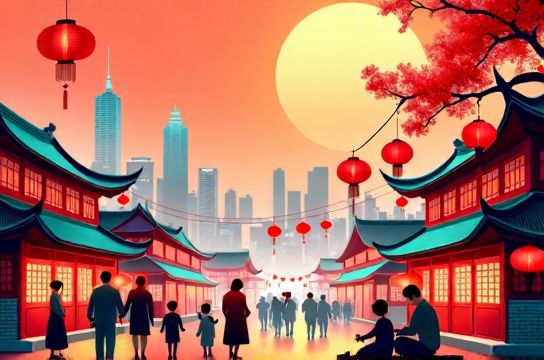
Ever wondered what makes Chinese society tick? It’s not just about ancient temples and dim sum—it’s the quiet rhythms of daily life, deep-rooted values, and subtle social cues that shape one of the world’s most fascinating cultures. Let’s take a walk through real-life China, where tradition dances with modernity.
The Heartbeat of Harmony: Guanxi & Family Ties
In China, who you know matters—guanxi (关系) isn’t just networking; it’s the invisible glue holding society together. From getting a job to securing hospital appointments, personal relationships often trump paperwork.
But it all starts at home. The family is the core unit, shaped by Confucian ideals of respect, duty, and hierarchy. Even in bustling cities like Shanghai or Shenzhen, multi-generational households are common—about 30% of urban families live with three or more generations under one roof (National Bureau of Statistics, 2023).
| Family Structure | Urban (%) | Rural (%) |
|---|---|---|
| Nuclear (parents + kids) | 58% | 45% |
| Extended (3+ gens) | 30% | 42% |
| Single-person | 12% | 13% |
Daily Rhythms: From Morning Squares to Night Markets
Step outside at 6 a.m., and you’ll see retirees practicing tai chi in parks. By 7 p.m., night markets buzz with skewers sizzling and boba tea flowing. These aren’t just habits—they’re expressions of community and balance.
Take the waimai (外卖) culture: food delivery isn’t a luxury, it’s a lifestyle. Over 500 million people order food online monthly, according to Meituan’s 2023 report. That’s nearly 40% of the population relying on apps for dinner!
Work Ethic & The '996' Shadow
You’ve heard of hustle culture—but in China, it sometimes hits extreme levels. The infamous “996” work schedule (9 a.m. to 9 p.m., 6 days a week) sparked national debate. While tech giants have toned it down, the pressure to succeed remains intense.
Yet, there’s pushback. Young workers are embracing “tang ping” (躺平), or “lying flat”—a quiet rebellion against overwork. It’s not laziness; it’s a call for balance. A 2022 survey found that 62% of Gen Z workers prioritize mental health over career advancement.
Values That Shape Behavior
- Mianzi (面子): Saving face isn’t vanity—it’s social survival. Public criticism is avoided; harmony > honesty.
- Jieji (节俭): Frugality is praised. Even wealthy families may reuse plastic bags or haggle at markets.
- Collectivism: Group goals often outweigh individual desires. Think group tours, shared meals, consensus decisions.
Modern Shifts: Youth, Tech & Identity
China’s youth are redefining norms. They’re fluent in global trends but proud of local identity. Hanfu fashion (traditional clothing) is surging—sales grew by 160% from 2020–2023. At the same time, digital life is everywhere: WeChat isn’t an app, it’s a lifestyle OS.
Yet contradictions exist. While 78% of young adults say they value freedom, only 34% believe political change is necessary (Pew Research, 2023). It’s a generation navigating progress within boundaries.
Final Thoughts: Understanding Beyond Stereotypes
Chinese society isn’t monolithic. It’s a blend of old and new, collective and individual, restraint and ambition. To truly get it, forget the headlines—watch how people share a meal, negotiate a deal, or honor their parents. That’s where the real story lives.