
Inside the Realities of Modern Chinese Society and Values
- Date:
- Views:251
- Source:The Silk Road Echo
China isn't just a country—it's a living, breathing paradox. Ancient traditions dance with futuristic ambitions. Family loyalty meets digital hustle. If you're trying to understand modern China, forget the stereotypes. Let’s dive into what life *really* looks like behind the Great Wall.
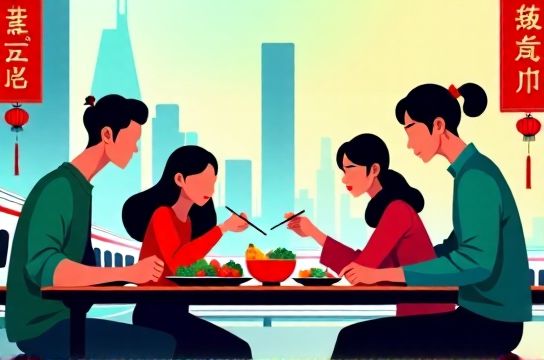
The Pulse of Daily Life: Tradition Meets Tech
Imagine this: an elderly man practices tai chi in Beijing’s Temple of Heaven at sunrise, while his granddaughter scans a QR code to rent a shared bike nearby. That’s modern China in one frame—deeply rooted, yet racing forward.
Social values here are shaped by Confucian ideals like filial piety and harmony, but now mixed with a hyper-connected, mobile-first lifestyle. Over 1.05 billion people use smartphones (Statista, 2023), and WeChat isn’t just an app—it’s a digital identity, wallet, social network, and office all rolled into one.
Work Ethic & The '996' Culture
You’ve probably heard of the infamous '996' work culture—9 AM to 9 PM, 6 days a week. While officially discouraged, it still lingers in tech hubs like Shenzhen and Hangzhou. A 2022 survey by Zhaopin showed that 42% of urban professionals feel overworked, yet productivity remains sky-high.
Why? Because success is measured not just in income, but in honor brought to the family. This collectivist mindset pushes individuals to endure long hours—not just for personal gain, but to uplift their entire clan.
Family First: The Unshakable Core
No matter how fast China changes, family stays central. The one-child policy (1979–2015) reshaped generations, creating the ‘4-2-1’ structure: four grandparents, two parents, one child. That single child now shoulders massive emotional and financial responsibility.
Real estate prices in cities like Shanghai average ¥68,000 per square meter (mid-2024 data), and it’s common for three generations to pool savings to buy a home for the youngest. Marriage? Still important—but delayed. The average first marriage age rose to 28.7 for women, 30.2 for men in major cities.
Values in Transition: From Stability to Self-Fulfillment
Younger generations are redefining success. While older folks value job security (hello, government roles!), Gen Z prioritizes mental health, creativity, and work-life balance. Terms like “tang ping” (lying flat) and “neijuan” (involution) went viral as youth pushed back against relentless competition.
But make no mistake—this isn’t laziness. It’s a quiet rebellion for meaning. A 2023 PwC survey found that 68% of young Chinese workers would take a pay cut for a less stressful job.
Social Snapshot: Key Data at a Glance
| Indicator | Data | Source/Year |
|---|---|---|
| Smartphone Penetration | 1.05 billion users | Statista / 2023 |
| Avg. Home Price (Shanghai) | ¥68,000/m² | National Bureau of Statistics / 2024 |
| First Marriage Age (Top Cities) | Women: 28.7 | Men: 30.2 | Ministry of Civil Affairs / 2023 |
| Overworked Urban Workers | 42% | Zhaopin Survey / 2022 |
| Young Workers Wanting Better Work-Life Balance | 68% | PwC China / 2023 |
The Takeaway: Harmony in Contrast
Modern Chinese society thrives on duality. Respect for elders coexists with TikTok fame. Ambition battles burnout. And through it all, the core values—family, education, perseverance—remain unbroken, even as they evolve.
To understand China today, stop looking for contradictions. Embrace them. Because in this land of ancient wisdom and lightning-fast change, balance isn’t perfection—it’s progress.