
Inside Chinese Society Youth Challenges and Cultural Shifts
- Date:
- Views:187
- Source:The Silk Road Echo
In today’s fast-evolving China, the younger generation stands at a fascinating crossroads — caught between tradition and modernity, ambition and burnout, family expectations and personal dreams. As economic pressures rise and digital culture reshapes identities, understanding the lives of Chinese youth offers a window into the nation’s future.
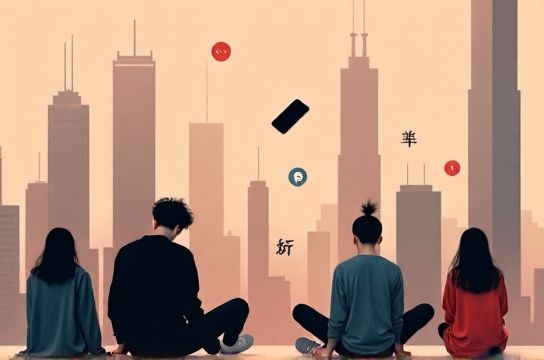
The Weight of Expectations
For many young Chinese, success is measured by academic achievement, stable employment, and homeownership. But with intense competition in education and the job market, the pressure is real. Take the gaokao, China’s national college entrance exam: over 12 million students took it in 2023 alone. Only the top fraction secure spots in elite universities.
And it doesn’t stop there. The term “involution” (内卷) has become a buzzword among youth, describing a system where hard work no longer guarantees advancement — just more competition.
Employment & The Rise of “Lying Flat”
Despite high graduation rates, youth unemployment hit a record 21.3% in 2023, according to China’s National Bureau of Statistics. Many graduates find themselves underemployed or stuck in low-paying gig jobs.
This reality has fueled the “tang ping” (躺平) — “lying flat” movement, where young people reject relentless hustle culture in favor of minimalism and mental well-being. It’s not laziness; it’s a quiet protest against unattainable societal goals.
| Year | Youth Unemployment Rate (%) | College Graduates (Millions) |
|---|---|---|
| 2021 | 14.2 | 9.09 |
| 2022 | 19.9 | 10.76 |
| 2023 | 21.3 | 11.58 |
Digital Natives Reshaping Culture
China’s youth are digital natives. Platforms like Douyin (TikTok), Xiaohongshu (Little Red Book), and Bilibili aren’t just for entertainment — they’re spaces for self-expression, community, and even activism.
Take fashion: Gen Z is reviving hanfu (traditional Han clothing), blending heritage with streetwear vibes. On Bilibili, videos tagged #hanfu have surpassed 2 billion views. This isn’t nostalgia — it’s identity reclamation.
Love, Marriage, and Independence
Another cultural shift? Delayed — or rejected — marriage. In 2023, China’s marriage rate dropped to 4.8 per 1,000 people, down from 9.9 in 2013. Urban women, especially, are prioritizing careers and autonomy.
As one 26-year-old Shanghai professional put it: “I’m not anti-love, but I won’t marry just because society says so.”
The Road Ahead
Chinese youth aren’t lost — they’re redefining success on their own terms. From embracing digital creativity to challenging outdated norms, they’re shaping a new social landscape.
Their struggles reflect broader global trends: economic anxiety, mental health awareness, and the search for meaning in a hyperconnected world. But in China, these forces collide with unique intensity.
So if you want to understand where China is headed, listen to its youth. They’re not shouting — they’re quietly rewriting the rules.