
Urban Dreams: The Identity Crisis of China's Migrant Youth
- Date:
- Views:274
- Source:The Silk Road Echo
Imagine chasing a dream—bright lights, tall buildings, endless opportunities. That’s the promise cities like Beijing, Shanghai, and Shenzhen dangle in front of rural kids. Every year, millions of young people pack their bags and head to China’s booming urban centers, hoping for a better life. But what happens when the dream hits reality? For many migrant youth, city life isn’t freedom—it’s confusion, struggle, and an identity crisis.
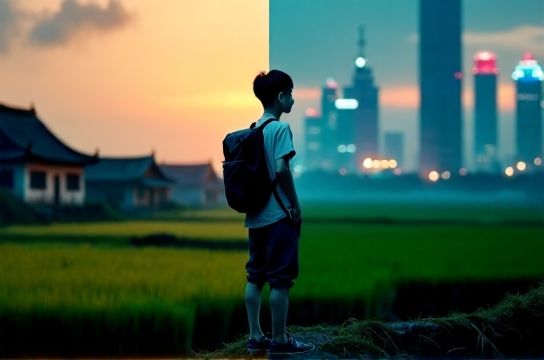
These aren’t just workers—they’re dreamers. Born in villages or small towns, they grew up watching glossy ads of city success. They studied hard, saved money, and made the leap. But once they arrive, they hit a wall: the hukou system. This household registration policy locks social benefits—like education, healthcare, and housing—to your birthplace. So even if you’ve lived in Shanghai for ten years, if your hukou says 'Hunan,' you’re treated like an outsider.
That means no access to public schools for their kids. No subsidized housing. No real shot at climbing the ladder. They end up in low-paying jobs—delivery riders, factory hands, cleaners—working longer hours than locals but earning less respect. They’re visible everywhere, yet invisible in society.
And it messes with their heads. Who am I? A city person? A country kid pretending? They speak with accents that mark them as 'other.' Their clothes, habits, even dreams don’t quite fit in. They’re too urban for home, too rural for the city. Psychologists call it 'cultural limbo'—a generation stuck between two worlds, belonging to neither.
Social media makes it worse. Scroll through Douyin or Xiaohongshu, and everyone looks rich, stylish, successful. Meanwhile, you’re sharing a 10-square-meter room with three others, working 12-hour shifts. The gap between expectation and reality? It’s not just economic—it’s emotional.
But here’s the twist: these kids are resilient. Many join online communities, creating spaces where they share stories, job tips, even mental health support. Some start grassroots groups, pushing for policy changes. Others turn to art—rap music, street photography, indie films—that scream, 'We exist! We matter!'
Cities need them. Who delivers your food at midnight? Who builds those shiny skyscrapers? Without migrant youth, urban China would grind to a halt. Yet they’re still treated like temporary guests in their own country.
The real question isn’t just about rights or policies—it’s about identity. Can China redefine what it means to 'belong' in a city? Can these young people stop being seen as outsiders and start being recognized as builders of the future?
The answer will shape not just their lives, but the soul of modern China.